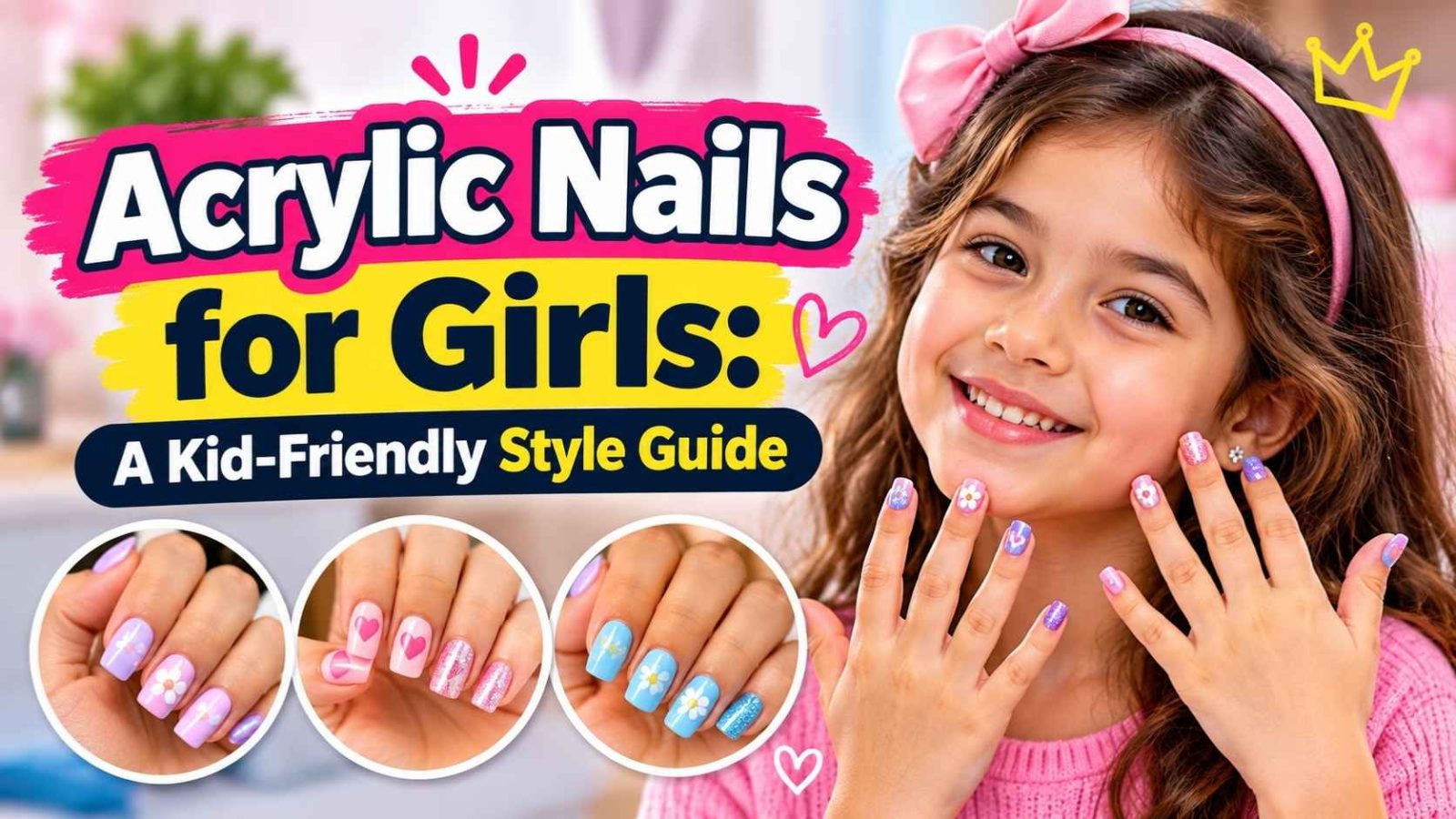
Acrylic Nails for Girls: A Kid-Friendly Style Guide
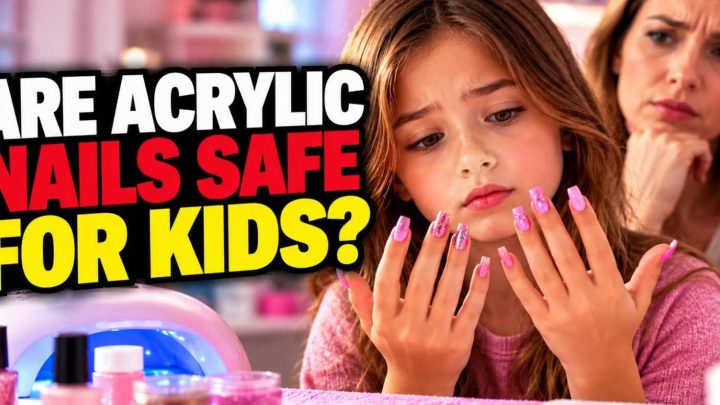
The prettiest acrylic set is not automatically the safest choice for a girl. A long, dramatic manicure may survive recess and playground time, but it can also snag, split, encourage nail biting, and be harder to remove. For kids, nail health, habits, and supervision matter more than color or trends.
A child can be a good candidate for acrylic nails when her natural nails are healthy, she can report discomfort, she does not bite or pick at manicures, and an adult can manage removal and maintenance. There is no single “safe age” for acrylic nails, and salon policies, state rules, and individual circumstances vary.
The Quick Answer for Parents
Yes, girls can get acrylic nails, but no age makes acrylics automatically safe. The better question is whether the child is ready for a durable enhancement that requires careful upkeep and professional removal.
I would consider a short set reasonable when all of these conditions are met:
- Her natural nails and surrounding skin are healthy.
- She does not regularly bite, chew, or pick at her nails.
- She can say if something burns, hurts, or feels uncomfortable.
- She can sit through an appointment without sudden movement.
- A reputable salon or experienced adult will apply the product correctly.
- The nails are short enough for school, play, sports, and daily tasks.
- A parent can monitor the manicure and arrange removal when needed.
Very young children, children who bite their nails, and children with eczema, psoriasis, nail injuries, or known chemical sensitivities may be better off with no enhancement or a simpler option such as adult-supervised press-ons. Even then, adhesive and decorative pieces require supervision.
The safest-looking option is not always the least complicated. Acrylics are durable, which is one of their main benefits for active children, but durability also makes chewing and picking especially damaging.
What Are Acrylic Nails, and Why Do Kids Ask for Them?
Acrylic nails are created by combining a liquid monomer with a polymer powder. The mixture hardens through a chemical reaction commonly called curing or polymerization. Basic acrylic systems do not need a UV or LED lamp, although some hybrid systems may use a separate gel-like product that does.
Many parents assume all long-lasting nail enhancements are acrylic. The main options are different:
| Nail option | How it differs | What parents should know |
|---|---|---|
| Acrylic extensions | A liquid-and-powder product is shaped to extend the natural nail | Resists chipping but requires careful application, maintenance, and removal |
| Acrylic overlay | Acrylic adds structure or thickness without major length extension | Still involves monomer exposure and may be difficult if the natural nail is weak |
| Gel manicure | Gel coats or extensions are hardened with a lamp unless the system says otherwise | Not automatically safer for children; UV/LED exposure and product sensitivities still matter |
| Dip manicure | Nail is dipped into colored powder and then sealed | A child may mistake the process for acrylic, but the products and application differ |
| Press-on nails | Preformed nails are attached with adhesive | Usually shorter and easier to change, but loose nails and glue still need adult supervision |
| Ordinary nail polish | Color is applied directly to the natural nail | Less commitment, although repeated removal and harsh chemicals can still weaken nails |
Girls are often drawn to acrylics because the colors stay neat through washing, school, sports, and play. A small French tip, pastel color, or glossy finish can feel special without being as bold as a long sculpted set. Acrylics also do not chip like ordinary polish, which can make them appealing for special events, vacations, birthdays, holidays, or a child who dislikes frequent touch-ups.
That durability is useful only when the manicure fits the child’s behavior. Nails that are too long can catch on clothing, books, playground equipment, car doors, or hair. Thick product can put pressure on the nail bed, and an uneven underside can make chewing more tempting.
Acrylics also create a longer-term commitment. A polish manicure can be removed at home, while a set of acrylics may require soaking, careful filing, or professional removal. Repeated application and removal can leave the natural nail plate thin or uneven, especially if the child continues biting while the set is lifting.
For parents planning around protecting her natural nails, think of the manicure as a temporary cosmetic choice, not a permanent change.
Can Girls Get Acrylic Nails? Age Is Only One Factor
A child’s birthday does not determine whether she can safely wear acrylics. Developmental maturity, nail condition, habits, health, and supervision can matter more than age. One 8-year-old may bite through a set in a week, while another 8-year-old could report discomfort and leave the nails alone.
The following guide reflects behavior and readiness, not medical age limits:
| Developmental stage | Likely challenges | A more suitable approach |
|---|---|---|
| Toddler or preschooler | Short attention span, frequent nail biting, teething, hand chewing, and little ability to report discomfort | Plain polish, occasional nail art, or no enhancement is usually the lowest-commitment choice |
| Early elementary age | May sit briefly for an appointment but may forget salon rules after school | A very short, simple set could be considered with close adult supervision |
| Upper elementary age | Better ability to follow instructions and communicate discomfort, though play and habits still matter | Short rounds, ovals, or squovals in a simple color are more practical |
| Preteen or teen | Can often manage maintenance, but may still bite, pick, or participate in sports | Fit should depend on healthy nails, personal style, and ability to follow aftercare |
Some families choose to wait until a child has stopped biting for a sustained period. That is a sensible personal boundary because nail biting is one of the most common causes of lifting, broken acrylics, and damage to the natural nail plate. The child may still enjoy nail art or polish while she develops that habit.
A nail-biting child can sometimes wear a short set successfully, especially with a clear or difficult-to-bite design, but this is not a guarantee. A bite mark, lifted edge, or partly detached nail can pull healthy nail with it. If biting is ongoing, frequent repair appointments may become necessary and can leave the natural nail with no rest.
Signs That a Child May Be Ready
Look for several of these signs before booking:
- She can sit with her hands supported during a nail appointment.
- She can tell an adult when something feels uncomfortable.
- She leaves existing manicures alone.
- Her nails are smooth, firm, and free of cracks, splits, swelling, redness, or open cuts.
- Her cuticles are not torn or infected.
- She understands that the manicure should not be chewed or picked.
- The family can manage fills, repairs, and eventual removal.
- She wants the set because she likes it, not because friends are pressuring her.
These signs are not a medical clearance checklist. They show that the child is likely to participate in safer care.
When Medical Advice May Be Sensible
Ask a pediatrician or dermatologist before a cosmetic nail procedure if the child has:
- A current nail infection, open wound, or recent nail injury
- Persistent eczema, psoriasis, or very sensitive skin
- A known allergy to acrylates, adhesives, rubber, or cosmetic products
- An autoimmune or immune-related condition that affects skin or nails
- An eating disorder or repetitive grooming behavior that makes nail damage more likely
- A tendency to pull, scrape, chew, or damage the nail plate
A clinician does not need to be involved for every healthy child who wants a salon manicure. Medical advice becomes more relevant when there is a known condition, an active skin problem, or a history of an adverse reaction.
What Makes Acrylic Nails Safer—or Riskier for Children?
Acrylic nails do not carry zero risk. Most healthy adults can wear them without problems, but a child may be more likely to move suddenly, pick at a lifting edge, chew the product, or use nail tools without understanding their purpose.
The Products and Allergies
Most of the chemical concern centers on uncured acrylic liquid. Repeated skin contact can cause irritation or allergic contact dermatitis, which is delayed inflammation caused by a substance touching the skin. Some people react after one exposure, while others tolerate a product many times before developing sensitivity.
The FDA’s nail-enhancement safety information explains that acrylates can cause allergic reactions in some people. It also states that methyl methacrylate, or MMA, is not safe for use in nail products and has been prohibited in cosmetics in the United States.
Several terms can create confusion:
- Acrylates is a chemical family used in many nail products.
- MMA is methyl methacrylate.
- “Hypoallergenic” does not mean that nobody can react.
- Odorless or low odor does not mean that the product is free from allergens.
- No-wipe formulas describe application steps, not universal safety.
- Gel-like topcoats may contain different chemicals from basic acrylic liquid and powder.
A reaction may appear as burning, itching, redness, swelling, a rash, tiny blisters, or discomfort around the nail. A child may not connect the symptom with the manicure, so adults should ask directly rather than assuming the nails are simply “itchy.”
Do not test a full acrylic system on a child’s arm. At-home skin testing cannot predict every reaction and can create irritation of its own. If a child has a history of sensitivities, ask a qualified clinician how to proceed.
Natural-Nail Damage
The nail plate is the hard, visible part of the nail. A thin, flexible nail plate is especially vulnerable when product is placed too heavily or removed aggressively.
Potential problems include:
- Thinning from filing, grinding, or repeated removal
- Lifting or separation of the natural nail from its bed
- Pressure caused by an incorrect apex
- Excess product added during frequent fills
- Deep splitting or peeling
- Injury from a lifted edge catching on clothing
- Damage caused by chewing instead of waiting for professional help
The nail plate usually grows gradually, but children’s nails may differ in thickness and growth rate. Parents should avoid promising that every nail will return to its exact previous appearance on a fixed schedule.
Hygiene and Product Contact
A manicure should be performed on clean, intact skin. The technician should:
- Use clean or properly sanitized implements
- Replace used files, buffers, and other disposable items
- Keep product away from the cuticle and skin
- Avoid cutting the cuticle
- Apply the smallest practical amount of product
- Ventilate the room
- Follow the product manufacturer’s instructions
- Avoid placing liquid directly on the child
Salon and state requirements differ across the United States, and salon policies can vary by location. A parent should still be comfortable asking what sanitation process is used rather than assuming every salon follows the same method.
Reusable tools must be handled appropriately. Items that cannot be cleaned or sterilized as required should be discarded rather than reused. A brand-new file for each nail is the simplest example of a disposable item.
Movement, Biting, and Play
A beautiful nail set must fit what a child actually does. A child who writes, climbs, plays basketball, swims, drums, or frequently uses her hands may need much shorter nails than a child who rarely wears them.
Avoid sharp or long shapes if there is any risk of scratching, snagging, or eye injury. Loose rhinestones, tiny loose charms, and bulky 3D decorations can detach. Small detached pieces can be choking hazards, especially around younger siblings.
The Drill Question
An electric nail drill is not required for every acrylic set, and aggressive drilling can create unnecessary risk for a child. Hand filing can be gentler and more controlled, provided the filing is gradual and the child remains still.
If a salon proposes a drill, parents can ask what bit will be used, whether the natural nail will be touched, and why the procedure is necessary. The provider should explain the step rather than treat the tool as an automatic part of every manicure. More on low-pressure filing can help a child understand why the file should move in one direction and why the nail should never be filed back and forth like a saw.
Salon, Adult-Led Home Application, or Press-Ons?
The best option depends on the child’s age, habits, nail health, and the family’s ability to manage removal. For most children who want a durable manicure, a reputable salon is easier and often safer than a child trying to balance a liquid monomer and powder near her own hands.
| Option | Best fit | Main advantages | Main cautions |
|---|---|---|---|
| Professional salon | Older children who can sit still and follow care instructions | Controlled application, sanitation process, access to product removal | Cost, strong odors, long appointments, and local policy differences |
| Adult-led home application | An experienced adult working with a cooperative child | More control over timing and scheduling | Adult still handles all chemicals and tools; moving children make skin contact more likely |
| Child applying her own acrylics | Not recommended | None that outweigh the safety and quality concerns | High risk of spills, rushed application, skin contact, tool injury, and product overuse |
| Press-on nails | A child who wants temporary color or length | Fast, removable, and usually less product exposure | Adhesive can irritate skin, nails can detach, and loose pieces require supervision |
| No enhancement | Any child with biting, injury, or a difficult removal schedule | Leaves natural nails untouched and lowest commitment | May not match the child’s desired look |
Choosing a Salon
A good salon should welcome a parent’s questions and explain the process in child-friendly terms. Before the appointment, ask about:
- Tool sanitation and disposable files
- Ventilation
- Product handling
- Whether the natural nail can be filed by hand
- How the technician handles a child who moves
- What removal process will be used
- Whether the child can stop the appointment at any time
A child should not be scolded for moving or complaining. Sudden movement near uncured product is a reason to pause.
Walk away or postpone if the salon:
- Rushed to finish an extensive set for a very young child
- Uses visibly dirty or shared implements
- Cannot explain its sanitation process
- Applies heavy product around the cuticle
- Plans extensive drilling without a clear reason
- Uses an unlabeled or suspicious product
- Encourages chewing to “break in” the nails
- Applies a full thick set to clearly weak or damaged nails
- Discourages the parent from staying present
A low price does not automatically mean poor work, and an expensive salon is not automatically safe. Judge the consultation, sanitation, technique, and willingness to protect the child.
Best Nail Shapes, Lengths, and Designs for Kids
The most practical child-friendly manicure is usually shorter, rounder, and thinner than what may appear on an adult. It should not press painfully against the finger, bend unnaturally, or force the child to consciously keep her hands away from her face.
| Length or shape | Kid-friendly fit | Notes |
|---|---|---|
| Very short round | Excellent everyday choice | Low snag risk, easy to maintain, useful for first or occasional sets |
| Short oval | Good balance of neatness and practicality | Soft appearance with slightly more length than a round shape |
| Short squoval | Strong practical option | Combines a rounded tip with a squared appearance |
| Soft French tip | Neat and school-friendly | Keep the white line small and crisp rather than oversized |
| Tiny accent nail | Useful for personality | One simple color or detail is usually enough |
| Short almond | Can work for older children | Corners and length create more snag potential |
| Small coffin or tapered square | Best only for older, careful wearers | Easier to bend, chip, or catch if too long |
| Long almond, stiletto, or pointed shapes | Poor fit for most active children | High risk of snagging, splitting, scratching, and breaking |
| Thick sculpted styles | Rarely practical for children | Added bulk increases pressure and makes removal more involved |
Length should be judged against function. A nail that is technically “short” can still be a problem if the child chews it, writes heavily, or plays a sport requiring frequent hand contact. An active child may do best with a round or squoval shape that closely follows the natural nail.

Similar Posts