Acrylic Nails for Guys: Style, Care, and What to Know
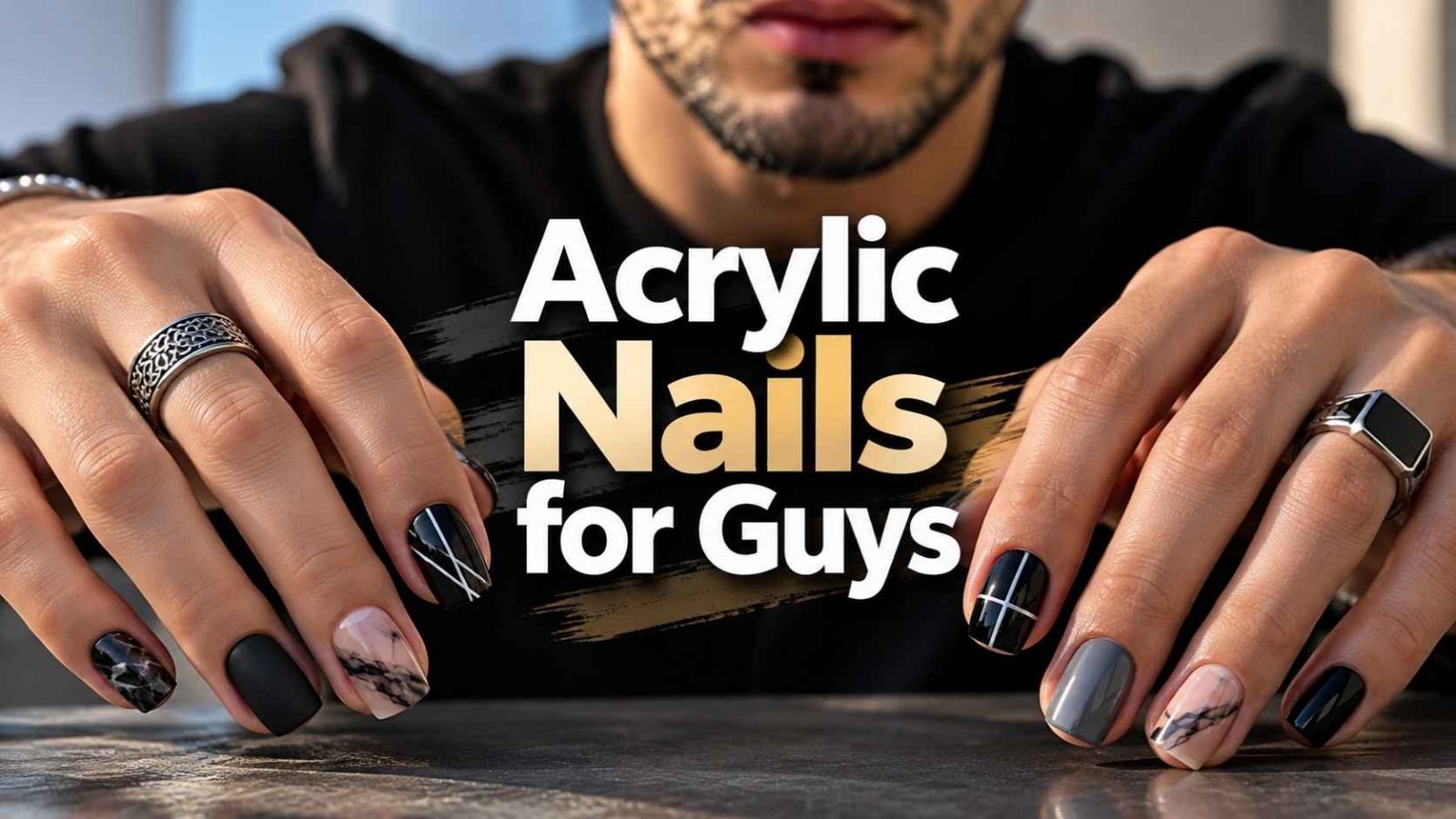
Acrylic nails for guys don’t need to be long, brightly colored, or designed to attract attention. A short, clear set can add structure to weak or ragged nails, while a matte black or French-tipped set can create a deliberate, polished look. The best style is the one that suits your hands, your routine, and your comfort.
The material itself has no gender. The “feminine” label comes from marketing and narrow ideas about grooming, not from anything in the chemistry. Men can wear nearly any acrylic shape or color, including a completely natural-looking finish.
The key is choosing a safe technician, protecting the natural nail, and maintaining the set before it lifts or cracks. Below is what you need to know before getting acrylic nails for the first time.
What Are Acrylic Nails for Guys?
Traditional acrylic nails are rigid enhancements made by combining a liquid monomer with a fine polymer powder. The liquid wets the powder, and a chemical reaction hardens the mixture into a durable plastic-like material. Traditional acrylic usually cures at room temperature rather than under a UV or LED lamp.
The finished product can be shaped into a thin overlay, used to repair part of a damaged nail, or applied as a full set across all visible fingernails. A full set is the most familiar option, although a repair or overlay is better when you only need support in one area.
A few terms often get mixed together, so it helps to know what each service actually involves.
| Term or look-alike | What it is | Why the distinction matters |
|---|---|---|
| Acrylic full set | Acrylic applied over most or all of each natural nail | It can add structure, color, and controlled length |
| Acrylic overlay | A thinner layer placed mainly over the natural nail | It supports the nail without creating much length |
| Acrylic fill or infill | Fresh acrylic added to the growing gap near the cuticle | It helps prevent separation and visible lifting |
| Gel nails | Pre-made or builder gel that cures under a lamp | Gel is not chemically the same as traditional room-curing acrylic |
| Dip powder | Powder applied over monomer and activator | It is a different system, although it can also contain acrylates |
| Press-on nails | Preformed nails attached with nail glue or adhesive | Nail glue does not replace acrylic monomer |
This difference matters when selecting products, removing an enhancement, or discussing an allergy. Someone can react to one nail system without reacting to every other adhesive.
Acrylic doesn’t make the natural nail grow. Your nail plate gradually grows out from underneath the enhancement, creating a small gap at the cuticle. That’s why fills are usually needed as the nail grows.
It can also remain attached if the natural nail is still growing. A full set left on too long may become unnecessarily thick at the front, snag on clothing, or stress the natural nail as the new growth moves underneath it.
Why Guys Get Acrylic Nails
The reason usually comes down to appearance, comfort, or nail condition rather than gender.
To Add Structure
A well-applied acrylic layer can give a short, uneven nail a more uniform shape. It can help with nail grooves, minor brittleness, and nails that look uneven because of minor damage. It doesn’t repair an infection or make a badly weakened nail healthy.
The natural plate still needs to be suitable for an enhancement.
If the nail is peeling, split, or painfully separated, address that problem before covering it. I wouldn’t recommend a new full set on a nail that’s still actively splitting or showing signs of infection.
To Grow Out a Biting Habit
Nail biting can damage the front edge, create uneven length, and make it difficult to apply a polished set. Acrylic creates a thicker barrier, but it doesn’t stop biting. If you continue biting the edge, the acrylic may crack or peel away with the nail.
My rule is straightforward: an acrylic set can support nail-biting recovery, but only when you’re also willing to stop the behavior that caused the damage. Addressing the habit gives you a much better chance of reaching a correction rather than constantly replacing damaged acrylic.
To Create a Consistent Look
Uneven nails can make short grooming look less finished, even when they’re healthy. A clear set can even out rough edges, fill small chips, and add a clean shape. Matte or glossy polish can then make the result feel more intentional.
For some men, a clear extension is also less noticeable than colored polish. It gives the hands a finished look without announcing itself.
To Add Controlled Length
Acrylic can add a small, medium, or dramatic extension depending on your personal preference. Short lengths are often easier to maintain because they’re less likely to bend against a keyboard, catch on fabric, or break during exercise.
Longer nails can still work in lower-impact environments, but they require more care. They may also affect grip, typing comfort, and the ability to perform certain tasks comfortably. If you work with your hands often, prioritize a practical length over simply choosing the longest option.
To Express Style Without “Nail Polish”
A clear, nude, gray, black, or French set gives you more control than a conventional polish color. A neutral finish can work with business-casual clothing, while a glossy accent can suit creative environments, events, or days when you want to make a statement.
You don’t need to explain the service or make it a permanent part of your identity. The nails are simply a grooming choice.
What Acrylic Nails Can Look Like
The most comfortable first design is usually the one you can forget you’re wearing. Some men never wear colored nail polish; others enjoy a precise French line or strong color. There’s no masculine checklist to follow.
The options below show a range of looks you can request by describing the finish rather than relying on a gendered label.
| Style | Appearance | Practical considerations |
|---|---|---|
| Clear natural | Transparent with a natural nail shape | Lowest visual contrast and easy to keep looking neat |
| Clear matte | See-through with a soft, low-shine finish | Shows fingerprints or surface oil less readily but may need refreshing |
| Nude or beige | Soft neutral color close to the skin tone | Works well when you want polish without a bold statement |
| Black | Deep, high-contrast color | Hides minor surface marks and looks deliberate in short or medium lengths |
| Gray or taupe | Neutral with a cooler tone | Useful for a modern look that contrasts less strongly than black |
| French tip | A clean color boundary near the tip | Can be nearly invisible, modern, or bold depending on line thickness and color |
| Glossy color | Shiny, high-finish polish | Durable when applied correctly and paired with good top care |
| Accent set | Color on one or two nails | Adds personality while keeping the overall look restrained |
| Smoky or ombré effect | Graduated or blended tone | Creates depth without requiring a completely uniform color |
If you want a clean color, you can compare long-wearing polish options before choosing the finish. A polish that needs constant touch-ups may create more maintenance than the acrylic itself.
Clear Acrylic
Clear acrylic is the easiest entry point because it can suit almost every outfit. Ask for a short length and a simple square, squoval, or oval shape. Avoid requesting an extremely thin, flat overlay if you want the set to add noticeable structure; some natural nails need more thickness for a balanced result.
A clear nail isn’t invisible. You may still notice the added shine, thickness, and cleaner cuticle line. A matte top coat can make the result more understated.
Nude and Neutral Colors
Skin tone and undertone matter more than gender. A neutral that complements your skin can look polished without looking obvious. Some men also prefer a transparent “skin-tone” enhancement that fills a ragged nail without making the color the main feature.
Don’t assume you need a color to make the set look professional. Clear and matte finishes can look equally finished.
Black and Dark Colors
Black is one of the most versatile choices for short nails. It can hide small marks, looks sharp, and works with a range of clothing. The front edge still needs to be well-maintained.
A black set shows chips, growth gaps, and uneven shaping more clearly than a clear set.
If the goal is discretion, choose a charcoal or deep navy shade. If you want a bolder look, use a true black or high-contrast color.
French Nails
A French manicure doesn’t have to be pale pink. The line can be white, black, blue, gray, or another color against a clear or neutral base. On shorter nails, the “smile line” can be narrow and understated.
I’d avoid an overly thick line if this is your first set. It’s difficult to correct quickly after the color is applied.
Matte and Glossy Finishes
Matte gives acrylic a softer look and reduces the shine associated with some traditional manicures. It can still show oil marks, so clean the nails with a compatible remover and avoid rubbing the surface aggressively.
Gloss looks polished but doesn’t automatically look feminine. The effect depends more on shape, color, and maintenance than on shine itself.
How to Choose Length and Shape
Start with how your hands function. A useful design should be comfortable while typing, exercising, opening doors, working with tools, or wearing gloves. The goal is to look good, not to constantly monitor your nails.
Pick the Length by Comfort, Not Gender
Here are the broad options:
- No added length: Shapes and reinforces the natural nail. This is the lowest-maintenance choice.
- Subtle length: Adds a small extension for a more uniform appearance while remaining practical.
- Moderate length: Makes the shape obvious and often creates a more dramatic manicure.
- Long length: Requires deliberate care and can interfere with tasks that require precise grip.
Long acrylic isn’t automatically stronger. A longer lever can create more stress on the front edge, especially if the apex or sidewalls are built incorrectly. More length also makes it easier to catch the nail on fabric.
If you play instruments, type heavily, work with tools, or train in a sport where your hands contact equipment, tell the technician. A short natural length is usually easier to live with.
Match the Shape to Your Hands
Short Square
Short square nails have a clean, structured appearance. Straight sidewalls and a flat color line can be difficult, so make sure the technician doesn’t over-square the corners. This shape is practical but still visibly manicured.
Squoval
A squoval blends a square base with rounded edges. It often looks softer than a square set and reduces sharp corners. For many men seeking a clear or neutral enhancement, this is one of the easiest shapes to wear.
Oval
Oval nails have curved sides and a rounded tip. They can look polished on both shorter and longer hands. A medium oval can be noticeable without creating the same bulk as a long extension.
Almond
Almond nails taper toward the tip and look sleek. The shape is attractive, but a very narrow version can be more fragile and less practical for heavy hand use. A wider almond is usually more forgiving.

Similar Posts