Acrylic Nails for Kids This Christmas: A Fun Guide
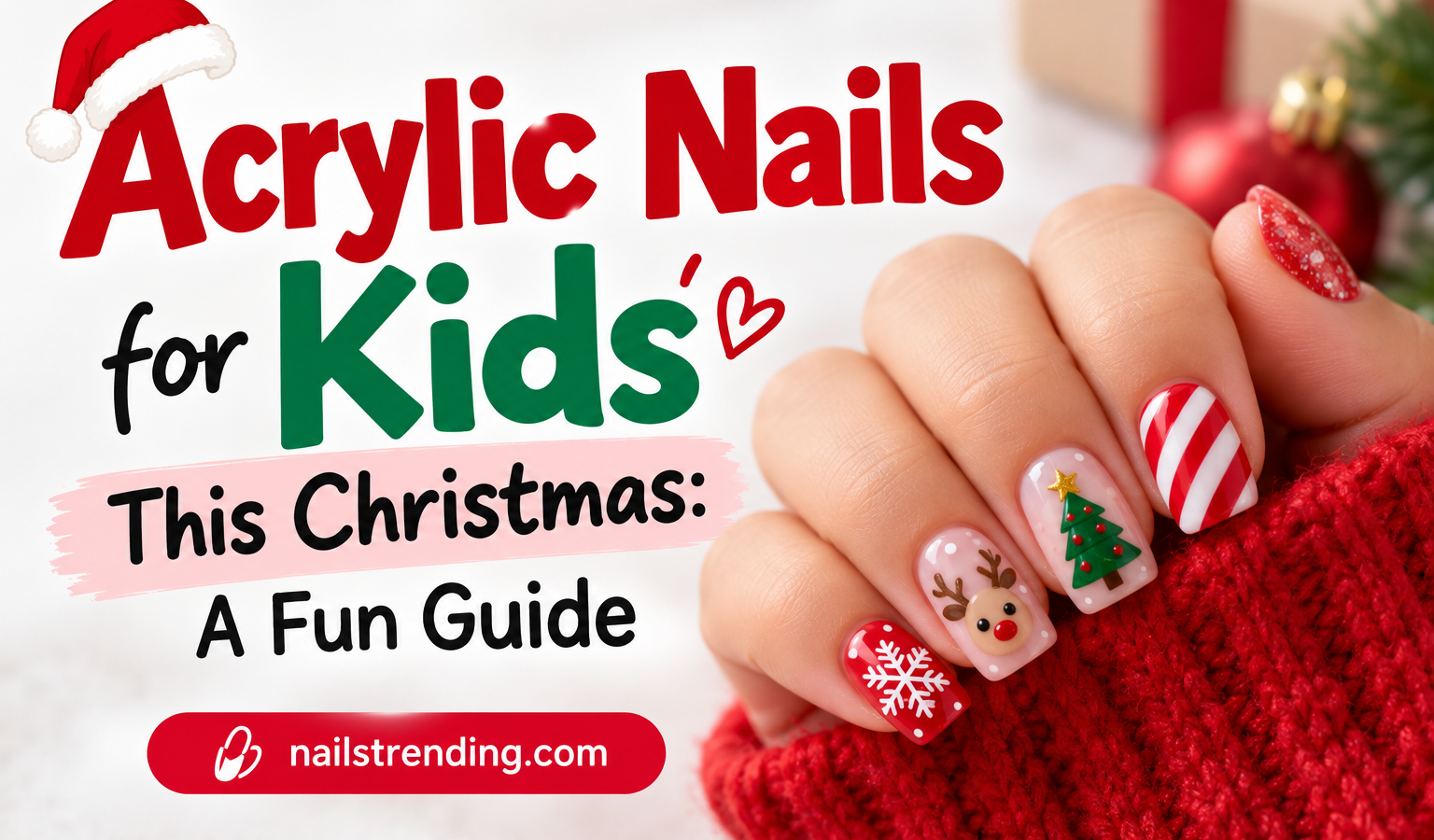
A Christmas manicure can be a fun holiday tradition, but a true acrylic manicure is not simply kid-sized nail polish. It involves filing the natural nail, mixing a polymer powder with a liquid monomer, and leaving a rigid enhancement in place for weeks. That creates more chemical exposure, more nail preparation, and a longer removal process.
My advice is straightforward: for younger children, choose a temporary holiday manicure such as stickers, regular polish, or well-fitted press-ons. A true acrylic overlay may be worth discussing for an older teen who understands the commitment, has healthy natural nails, and will not bite or pick at the manicure. Long sculpted extensions should be a separate, and much more cautious, decision.
The best age-appropriate holiday manicures vary by age
There is no universal, medical “safe age” for true acrylic nails, and salon policies differ. As a conservative planning guide, I would skip true acrylic overlays for children under 12. Tweens should usually begin with regular polish, stickers, or press-ons.
Older teens can consider a short acrylic overlay only after a proper consultation, with a salon that prioritizes nail health and safe removal.
These age bands are not medical clearance. A child’s nail condition, tendency to bite their nails, skin sensitivities, maturity, and ability to leave the manicure alone matter more than a birthday alone.
For most children, the best Christmas manicure is the one that delivers the festive look without turning a nail treatment into a long-term commitment. A quick-dry polish, festive decals, or professionally fitted press-ons can still feel special while giving the natural nails time to rest.
What Counts as Acrylic?
The word “acrylic” gets used loosely in nail salons and online. Several completely different methods may be described with the same term.
| Manicure type | What it involves | General fit for children | Main concern |
|---|---|---|---|
| Festive nail stickers or decals | Decorative designs placed over the natural nail | Often the simplest choice for younger children | Adhesive may irritate skin if left too long |
| Regular nail polish | Color painted directly onto the natural nail | Suitable for many older children and teens | Chips, repeated removal, and temptation to pick |
| Press-on nails | Preformed tips attached with glue or adhesive tabs | Can work for older children with adult help | Tight sizing, glue ingestion risk, and forceful removal |
| Gel manicure | Resin-style product applied and hardened under a lamp | Better reserved for responsible older teens | Long wear, acrylate exposure, and removal by a professional |
| Dip powder | Color powder applied to nail product over the natural nail | Not automatically safer than acrylic | Long wear and exposure to acrylates or related chemicals |
| True acrylic overlay | Acrylic powder and liquid applied over the full natural nail | A cautious option for some older teens | Filing, monomer exposure, allergies, and removal trauma |
| Sculpted acrylic extensions | Acrylic shaped to add length using a form or tip | Usually a poor first choice for a child | Long extensions create snagging, biting, and injury risks |
A true overlay adds little or no length. It is different from a long extension, although the same liquid-and-powder system may be used. Even a short overlay still requires the natural nail to be prepared and the enhancement to remain in place while the child goes about daily life.
I wouldn’t describe dip powder, gel, or “acrylic-look” products as safer simply because they use different application methods. They can have similar long-wear, allergy, removal, and nail-bitten concerns.
Choosing a Christmas Manicure by Age
Age is only one part of the decision. The following guide is based on a conservative approach to holiday nail care rather than a fixed medical rule.
| Age group | My recommendation | Useful holiday options | Why |
|---|---|---|---|
| Under 5 | Keep the manicure temporary and glue-free where possible | Festive stickers, removable decals, nail art drawn with a child-safe marker | Young children are more likely to chew small decorations or damage long-lasting enhancements |
| Ages 5–8 | Choose a short, adult-managed visit | Stickers or regular polish that an adult removes | Avoid long extensions, thick overlays, and products left on for weeks |
| Ages 9–11 | Favor low-commitment options | Regular polish, nail wraps, or carefully fitted press-ons for an older child | The child can still change the manicure as their preferences and habits change |
| Ages 12–14 | Treat true acrylic as a consultation, not an automatic yes | Polish, press-ons, or a very short professional overlay only if all readiness checks are met | Nail biting, picking, and impatience during removal remain common concerns |
| Ages 15–17 | A short overlay may be considered for a responsible teen | True acrylic overlay after a salon consultation; extensions remain a separate choice | Maturity, nail health, product disclosure, and a removal plan are more important than age alone |
A child is not ready for true acrylic if they plan to bite the enhancement off, pick at the edges, or refuse removal when it starts to lift. A child who has eczema around the nails, damaged cuticles, recent nail injuries, active infection, or a known reaction to beauty products may be better served by a polish-free holiday look.
My conservative starting point is no true overlay under age 12. From 12 to 14, I would still choose a temporary method unless there were compelling reasons to consider professional acrylics. By 15 or 16, the decision can become more reasonable for a responsible teen, but it should never be based on age alone.
Why True Acrylics Deserve Extra Caution on Children
Acrylate allergy can develop without warning
Acrylic nail systems can contain methacrylate or acrylate chemicals. These include monomers such as ethyl methacrylate, hydroxyethyl methacrylate, or methyl methacrylate, depending on the product. The FDA’s guidance on nail products and acrylate chemicals notes reports of allergic reactions associated with methyl methacrylate in nail products.
A reaction is not always a sudden burning sensation during the appointment. It may show up later as itching, redness, swelling, burning, cracking, or a rash around the nail. Sensitivity can develop after repeated exposure, even when earlier applications caused no problem.
A small patch test at a salon is not proof that a child will not react. It does not perfectly reproduce application on the nail folds, and the product may not be fully representative of later exposure. If a child has ever reacted to nail products, a dermatologist or pediatric clinician should guide the decision.
Long wear creates ongoing exposure
A quick holiday manicure might be removed after one evening. A true overlay may remain for several weeks. During that time, the child touches the product hundreds of times, washes their hands, exposes the nails to water, and possibly chews or picks at the edges.
Long wear can also hide lifting near the sidewalls, where a child may play with the product or invite irritation. For a child who changes hobbies, sports, or routines quickly, a long-wear manicure can be a poor fit even when the application itself goes well.
Preparation can damage the natural nail
A smooth application depends on careful preparation, but “better” does not mean removing more natural nail. Over-filing, scraping the nail plate, cutting cuticles, or pushing too aggressively can leave the nail thin, tender, or uneven.
Children may also have more hangnails or bitten nail edges. Applying product over damaged skin increases irritation risk and can make removal harder. A careful professional should stop if the nail or surrounding skin is broken.
Removal can cause more trauma than application
Acrylic should not be peeled or snapped off. Proper removal may involve controlled soaking and filing, but repeated soaking, scraping, pressure, or rushing can damage the natural nail. An impatient child who pulls at a lifting edge can create the same problem in seconds.
Before any long-wear manicure, ask what removal will involve and who will perform it. A parent should know where to return if the enhancement starts separating before the planned fill appointment.
Long nails are tools, toys, and potential hazards
Long extensions can catch on sweater cuffs, car seats, sports equipment, hair, and school objects. A child may use the nails to pick at labels, scratch stickers, or pry open containers. These habits can lead to bent nails, tearing, or a visit to urgent care.
A short overlay minimizes the problem, but it does not remove it. Length should be chosen for the child’s actual routine rather than for a holiday photograph.
Small decorations and adhesives create a separate safety issue
Christmas nail art may include rhinestones, glitter, small stickers, or charm-like decorations. A younger child may pull one off and put it in their mouth. Adhesive bottles can also be mistaken for nail polish or another familiar product.
Any loose decoration should be avoided for young children. Nail glue and removable accessories should stay out of reach and be stored closed after use.
Festive Christmas Nail Ideas That Work for Kids
The safest design is also often the easiest one to remove. A child does not need ten tiny illustrations to have a memorable holiday manicure.
| Christmas design | Kid-friendly version | Best method | Watch for |
|---|---|---|---|
| Holly | Short red and green nails with a few simple dot details | Regular polish or press-ons | Long freehand lines that encourage picking |
| Candy cane stripes | Curved red and white strokes on a short nail | Regular polish or nail art stickers | Very thin stripes that chip quickly |
| Snowflakes | White or silver snowflake decals on one or two accent nails | Stickers or press-ons | Loose rhinestone snowflakes on young children |
| Reindeer | Two simple dots and short antlers | Nail art stickers for younger children; polish for older teens | Overly detailed faces that take a long session |
| Christmas ornaments | Metallic red, green, gold, or silver nail with a small dot | Polish, topcoat, or press-ons | Excess glitter and difficult cleanup |
| Santa hat | Red French tip with a white edge | Polish or press-ons | Looking too much like a long extension |
| Rudolph red | Glossy red nails with one themed accent nail | Polish or press-ons | None beyond normal chipping |
| Snowy sparkle | Soft white or silver with one glitter accent nail | Polish or decals | Glitter spreading onto clothing or floor |
| Pine green and red | Simple alternating colors with a matte topcoat | Regular polish | Uneven application on very short nails |
| Classic red bow | A tiny painted or stick-on bow on one accent nail | Stickers for most children | Hard, raised glue decorations |
For children who bite their nails, the simplest polish is the safest choice. Trying to disguise a large bitten or uneven nail with an elaborate design often makes the problem more noticeable. Two thin color coats and a short, rounded shape usually look cleaner than one thick coat with tiny details.
If regular polish is the chosen option, a reputable retailer or salon is a better place to start than an unlabeled bottle found in a bargain bin. A trusted selection of polish options can make it easier to compare basic products without relying on unsupported “kid-safe” claims.
For faster drying, use the product directions and allow enough time between coats. The child should not wave their hands vigorously, rub the polish, or use a hairdryer unless the polish maker specifically permits it. Simple speed-drying habits can reduce waiting without forcing a quick but damaging application.
Safer Alternatives to True Acrylic for a Kid Christmas Manicure
Festive stickers and decals
Nail stickers are often the easiest Christmas option for a younger child. An adult can apply them at home, and there is no filing, monomer, sculpting, or soaking.
Choose age-appropriate designs with no loose gems or very small detachable pieces. The quick decorative decal method can work well for simple snowflakes, stars, Santas, and candy canes. Follow the product directions, press the decal between two clean surfaces, and avoid picking at its edges.
Regular nail polish
Regular polish has less wear time and can be removed without grinding or extensive filing. It may still cause irritation, especially if it contacts damaged cuticles or is left on for weeks. Use it only when the child can cooperate with application and removal.
Keep polish off hangnails, cuts, and irritated skin. Do not use nails as scrapers once the manicure is done. A younger child’s first holiday manicure should be a short, low-pressure event rather than a long appointment.
Press-on nails
Press-ons can create a bold holiday look without mixing chemicals or shaping the natural nail. They still require careful sizing, and glued nails should be fitted and removed by an adult with a younger child.
Choose a size that fits without forcing the nail sideways, stretching the fingertip, or trimming the tip right before application. Keep glue away from the cuticle and skin. Do not use glue if the child has a known adhesive reaction.
A simple press-on routine works best when the adult controls the fitting and the child understands that the nails are decoration, not tools for opening packages or scratching off labels.
Nail wraps or seasonal nail art
Nail wraps can give a more finished manicure than a single coat of polish and generally offer a shorter commitment. They still need careful fitting and removal, so the same concerns about adhesive, damaged skin, and picking apply.
Hand-painted nail art, stickers, and make-up-style nail products should not be applied by the child without adult supervision. Products intended for facial cosmetics should never be substituted for nail products.
A polish-free holiday look
Sometimes the best manicure is not a manicure at all. A parent can give the child a special nail-care moment by using cuticle oil, hand cream, a warm soak, and nail art stickers. This gives the child an enjoyable Christmas ritual without committing the natural nails to a long-wear product.
A proper nail soak does not need to include nail glue, acetone, harsh clipping, or cutting. Moisturizing the hands afterward is a simple way to help the child notice how the natural nails change from week to week.
What to Look for in a Kid-Friendly Nail Salon
A salon may offer a “kids’ manicure” without giving children a true acrylic overlay. That is a positive sign. The technician should be able to explain why a different method suits a particular age and nail condition.
Ask these questions before booking
The first question should ask whether the salon is genuinely recommending true acrylic or another method. The parent should then inquire about the minimum age for that service and the salon’s policy for minors. It is also important to determine whether the same price applies to a child’s service.
Questions should also address whether a guardian must be present and whether the salon can avoid an electric nail drill. The discussion must cover how the natural nail will be prepared and what happens if the child has hangnails, bitten nails, eczema, or damaged cuticles. The technician should be asked if the full system and important ingredients can be identified before starting.
Parents should also ask whether the product contains HEMA, MMA, or other acrylates, and if the technician is unsure, they should be asked to check with the manufacturer.
Finally, inquire about dust control and ventilation and whether one adult can observe the entire service. The family should also ask if the nail enhancement is being applied over the natural nail, adding length, or both. The parent must verify whether the salon provides a safe removal process and how long the child can safely leave the nails on.
The salon should be asked whether they can take a short break if the child feels overwhelmed.
A parent can say:
“My child is [age] and sometimes bites or picks at their nails. Please tell me the difference between press-ons, gel, dip, and true acrylic. Can you do the service without a drill, cutting the cuticles, or aggressive filing? I also want to know what removal will involve.”
The child should never be told that a painful service is simply something they must tolerate. A good technician will stop if the child panics, repeatedly pulls away, or asks to stop.
Green flags and warning signs
A reliable salon should be evaluated based on specific warning signs to help parents identify safe practices.
| Green flags | Warning signs |
|---|---|
| Explains the service and removal process | Promises that a product is “allergy-proof” |
| Asks about nail biting, eczema, and previous reactions | Says every child is eligible because the salon has child-sized tips |
| Uses clean, properly disinfected tools and fresh or sanitized files | Refuses to explain sanitation procedures |
| Keeps the service short and stops when the child is distressed | Rushes the appointment or discourages breaks |
| Recommends a temporary method when appropriate | Insists that long nails are necessary |
| Can identify the system and disclose known ingredients | Mixes products from different systems or decants unlabeled powders |
| Discusses when and how the enhancement will be removed | Treats nail damage or prolonged pain as normal |
| Allows a parent to observe or stay close | Pressures the child into extensions after hearing “no” |
A basic nail file that has touched one client’s nail should not simply be moved to another child. The salon should be able to explain its sanitation procedure and local requirements. Nail salons in the United States may be regulated by state or local boards, and a parent can verify a license through the relevant state board rather than relying only on a social media profile.
Understanding Acrylic, Gel, and Nail-Product Ingredients
Calling a product “acrylic” does not reveal its full formula. It identifies a broad product type, not a single ingredient. Different systems may use different monomers, stabilizers, colorants, adhesives, and primers.
Terms like “non-toxic,” “5-free,” “11-free,” “HEMA-free,” “MMA-free,” and “hypoallergenic” can help a shopper ask better questions, but none should be treated as proof that a manicure is safe for every child.
A product that avoids HEMA may still contain other acrylates or methacrylates. A product that is free of MMA may still contain HEMA. A manufacturer may also change a formula or use different ingredients by market or product line.
Several common terms are used in nail products, each with specific characteristics. Understanding these components helps clarify what a product contains.
| Term | What it means in a nail system | Why it matters |
|---|---|---|
| Acrylic powder | The polymer powder used to build the enhancement | It is one part of a system and should not be treated as the whole product |
| Liquid monomer | The liquid mixed with acrylic powder | Some monomers are associated with contact allergy and irritation |
| EMA | Ethyl methacrylate, a monomer used in some systems | The exact formula depends on the manufacturer |
| HEMA | Hydroxyethyl methacrylate, found in some nail products | It is a recognized nail-product allergen |
| MMA | Methyl methacrylate, used in some nail-related products | The FDA has received reports of allergic reactions associated with MMA exposure |
| Photoinitiator | A component used in some lamp-cured products | It starts the curing process in gel-style systems |
| Primer or adhesive | A product applied to improve bonding or attachment | These can contain ingredients separate from the visible color system |
| Topcoat | A protective layer applied over polish or another product | It has its own ingredients and can chip, peel, or require additional removal |
In the United States, most cosmetic products are not individually preapproved bythe FDA before being sold. Instead, manufacturers are responsible for substantiating the safety of their products and complying with applicable rules. That does not mean every product is unsafe; it means “FDA-approved” is not a useful claim to look for on a child’s nail product.
A parent can ask for the brand, product name, ingredient information, and safety data where available, then contact the manufacturer if the label is unclear.
How to Prepare for a Kid’s Christmas Nail Appointment
A good holiday manicure starts before the child sits in the salon. A few minutes of preparation can prevent most last-minute problems.
First, decide what “Christmas nails” means for your child. Are you looking for red and green polish, snowflake stickers, a full glitter manicure, or a long-lasting nail enhancement? These are very different services.
If the child is under 12, a temporary manicure usually gives the best balance of fun and ease.
Next, write down any nail concerns. Tell the technician about:
- Nail biting, picking, or chewing
- Hangnails or recently damaged cuticles
- Eczema, psoriasis, or sensitive skin around the nails
- A known allergy to adhesive, latex, fragrance, or nail products
- A recent manicure, gel removal, or nail injury
- Sports, swimming, dance, or other activities that may stress the nails
- Any sensory sensitivities that make a long appointment difficult
Choose a salon before the holiday rush when possible. A rushed appointment is more likely to involve improper preparation, a rushed removal, or a child being pushed through a service she does not want. Tell the salon the child’s age at booking instead of waiting until arrival.
Allow a short, flexible appointment. A child who is excited about a manicure at the beginning may lose interest halfway through. A simple design, a break, and plenty of time for questions are better than a complicated holiday theme that needs several extra coats.
The child should understand what is about to happen. Explain that the nails may be filed lightly, that a normal manicure may feel warm, and that they can raise a hand or say “stop” at any time. This is especially important with a loud nail drill, uncured product, or a long wait.
A child’s request to stop should be taken seriously.
For a true overlay, the parent should plan for professional removal instead of treating it as a permanent change. Make sure you know who will remove the enhancement, what the process involves, and what should happen if the nail starts lifting before the planned fill appointment.
Leave enough time before Christmas for the manicure to settle. If the child is getting polish, a few quiet hours are helpful. If a professional is applying an enhancement, a few days before the holiday is better than the day of the party.
That gives you time to contact the salon if the child dislikes the result or develops irritation.
Do not apply lotion, hand cream, or cuticle oil immediately before a polish application unless the salon tells you to. Oil on the nail plate can interfere with adhesion. If the child has dirty hands, wash and dry them well before the appointment.
What a Careful Professional Acrylic Appointment Should Look Like
A true acrylic overlay is more involved than simply painting the natural nail. A careful appointment should include a clear explanation, gentle preparation, controlled product handling, and a removal plan.
1. The technician explains the service
Before touching the nail, the technician should explain whether the service is:
- A natural-nail overlay
- A tip with added length
- A full sculpted extension
- A gel manicure
- A dip-powder manicure
- A press-on application
- A temporary polish or decorative service
Ask the technician to point out the difference between an overlay and an extension on a sample tip. An overlay may add strength or a very small amount of shape while keeping the natural nail length. An extension adds length using a form, tip, or other support.
2. The natural nail and surrounding skin are checked
The technician should look for cuts, hangnails, redness, swelling, infection, or a damaged nail plate. A manicure should not be applied over irritated skin or a broken nail without addressing the problem first.
A child who has been biting their nails may still be a candidate for a simple manicure, but the nail edges and cuticles need extra care. The technician should not treat bleeding or torn skin as a minor inconvenience.
3. Preparation is gentle
Some filing is often needed to create a clean surface. Excessive filing, scraping, cutting, or cuticle removal is not a necessary part of a safe child manicure. Ask the technician to avoid working on damaged cuticles and to stop if the child is uncomfortable.
An electric file is not automatically dangerous when used properly, but it can create dust, heat, vibration, and noise. For a child, a salon that can use a gentle hand file or a low-dust, child-friendly technique may be a better fit. You do not have to accept a drill simply because the salon usually uses one.
If the child has sensory sensitivities, ask about noise, vibration, strong smells, and the length of the appointment before booking.
4. Product contact is limited
The liquid component of an acrylic system can irritate skin and eyes. It should not touch the cuticle, hangnails, cuts, or the sides of the fingers. The technician should use a controlled application process and keep the product off the skin whenever possible.
A salon should not casually pour product onto a tray near a child’s hands or allow a child to touch uncured material. The parent should ask what protective measures are used and what happens if a small amount of product touches the skin.
Ventilation and dust control also matter. A nail appointment should not take place in an unventilated space where fumes or filing dust can collect. A child should not be allowed to play with product containers while the technician is working.
5. The shape and length suit the child
For a first true overlay, a short rounded or softly squared shape is usually more practical than a dramatic extension. A child’s fingers should lie comfortably when relaxed, and the nail should not press into the fingertip.
Avoid long pointed shapes for everyday wear. Stiletto, claw, and sharply tapered nails catch on clothes and objects. Even a relatively short extension can change how a child types, writes, plays, or opens packages.
6. The child receives aftercare and a removal plan
The parent should know:
- How long the manicure is expected to last
- When a fill may be needed
- What signs require early removal
- How to protect the nails during daily activities
- Who to contact if the enhancement lifts
- How the enhancement should be removed
A child should not be told to wait until the enhancement is uncomfortable. Pain, redness, swelling, lifting, or a sharp edge should be assessed promptly.
Can You Do Christmas Acrylic Nails at Home?
I would not recommend a child doing a true acrylic application at home, even if the parent is experienced with the process on an adult. The main concern is not only skill; it is the combination of a small child, a moving hand, uncured chemical product, and a process that requires careful timing and cleanup.
Why home application is a poor fit for a child
A child may pull away, bump the other nails, spill liquid, or touch the product. The adult then has to manage the child while trying to protect the skin and maintain the correct product ratio. A small mistake can lead to skin irritation, an uneven enhancement, or damage during later removal.
At-home application can also make it harder to identify the complete system. Monomer should never be mixed casually with a powder from another brand or a random product found in a craft or discount store. Gel, dip, and acrylic systems are not interchangeable.
Mixing products can create unpredictable adhesion and make removal more difficult.
Adult-only safety practices matter. Monomers and some removal solvents can produce strong fumes and may be flammable. They should never be used near an open flame, candle, heating device, or other ignition source.
Children should not be in the room while an uncured product is being mixed or applied.
Safer at-home options
A holiday manicure at home can still feel special without the risks of a full overlay. Consider:
- Regular polish in two or three simple colors
- Nail stickers or decals
- Nail wraps applied carefully by an adult
- Press-ons sized and fitted by an adult
- Glitter polish used sparingly
- A hand soak followed by hand cream and temporary nail art
An adult can supervise the whole process and remove the manicure before the child loses interest. This is especially useful for younger children, who may not be able to sit through a long appointment or follow complicated aftercare instructions.
If an older teen is asking for a true overlay, book a professional consultation instead of handing them a product and a tutorial. An in-person conversation can address nail health, allergies, length, maintenance, and removal in a way that a screen cannot.
How Long Should a Child’s Holiday Acrylics Last?
There is no fixed lifespan for acrylic nails. Nail growth, product thickness, daily wear, and nail-biting habits all affect how long an overlay or extension lasts. A natural-nail overlay may need attention sooner than a thick extension, while a child who picks at lifting edges may need removal almost immediately.
Many manicure plans involve returning for a fill before the visible gap becomes large. The right interval depends on the salon’s system and the child’s nail growth. A parent should ask for a removal date as well as a fill schedule.
For Christmas, it is often more useful to plan around the holiday than around an ideal nail-growth timeline. A child who wants the manicure for a Christmas party may not want to keep the same style for weeks afterward. A temporary option can be removed after the event and replaced with a new design.
A short overlay may be scheduled a few days before the holiday so the technician can check the fit and the child can become familiar with the nails. Long extensions are harder to justify for a one-day event because the child must still live with them during the following weeks.
Signs the manicure should be checked sooner
Ask the salon about an earlier visit if the child develops:
- Pain or tenderness under the nail
- Redness or swelling around the nail
- A lifted edge that catches on clothing
- A nail that bends, splits, or separates
- A sudden change in the child’s ability to use the finger
- Repeated picking, biting, or attempts to remove the nails
Do not use glue, tape, or household products to fix a lifting overlay. Let the technician assess the bond. A small gap may look harmless but can become a route for irritation or infection if the child keeps touching it.
Safe Removal and Aftercare for Children
Let a professional remove true acrylics
A child’s true acrylic overlay should be removed by someone trained in the system being used. The parent should not plan to peel, snap, or clip it off at home. Those methods can take healthy nail material with the enhancement.
Controlled removal may involve reducing or lifting the product, soaking when appropriate, and gently filing the remaining surface. The exact process depends on the product and the condition of the nail. A good technician will stop if the nail becomes painful or fragile.
The child should be told what removal will feel like and how long it may take. If the child is uncomfortable, the parent should ask the technician to pause rather than force the process to continue.
If the nail is already damaged, the technician may choose a slower approach or recommend waiting for a healthier nail edge to grow. “Getting it all off today” is not worth sacrificing the natural nail.
What if the child bites or picks at the enhancement?
Treat biting as a sign that the manicure does not fit the child’s habits. Do not shame the child or tell them to simply stop. A child may bite because the nails feel unfamiliar, too long, loose, or uncomfortable.
If the child has damaged the edge, stop using the remaining enhancement if it catches or exposes the nail. Contact the original salon when possible. If the nail is painful, bleeding, swollen, or separated, seek medical advice for the injury rather than trying to fix it with more nail product.
For a very short overlay, a professional may decide that a temporary manicure is safer until the biting habit improves. Press-ons and polish can help the child enjoy a holiday look without reinforcing the behavior of pulling at a bonded enhancement.
Accidental exposure or ingestion
Monomer, nail glue, and removal products should be stored in their original containers and kept out of reach. Do not pour them into unlabeled cups or bottles. If a child gets product on the skin, move the child away from the product and rinse the affected skin with plenty of water.
For eye contact, rinse the eye gently with water for 15 to 20 minutes and contact Poison Control or a medical professional if symptoms continue.
If a child swallows nail product, do not induce vomiting. Call Poison Control or seek emergency medical advice. In the United States, the national Poison Control number is 1-800-222-1222.
If the child has trouble breathing, is unconscious, or has a severe reaction, call emergency services immediately.
Do not use a hairdryer, heater, or open flame to speed drying. Some solvents produce harmful fumes, and heat can increase irritation or fire risk.
Care after a temporary manicure
After polish, decals, wraps, or press-ons come off, keep the natural nails dry for a short time and avoid aggressive soaking. Moisturize the hands and cuticles gently. Do not clip or peel the remaining product if it is attached.
A sensible post-visit nail care routine can help a parent support the natural nail after a long-wear service, but no product can instantly repair a nail that was filed or torn. If the nail plate is split, bleeding, or very thin, a salon or healthcare professional should advise the next step.
Do not promise that nail growth will repair damage by a certain date. Nails grow at different rates, and an injury can affect how long the visible problem lasts. The safest approach is to keep the area clean, avoid further trauma, and let the healthy nail grow out.
The Best Length and Shape for a Child
If an older teen receives a true overlay or a very short extension, the shape should reflect her daily routine. A short, rounded shape is usually the most forgiving. A soft square can also work if the corners are not sharp.
A long extension is a lifestyle commitment, not just a holiday accessory. Ask the child to consider whether she will be able to:
- Type or write comfortably
- Use a pencil or stylus
- Wear gloves
- Play a musical instrument
- Exercise or swim
- Sleep without catching the nails
- Open packages and food containers
- Keep the nails from biting or picking
A child who plays sports should not choose a long sculpted shape. A child who uses her hands for drums, guitar, art, or other detailed work may need a shorter length. A salon should be willing to recommend less rather than push a dramatic holiday design.
If the child is under 12, the practical answer is usually no added length at all. Stickers and polish can provide a bold look without changing the child’s ability to play and explore.
A Simple Decision Checklist for True Acrylics
True acrylics may be worth discussing only when most of these answers are “yes”:
- The child is an older teen, not a young child.
- The child wants the manicure herself and understands the maintenance.
- She does not bite, chew, pick, or repeatedly try to remove the nails.
- The natural nails and surrounding skin are healthy.
- There is no known allergy or previous reaction to nail products.
- The family can attend a professional consultation.
- The salon will not use aggressive filing or cuticle cutting.
- The chosen length is short and practical.
- The salon can explain exactly what is being applied.
- The family has a plan for safe removal before the enhancement becomes damaged.
- The child can say “stop” and have the appointment paused.
- The holiday event is important enough to justify a multi-week commitment.
If the answer to any safety question is “no,” choose a temporary manicure instead. A child’s age is a useful starting point, but readiness and health are better guides than a birthday.
When to Skip Acrylics for Christmas
Skip true acrylics, gel, dip powder, and long press-ons when any of the following is true:
The child is still biting her nails
A bite can damage both the natural nail and the enhancement. It also makes proper removal harder. A simple polish manicure or sticker set is a better fit.
The child has damaged cuticles or an active skin problem
Do not cover irritated skin with a product. Hangnails, eczema, redness, and open cuts need care before a manicure. A nail salon should not treat a skin infection as a cosmetic issue.
The family wants the nails removed after Christmas
A true overlay remains in place longer than a holiday event. If the goal is only a Christmas picture, use polish, wraps, stickers, or press-ons that can be removed easily.
The child changes her mind quickly
Long-term enhancements require patience. If the child is unsure about color, length, or even having nails painted, do not turn the uncertainty into a chemical commitment.
The appointment is rushed
If the salon cannot explain the system, discuss allergies, or answer questions about removal, move to a more transparent appointment. A cheaper or faster service is not a bargain if the nail is damaged afterward.
The child has sensory sensitivities
Strong smells, noise, vibration, waiting, and having an adult hold a hand can make a nail appointment difficult. Choose a quiet, low-sensory salon or use a temporary option at home.
The family cannot monitor maintenance
A fill, lifting edge, or injury needs prompt attention. If no adult can watch for problems and arrange follow-up, a short-wear manicure is safer.
Common Mistakes Parents Make Around Christmas Acrylics
Treating a child like a small adult
A child’s nail plate may be smaller, and their habits may be less consistent. A service that works for an adult may not work for a child who bites nails or uses her hands constantly.
Choosing a dramatic length for one holiday
Long extensions may look fun in a photograph but interfere with school, sleep, sports, and play. A holiday look should not create more problems than the child wants to manage.
Believing “gel” or “dip” is automatically safer
Different does not mean risk-free. Gel and dip systems may offer long wear and can also involve acrylates, adhesives, skin contact, and removal by a professional. Ask for the actual ingredients and system used.
Asking for a drill without a reason
A nail drill can be useful in some professional applications, but a child does not need to tolerate one if a gentler, lower-dust method is available. Ask about noise, heat, vibration, and alternatives.
Applying glue to the cuticle or skin
Press-on adhesive should not be placed on irritated skin. A badly fitted nail can be more damaging than a simple polish manicure. An adult should control the fitting and removal for a younger child.
Removing product at home by force
Peeling, snapping, scraping, or clipping true acrylics can take the natural nail with them. A child’s nails are not a suitable test of how much product can be pulled off without pain.
Booking the first attempt days before Christmas
A child may hate the length, develop a reaction, pick at a lifting edge, or change their mind. A few extra days give the family time to contact the salon and choose a safer alternative.
Forgetting about the child’s consent
A child may agree to a color and then dislike the shape, or agree to a manicure and panic when the appointment starts. A good salon should treat the child’s comfort as part of the service.
Storing products where children can reach them
Christmas cleanup time can put nail products near crafts, medications, or household supplies. Keep bottles closed and stored according to their labels. Do not transfer product into beverage bottles or unlabeled containers.
How to Make a Christmas Manicure Feel Special Without Long Nails
A memorable manicure does not have to be the longest or strongest one. A parent can make the appointment feel like a holiday event by involving the child in the design.
Let the child choose two colors from a small seasonal palette. Options include:
- Classic red and deep green
- Cranberry and soft pink
- Holly green and warm gold
- Candy-cane red and white
- Icy blue and silver
- Forest green and cream
- Plum and rose gold
- Burgundy and charcoal
For a younger child, a simple two-color design is easier to understand and remove. For an older teen, a tasteful accent nail or matte finish can feel more grown-up without requiring long extensions.
Nail art can be themed without becoming complicated:
- One snowflake accent nail
- Two tiny reindeer antlers on an accent nail
- A small red bow
- A gold line that suggests ornament trim
- White dots that look like falling snow
- A matte green nail paired with a glossy red nail
- A silver or pearl accent on one or two nails
Avoid loose rhinestones and very small three-dimensional decorations for younger children. A tiny charm can disappear in a pocket, on the floor, or in a child’s mouth. Stickers are easier to control and remove.
For a short appointment, a family can also use a coordinated color on the hands and a simple holiday-themed nail sticker on one nail. This creates a polished look without a long sculpting session.
If the child enjoys regular polish, allow the manicure to be part of the Christmas routine. A hand soak, a short application, a holiday playlist, and a photo with the finished nails may be enough to make the day memorable.
Choosing Between Press-Ons, Gel, Dip Powder, and Acrylics
Ask the salon to compare the services on a nail tip or diagram. The names are not always used consistently, so focus on what is actually applied and how long it stays on.
| Question | Why it matters |
|---|---|
| Is the product painted directly on the natural nail? | Direct polish usually has a shorter commitment than a bonded enhancement |
| Is an overlay applied over the full natural nail? | It may add strength but still requires filing and removal |
| Is length being added? | Added length creates more snagging, biting, and impact risk |
| Is the product lamp-cured? | A gel-style product creates a different long-wear commitment |
| Is powder applied with a dip system? | The application and removal process may be unfamiliar to the parent |
| Are press-ons glued on or attached with tabs? | Adhesive and removal risks differ between methods |
| How long before the product must be removed? | A holiday look may not justify a several-week service |
| What happens if the child bites or picks? | The salon should have a plan for early removal |
When comparing methods, focus less on the label and more on the contact time, ingredients, preparation, and removal. “Natural-looking” does not automatically mean “chemical-free,” and “long-lasting” does not automatically mean better for a child.
A Practical Christmas Planning Timeline
For a family considering a kid’s Christmas manicure, a simple schedule works well.
Four to six weeks before Christmas
Decide whether the goal is a temporary holiday look or a long-wear enhancement. If there is any uncertainty, book a regular manicure, nail art session, or press-on fitting instead.
If true acrylics are being considered for an older teen, schedule a consultation now. Do not wait until the final week.
One to two weeks before Christmas
Ask the salon to explain the service, ingredients, length, maintenance, and removal. Confirm that the technician is comfortable working with the child’s age and nail habits.
Check whether the child has had any nail damage, biting flare-up, eczema, or product reaction since the last manicure.
A few days before the event
For a true overlay, leave time to contact the salon if the child dislikes the fit or experiences irritation. Avoid scheduling on a day when the child has a school presentation, a sporting event, or a special activity that may damage the manicure.
For a temporary manicure, schedule when the child can rest and allow the polish or adhesive to fully set according to the product instructions.
After the holiday
Remove temporary decorations promptly if the child is uncomfortable, chewing at them, or leaving residue. Arrange professional removal for a true overlay rather than waiting for it to become badly lifted.
A holiday manicure is successful when the child feels festive and comfortable. It is not successful because the enhancement lasted longer than everyone expected.
Frequently Asked Questions About Acrylic Nails for Kids at Christmas
What age can kids get acrylic nails?
There is no universal, medical safe age for true acrylic nails, and salon policies vary. As a conservative planning guide, I would choose temporary options for children under 12 and consider a true overlay for an older teen only after a professional consultation. A child’s nail health, habits, maturity, and ability to accept removal matter more than age alone.
Are acrylic nails safe for kids?
True acrylics are not automatically unsafe, but they carry more commitment and exposure than regular polish. They can involve nail preparation, acrylate or methacrylate exposure, long wear, and removal. Younger children are usually better served by polish, stickers, wraps, or adult-fitted press-ons.
Can a 10-year-old get acrylic nails for Christmas?
I would not choose true acrylics for most 10-year-olds. A festive polish manicure, nail wraps, stickers, or a carefully fitted press-on set can give a child a Christmas look without weeks of maintenance. If the child has special circumstances, a salon and possibly a healthcare professional can assess the individual situation.
Can a child get a short acrylic overlay without adding length?
Possibly, but a short overlay is still a true enhancement rather than ordinary polish. It may be considered for an older teen who does not bite or pick at the nails, has healthy natural nails, and can commit to professional removal. It is not the same as simply painting the natural nail.
Are gel or dip nails safer than acrylics for children?
Not automatically. Gel and dip systems may have different ingredients and application methods, but they can also involve long wear, skin contact, acrylates or related chemicals, and professional removal. Compare the exact product, ingredients, commitment, and removal process rather than relying on the product name.
How long should Christmas acrylic nails last?
The lifespan depends on the product, nail growth, length, and the child’s habits. A child who bites or picks at the nails may need removal sooner than the normal fill schedule. If the look is only needed for one holiday event, a temporary manicure is usually more practical.
How are acrylic nails removed from a child’s nails?
True acrylics should be removed by a trained professional using a controlled process. Do not peel, snap, or clip the enhancement off at home. Improper removal can take the natural nail with it and cause pain, bleeding, or long-term weakness.
What if a child starts biting or picking at the manicure?
Stop treating the manicure as invisible maintenance. Contact the salon and ask whether the enhancement should be removed early. A child who cannot leave the nails alone should usually choose polish, stickers, wraps, or press-ons until the habit improves.
Can a child get a Christmas manicure without a nail drill?
Often, yes. Ask the salon in advance whether it can use a gentle hand file or a low-dust, child-friendly method. Some services do not need a drill at all.
If a drill is proposed, ask what it is being used for and whether there is a quieter, less abrasive alternative.
Is a holiday manicure worth the risk for one Christmas party?
Usually, a temporary option is enough for a single event. Choose red-and-green polish, festive decals, snowflake stickers, nail wraps, or press-ons fitted by an adult. A true overlay becomes a longer-term nail care commitment even if it begins during the holiday season.
The safest Christmas choice is the one your child actually wants to keep safe. For most kids, a temporary manicure delivers the festive fun with less commitment. For an older teen, a short overlay can be considered only after a careful salon consultation, a clear allergy discussion, conservative length, and a safe removal plan.
Amazon and the Amazon logo are trademarks of Amazon.com, Inc, or its affiliates.
Author


Similar Posts