Are Acrylic Nails Safe for Kids? A Guide for 9-Year-Olds
At nine years old, many children start noticing salon manicures, colorful press-ons, and beauty routines they see on social media. The important question isn’t whether a nail technician can apply acrylic product to a child’s nails. It’s whether the process, product, and removal plan are appropriate for a child who is still growing and likely to touch, bite, or play with anything on her hands.
My practical answer is straightforward: age nine is not an automatic yes. There is no single medical age when acrylic nails automatically become safe or unsafe, and a salon’s willingness to perform the service doesn’t determine whether it’s the best choice. Acrylic nails have no health benefit for a 9-year-old.
They don’t heal a damaged natural nail or prevent a child from biting her nails, and they can add allergy, irritation, breakage, and removal risks.
The lower-risk choice is a temporary color, sticker, wrap, or properly fitted press-on. If a family still chooses acrylics for a special occasion, the safest approach is a short, practical set applied by a reputable professional, with known products, good ventilation, an adult present, and removal planned from the start.
Can a 9-year-old get acrylic nails?
A salon may be able to give a 9-year-old acrylic nails, but possibility and suitability are different questions. Some salons have age policies, and local licensing and sanitation rules vary. Those rules don’t prove that the treatment is harmless for every child.
For most 9-year-olds, acrylics are a poor routine treatment and may be reasonable only as a carefully managed, occasional choice. A parent should first answer several questions.
| Question | What to consider before booking |
|---|---|
| Is there a specific reason? | A birthday, school celebration, or family photo may justify a temporary enhancement. Boredom or routine “self-care” usually does not. |
| Are the natural nails healthy? | Acrylics should not cover nails that are broken, peeling, infected, sore, or separated from the nail bed. |
| Does the child have sensitive skin? | Eczema, hand dermatitis, a known adhesive reaction, or current skin irritation makes the appointment more difficult. |
| Does the child bite or pick nails? | A child who chews the edges or repeatedly pulls at lifting acrylics is at higher risk of swallowing product and damaging the natural nail. |
| Can the salon identify its products? | The tech should be able to name the system, explain the removal process, and provide safety information. |
| Is removal included in the plan? | The appointment should never be a commitment to keeping the set on until it becomes badly lifted or damaged. |
| Will an adult stay? | A responsible adult should approve the service, remain available, and receive the aftercare instructions. |
Acrylic overlays can look like ordinary polished nails, but they are still cosmetic chemicals attached to the natural plate. They do not “strengthen” a weak nail in a medical sense. A separate rigid layer may disguise weakness while making the underlying nail harder to observe and more vulnerable to damage during filing or removal.
If a child already has damaged nails, basic everyday natural nail care is a better starting point than covering the problem.
What happens during an acrylic nail appointment?
Traditional nail enhancements usually use a liquid-and-powder system. The technician prepares the natural nail, applies a primer or bonding layer, shapes product over the nail, and allows it to harden. Some systems require a lamp; many traditional acrylic systems cure without one.
An acrylic overlay adds product over the full natural nail. An acrylic extension adds length beyond the fingertip, either with a plastic tip or a form.
A typical appointment may include:
- Inspecting and shaping the natural nail.
- Gently pushing back or removing cuticle material.
- Filing the surface so the product can bond.
- Applying a dehydrator, primer, or base layer.
- Placing liquid monomer and acrylic powder.
- Shaping and refining the enhancement.
- Applying nail polish or another decorative finish.
- Filing the surface and applying cuticle oil near the end.
Each stage involves a different risk. Filing can thin the natural plate. Liquid products can touch the surrounding skin.
Solvents and removers produce fumes. Electric files create heat, noise, and fine dust. A poorly controlled UV lamp adds another exposure, while excessive filing makes removal harder.
Acrylic, gel, dip powder, and press-ons are not interchangeable. Gel systems are cured products rather than traditional air-cured acrylic, but their monomers, primers, and adhesives can still cause reactions. Dip powder also involves acrylate-based liquid systems, and press-ons depend on adhesive.
A different category name doesn’t automatically make one option safer for a child.
The FDA’s nail-product safety guidance explains that some ingredients used in nail products can cause harm, including allergic reactions. It also draws attention to methyl methacrylate, commonly abbreviated as MMA, and to the need to consider product exposure and ingredient information.
There is no blanket FDA approval that makes a cosmetic nail product “safe for kids.” A label such as hypoallergenic, natural, nontoxic, or kid-safe is a claim, not a guarantee that every child will be free from reactions.
Main safety concerns at age nine
1. Damage can remain visible for months
A child’s natural nail is smaller and thinner than an adult’s. Aggressive filing, pulling, or repeated removal can thin the nail plate, create rough ridges, or cause small areas of separation from the skin beneath it.
The nail grows from the matrix, and the visible portion moves slowly. That means a dent, ridge, tear, or discolored area caused during an appointment may be visible long after the product has been removed. A parent can’t judge nail health only by how it looks at the end of the service.
Choose a technician who preserves as much natural nail as possible. Excessive filing before the appointment is a warning sign. If the natural plate is already thin, the safest choice is to delay enhancements until it has recovered.
2. Acrylate allergy may not appear immediately
The largest concern is contact allergy, a delayed immune reaction to acrylates, monomers, adhesives, or related chemicals. The first appointment may look and feel fine. Redness, itching, swelling, blistering, cracking, or pain can appear hours later, several days later, or after repeated exposure.
Common signs around the nail include:
- Persistent itching or burning
- Redness, swelling, or darkening around the nail
- Repeated dryness, peeling, or cracking
- Small blisters or raw areas
- Tenderness when the enhancement is removed
- A rash extending beyond the treated area
A reaction can become more serious with continued exposure. A child may also react to similar acrylate-containing products in the future. An adult who has tolerated nail products is not a reliable guide for a child with a different health history.
A small patch test on the arm cannot reproduce repeated nail-product exposure, and it can’t guarantee safety. A child who reacts once may have been sensitized even though the earlier appointments caused no visible irritation.
Stop using the product if a reaction appears. Keep the package and ingredient information so a clinician can advise the family.
3. Skin contact and repeated exposure matter
Product that remains on the skin may cause irritation even when the nail itself looks fine. The surrounding cuticle and skin are living tissue and are more reactive than the hardened nail plate.
A technician should keep the liquid away from the sidewalls and cuticle, work in a controlled area, and stop if the product spreads beyond the intended surface. “It will wash off” is not an acceptable cleanup plan. Repeated application and removal can also increase exposure.
Some nail systems use cyanoacrylate, commonly known as instant adhesive. Packaging language about bonding skin does not mean the product is safe to eat, swallow, or leave on a child’s body.
4. Solvents and removers can irritate lungs and skin
Acetone and other remover ingredients can evaporate quickly and may irritate the eyes, skin, and airways. Poorly controlled use in a bedroom, bathroom, or enclosed room can expose everyone nearby. Treat some monomers, removers, and solvents as flammable and keep them away from flames and sparks.
A strong odor is a sign that the room deserves attention, but a lack of odor doesn’t prove the room is well ventilated. Source control, meaning a system that captures fumes near the application area, is more dependable than relying on an open window or a small fan alone.
If a parent cannot tell what the salon uses for removal, there is another reason to postpone the appointment.
5. UV and LED lamps aren’t automatically safer
Some acrylic, hybrid, and gel-style systems are cured with UV or LED light. A lamp can help an adult apply a compatible system, but it doesn’t remove acrylate exposure. Under-curing may leave chemicals unreacted, while direct skin exposure during curing is unnecessary.
Traditional acrylic that cures in the air does not need a lamp, so adding a UV device is not a valid health benefit. If a product does require a lamp, verify that the lamp and curing schedule match the exact product. Don’t accept “just keep it in longer,” which can increase heat and skin exposure.
The FDA’s nail-product guidance explains that UV exposure is dose-dependent. Skin and eye protection, the product’s compatibility with the lamp, and the frequency of exposure all matter.
6. Hygiene affects every client
A manicure that crosses the natural nail, cuticle, or skin can create a route for blood or other contamination. The child should receive fresh or properly cleaned and disinfected implements, including files and buffers. Anything that touches blood or penetrates tissue requires a different and more stringent sterilization standard.
A parent can ask:
- Are files and buffers single-use?
- How are reusable tools cleaned between clients?
- Is the workstation disinfected between clients?
- What happens if the natural plate or surrounding skin breaks?
- Who handles disposal of contaminated materials?
Where salon and cosmetology licensing applies, parents can also check the technician’s status through the relevant state authority. A clean appearance alone doesn’t answer sanitation questions.
7. Choking, snagging, and play can be daily problems
A detached tip, charm, or large nail decoration can become a small object a child handles or puts in the mouth. Long extensions can catch on clothing, bedding, playground equipment, or hair. Sharp tips may snag, and children often chew or pick at dry cuticle skin beside an enhancement.
These may seem like minor concerns, but a 9-year-old spends a lot of time writing, eating, bathing, and playing. A nail that is difficult to keep clean or comfortable is unlikely to remain decorative for long.
How to choose a safer salon
A safe appointment requires adult involvement before the child sits down. Begin with the reason for the manicure. Ask whether a temporary option would produce nearly the same effect.
For many celebrations, polish, stickers, or a simple press-on meets the need with less exposure.
Next, compare the salon before booking. Ask the exact questions rather than accepting generic phrases such as “our products are safe” or “acrylic is always the same.” A careful provider can answer them without becoming defensive.
| Question to ask | What a responsible answer includes |
|---|---|
| What system do you use? | A product or system name, with brand information when available. |
| Does it contain MMA? | A direct answer backed by ingredient or safety documentation. |
| What removes it? | A controlled filing-and-soak process designed to protect the natural plate. |
| How is the room ventilated? | A system that captures fumes near the work surface. |
| What sanitation steps do you use? | Specific cleaning, disinfection, and tool-handling procedures. |
| Is removal included? | A clear initial plan and any separate removal charge explained before service. |
| What happens if a reaction occurs? | A process for stopping, cleaning the area, and obtaining medical advice. |
A salon should also ask about the child’s age, allergies, skin conditions, nail-biting habits, and the reason for the manicure. Those questions protect the child and the technician.
The appointment should not begin without a clear removal plan. A child may be ready to change her mind, and preserving the natural nail is more important than avoiding an additional charge later. The family should not feel pressured to keep an enhancement on because it was “technically part of the set.”
A parent should stay on-site, especially for a minor’s first appointment. The adult can approve any changes to length, color, or design, identify early irritation, and make sure the child leaves with clear instructions. The child should not be asked to sit silently through a painful process or keep the enhancements despite discomfort.
How to evaluate the product and ingredients
The words acrylic, gel, and dip don’t tell a parent enough. Different systems use different monomers, adhesives, primers, and curing methods. Ask the technician to explain what is being applied and what will be used for removal.
| Product or exposure | Why a parent should ask about it |
|---|---|
| Liquid monomer or “acrylic liquid” | Some acrylates, including MMA, can trigger contact allergy. Contact and repeated exposure matter. |
| Powder polymer | The final product contains more than the liquid monomer, so the complete system should be identified. |
| Primer and bonding liquid | These may contain chemicals that do not appear in the powder containeror label. A child may react to the primer even when the finish itself causes no problem. |
| Gel or gel-like coating | Some systems cure in UV or LED light and may still contain acrylates. A lamp does not make the entire product risk-free. | | Cyanoacrylate nail glue | Instant adhesives can bond quickly, but they may irritate skin and are not intended for ingestion. | | Nail polish remover | Acetone and non-acetone formulas can have different odors and drying effects. Both require good ventilation and careful storage. | | Cuticle oil or moisturizer | Oils are useful for dry skin, but they cannot make an irritating product safe to leave on the nail plate. | | Adhesive decorations or wraps | A child may chew at edges, and removing them can pull the natural nail. | | Artificial extensions | Long tips create snagging, break-off, and choking hazards, especially during everyday play. |
An ingredient list on a retail package can be incomplete or difficult to interpret. A salon may receive professional products in larger containers, and the child-facing bottle may not show every component. Parents should not open, smell, pour, or test the products.
It is reasonable to ask the salon which system it uses and where the manufacturer’s safety information can be found.
A word like professional doesn’t establish safety by itself. Nor does hypoallergenic. The more useful questions are:
- Is the product intended for use on intact natural nails?
- Does the system contain MMA?
- What is the full removal process?
- How are fumes controlled?
- What allergy and irritation warnings does the manufacturer provide?
- Has the product been stored as directed?
If a technician can’t identify the system, says all acrylic products are the same, or treats an obvious reaction as no big deal, the family should end the appointment.
What makes a 9-year-old different from an adult customer?
A 9-year-old has smaller hands, thinner natural nails, and less nail-care experience. A child may also change the set by biting, picking, swimming, or forgetting what was applied. Adults may be able to stop a product from touching their skin and report discomfort accurately; children may sit quietly or try to “be brave.”
There is no published age threshold that makes the service safe. Children of different ages have different behavior, nail thickness, health conditions, and exposure patterns. Two 9-year-olds can also have very different risks.
The most important differences are:
- Nail-biting and picking: These behaviors increase product ingestion, skin irritation, and damage to the natural plate.
- Skin conditions: Eczema, eczema on the hands, allergies, and recent skin injuries can make exposure more troublesome.
- Activity level: Play, sports, instrument use, and chores create more friction and snagging than they do for many adults.
- Ability to communicate discomfort: A child may not describe burning, pressure, or itching accurately.
- Time between appointments: Growing children may have uneven nail growth or a changing nail shape.
- Supervision: A minor needs an adult who can stop the service and manage removal if something goes wrong.
A salon that works mostly with adults may have policies designed for adult scheduling, consent, and aftercare. A child needs a shorter appointment, more breaks, and an adult who remains in the room.
Should your 9-year-old get acrylics for a special event?
Sometimes, a child can wear a short set of acrylics for a special occasion, but the decision should be made case by case. It is a reasonable option only when all of the following are true:
- The natural nails are intact and comfortable.
- The child does not have an active skin condition or known nail-product allergy.
- The child can agree to leave the nails alone for the duration.
- A reputable salon uses a well-controlled, properly ventilated process.
- The design is short, rounded, and practical.
- Removal is planned before the appointment ends.
- A parent stays present and can monitor the child afterward.
A birthday, wedding, school photo, or family celebration may be a legitimate reason. A weekly beauty routine usually isn’t. If the goal is to make the child feel special for an afternoon, a temporary color, sticker set, or fitted press-on may give the same visual effect with less exposure and removal risk.
The shorter the time the enhancements remain on, the less opportunity there is for repeated exposure, biting, snagging, and product buildup. There is no universal safe wearing time. Even a short set can cause an allergic reaction, while a longer set can increase the chance of irritation.
The family should choose removal based on the nail and skin condition, not on a salon’s “fill every three weeks” schedule.
If a child has a history of biting nails, growing them out before the appointment may be harder than simply declining the service. Temporary nail art can work for a single event without creating a long-term enhancement habit.
Choosing a safer length, shape, and design
If the family decides to proceed, simplicity matters. Ask the technician to keep the enhancement close to the natural nail. Rounded or softly squared ends are less likely to catch than long pointed tips.
A length that allows the child to type, write, hold a pencil, and play without constantly touching the nails is easier to manage.
Avoid:
- Long extensions beyond the fingertip
- Sharp corners and stiletto shapes
- Large charms and three-dimensional decorations
- Heavy rhinestone coverage
- Nails that press into the fingertip pad
- Designs a child is likely to chew or pull at
- Multiple colors and layers that require excessive filing
- A full set when a simple overlay would achieve the look
A clear or light polish may be easier to see if lifting begins. A child can notice a small gap sooner than a dark design, although the main protection comes from leaving the set alone. If the child prefers a special look, stickers, decals, or simple press-ons may satisfy the design request without adding liquid monomer and extension product.
The child should understand before the appointment that the product will come off. If they think the set is permanent, they’re more likely to resist careful removal when it starts to grow out.
What to do before the appointment
A parent can reduce surprises by setting expectations before the child enters the salon. Explain that the appointment may be short, that the technician may need to ask questions, and that the child can ask for a break if anything feels uncomfortable.
It’s fine to postpone if the child is sick, has broken skin around the nails, or is receiving treatment for a hand condition. A manicure is not urgent. A good salon will prefer postponing over applying a product to damaged skin.
Before the service starts, identify the following in advance:
- The reason for the manicure
- The planned length and shape
- The products that will be used
- The expected drying time
- The removal method
- The total cost, including removal
- The person responsible for removal
- What to do if irritation appears
Parents should also tell the technician about nail-biting, eczema, allergies, recent manicures, and any medications or skin treatments that may affect the nails and surrounding skin. Don’t assume a salon can tell from a quick glance that a nail is healthy.
If the child is under the care of a clinician for a nail or skin issue, ask that clinician before scheduling a cosmetic appointment. A parent doesn’t need to obtain permission for every routine grooming service, but a child with a diagnosed condition deserves extra caution.
During the appointment: questions to ask out loud
The parent doesn’t need to turn the appointment into an inspection. A few calm questions can reveal whether the technician follows a careful process.
Ask:
“What system are you using today?”
A technician should be able to identify the product family and explain whether it is an overlay or an extension.“Does it contain MMA?”
If the technician doesn’t know, the family can pause and check the manufacturer’s information. “No acrylic contains bad ingredients” is not an answer.“How will you remove it?”
The technician should describe a process that preserves the natural plate, not a promise to soak indefinitely or scrape the product away.“What is the ventilation setup?”
Look for source control near the work surface and ask how the room is ventilated. An open door alone may not be enough.“Will my child need breaks?”
A child can leave the chair, stretch, rest a hand, or stop if the product touches skin.“What happens if she bites the nail or it lifts?”
The family needs a clear answer before the appointment. A responsible technician should not encourage a child to “just pull it off.”
If the technician dismisses safety questions, uses vague terms such as “chemical-free,” or says that the child’s age makes the product harmless, that is a reason to leave without beginning the service.
Keep the child’s hands still
A nervous or restless child may need a break. Don’t hold a child’s hand down forcefully or ask her to sit through pain. The technician can pause, inspect the skin, and remove product that has spread beyond the intended nail area.
The adult should also watch the child’s face. Persistent wincing, repeated withdrawal, redness, or a sudden refusal should not be treated as normal behavior. A child doesn’t have to prove that she is tough enough to finish a manicure.
Be cautious with electric files
An electric file can be useful for removing old product, but it can also generate heat, dust, and excessive pressure. Ask whether the technician will use an appropriate grit, maintain control, and avoid thinning the natural plate. The child should wear suitable eye protection if filing dust is present, and the room should have a reliable dust-control method.
A drill-free technique may reduce one kind of equipment risk, but it isn’t automatically safer overall. Product chemistry, filing, hygiene, and removal still matter. If a family is comparing procedures, they should focus on the whole process rather than assuming a single technique eliminates risk.
Aftercare for acrylic nails on a 9-year-old
Good aftercare protects the natural nail and helps a parent notice problems early. It doesn’t turn an unsuitable product into a healthy treatment.
The first day
Have the child wash her hands with soap and water and dry them thoroughly, including between the fingers. Check the skin around each nail for redness, swelling, blisters, cracks, or a burning sensation. The child should not scratch, bite, or peel at the product.
A thin layer of cuticle oil or ordinary hand moisturizer can help dry skin around the nail, provided the product is intended for skin and the child has no reaction to it. Oils don’t penetrate a contact-allergic reaction or repair damage caused by filing. They’re simply a surface-conditioning step.
Avoid gluing a lifted enhancement back down. Household glue, cyanoacrylate, and nail glue are not interchangeable, and re-gluing can trap moisture or pull at the natural plate. If an edge lifts, the safer choice is to ask the salon whether the set should be removed.
During the first few days
Keep the nails dry for longer periods when practical. Change out of wet socks and clothing promptly if the child is active, and avoid leaving damp hands inside gloves. Brief contact with water is not a reason to remove a healthy set, but prolonged soaking can affect the surrounding skin and the seal around the nail.
Gloves can help with dishes, gardening, cleaning, and other rough tasks. They should fit well and be removed when moisture builds up. A child should not wear tight gloves for an entire day simply to protect a manicure; irritation around the fingers is a more immediate concern than preserving the design.
If a nail snags, don’t pull it. Keep the child from biting the area and contact the salon the same day or soon afterward when practical.
During the second and third weeks
The gap between the enhancement and the growing natural nail is normal. It doesn’t automatically mean the set has lifted. However, the child should not use the gap as a handle or try to clean underneath it with sharp tools.
Avoid trimming or clipping the acrylic at home if the child can’t see the natural edge. For a long or uneven set, professional keeping an extension safely short requires a file and a clear view of the natural nail. A parent who cannot control the hand position should ask the salon for help instead.
Don’t apply cuticle oil aggressively or soak the nail to “loosen” a gap. Solvent can irritate the child’s skin and doesn’t safely reverse a bonded enhancement.
When the set should come off
Remove the acrylics as soon as a professional advises, or sooner if the child experiences symptoms. Common reasons include:
- Persistent redness, itching, swelling, or burning
- Repeated peeling or cracking around the nail
- A lifting edge that catches on clothing
- Snagging, bleeding, or nail-plate separation
- Pressure or pain under the nail
- A child biting or chewing the product
- A visible change in the natural nail
- A new illness or skin condition affecting the hands
- A family decision that the child is ready to stop
A growth gap alone is not a medical emergency, but it is a good time to reassess the schedule. At nine, there is little reason to extend the set simply to keep it going longer.
Warning signs that need medical attention
A small amount of dryness immediately after a manicure is different from a persistent reaction. Seek prompt medical advice for a reaction that persists, worsens, or spreads beyond the treated area.
Contact a clinician if the child develops:
- Increasing pain, redness, or swelling
- Itching or burning that does not settle after the product is removed
- Blisters, raw skin, or deep cracks
- A rash that spreads up the finger or across the hands
- Pus, increasing warmth, or a worsening infection-like appearance
- A nail plate that lifts, tears, or bleeds
- Pain that makes the child avoid using the hand
A child with facial swelling, breathing difficulty, widespread hives, faintness, or a rapidly developing severe reaction needs emergency care. Nail allergies are not the same as a mild cosmetic irritation, and emergency symptoms should be treated as urgent.
If the natural nail is separated from the nail bed, keep the area clean and avoid pulling at the lifted plate. Don’t cut it off yourself. A clinician can decide whether the nail needs trimming, protection, or further treatment.
The FDA advises consumers to stop using a nail product that causes redness, itching, swelling, or other irritation and to seek medical advice when appropriate. Keeping the product container and ingredient list can help the clinician identify what caused the reaction.
Can a child develop an acrylic allergy after the first appointment?
Yes. There’s no reliable way to predict how a child will respond. A first exposure may cause no visible problem, and a later exposure may produce a reaction.
Repeated use, broken skin, extensive application, and inadequate cleanup can increase the risk of sensitization or irritation, but a child can still react after one appointment.
A patch test has limits. Testing a small area for one limited period may not mimic a full manicure, repeated filing, or repeated product removal. It also cannot prove that the child won’t become sensitized later.
If a child has ever had a strong reaction to nail glue, gel, artificial nails, adhesives, or plastics, tell the salon before booking. A history of eczema or hand dermatitis also deserves attention. The child should not be told to “push through” itching or discomfort to complete a set.
Once a contact allergy appears, the safest course is to stop the exposure and seek professional advice. Don’t test tolerance by applying the same product to a small nail or a different finger. A clinician may recommend an alternative product family, though a future appointment should still be approached carefully because some ingredients can cross-react.
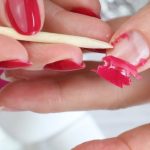
How to remove acrylic nails from a child
Removal should be planned before the set is applied. A child should not peel, chew, saw, or scrape the product off at home. Trying to remove dried acrylic with a sharp tool can tear the natural plate, cause bleeding, and increase the chance of an allergic reaction during removal.
A salon typically controls the process by:
- Removing compatible surface color where necessary.
- Reducing the thickness of the product with a file.
- Using a product-specific remover in a controlled, ventilated area.
- Keeping the remover from prolonged contact with the skin.
- Lifting softened material gently rather than forcing it.
- Stopping if the child experiences pain, burning, or skin irritation.
- Inspecting and gently buffing the natural plate after removal.
- Recording what was done if the nail needs follow-up care.
The natural plate may feel rough, ridged, or tender for a time. A healthy nail is attached and usually smooth, although some change can take weeks or months to grow out. The family shouldn’t repeatedly file the surface to make it look perfect.
Excessive buffing can make recovery slower and increase sensitivity.
If adhesive gets on the skin during removal, don’t peel it aggressively. Product that is still liquid should be handled according to the salon’s instructions, and skin should be rinsed with soap and water if exposure occurs. There are specific techniques for removing nail adhesive from skin, but a nine-year-old should not be made to manage solvents or sharp tools alone.
After removal, apply a simple fragrance-free moisturizer if the skin is dry. Avoid attaching artificial nails to a nail that is still sore, peeling, or separating. A clinician should evaluate a nail that remains painful, swollen, infected, or visibly damaged.
Lower-risk ways to create a special manicure
A temporary enhancement is often the better option for a child. The goal is decoration, not chemical strengthening. Consider these options:
| Option | Possible benefits | Main cautions |
|---|---|---|
| Regular nail polish | Color without a hard extension; easy to change | Use ventilation, avoid damaged nails, and stop if the child reacts to the formula. |
| Nail stickers or decals | Quick, inexpensive, and suitable for a one-off design | Edges can peel, and a child may chew at them. |
| Nail wraps | A temporary color change without a liquid monomer | Adhesive and removal can irritate sensitive skin. |
| Press-ons | A polished look for a short event | Adhesive, over-filing, poor fit, and nail-biting can cause problems. |
| Natural nail care | Supports the real nail and avoids enhancement chemicals | Results take time, so it may not suit a child who wants an immediate dramatic change. |
For a child who wants the salon experience without a full extension, a simple polish appointment can still feel special. A parent can create a small at-home celebration with a sticker set, a clear coat, or a carefully chosen press-on while supervising every step. The short-wear press-on options are most appropriate when the nails fit well and the child won’t chew at them.
Avoid choosing a long-lasting coating simply because it is advertised as chip-proof. Longer wear is a benefit for an adult who wants a manicure to last, but a child may be safer with a product that comes off easily when the event ends. Similarly, a “gel-like” formula isn’t automatically a gentler choice.
Ask the same questions about ingredients, curing, ventilation, and removal.
How long should a 9-year-old keep acrylic nails on?
There isn’t a medically safe wearing period that applies to every child. Ask the salon to plan removal based on the condition of the natural nails and the child’s behavior. For a special occasion, a parent may choose removal after a few days rather than waiting for a fill appointment.
The set should never remain on because the child dislikes the removal process.
Time alone doesn’t make the product safe. A short set can still cause irritation if liquid touches skin, while a longer set may become uncomfortable as the natural nails grow. A well-fitting, short design with no biting habit is preferable to a long set that lasts longer but causes repeated snagging.
If the child cannot say that an edge feels tight, itchy, or painful, a responsible adult should inspect the nails. Don’t wait for a child to describe a serious reaction in detail. A simple weekly check can catch lifting, redness, or unusual sensitivity early.
What should happen at the removal appointment?
The removal appointment should feel calmer than the original manicure. The parent should explain that the technician will remove the product slowly and stop if the child feels pain. A child can hold a stress ball or take a break, but the adult should still stay present.
The technician should avoid:
- Soaking beyond the product’s directions
- Using a metal scraper on the natural plate
- Pulling hard at an edge
- Filing aggressively after removal
- Applying a new enhancement over damaged nails
- Leaving harsh remover on the skin
After removal, the family can support the natural plate with gentle washing, moisturizer, and protection from biting or picking. If the nail is weak after repeated enhancements, a clinician or qualified nail professional can advise on care. A general guide to recovering the natural plate can help with routine questions, but it shouldn’t replace medical advice for pain, infection, or a separated nail.
A natural nail that feels smooth and attached doesn’t need to be filed. If the family is tempted to apply another set as soon as the old one comes off, take a pause. That is a chance to decide whether the event is over and whether the child’s nails would benefit from a break.
How to explain the decision to a child
A child may be disappointed if the appointment is canceled, especially if friends are getting manicures. Adults can keep the explanation simple and age-appropriate.
Try saying:
“Your natural nails are healthy and don’t need a hard coating. We can make them look special with a color or stickers for the celebration and let your nails stay comfortable while you play.”
Avoid calling acrylic nails “stronger” as though they are a health treatment. The child should hear that the choice is about decoration, not making the nails healthier. If the family proceeds with acrylics, explain that the set must be removed carefully and that the child needs to tell an adult if anything hurts, itches, or gets loose.
Set a clear rule before the appointment: no biting, no picking, and no playing with the edge. If the child agrees to those rules, the appointment may be manageable. If the child cannot commit, a temporary alternative is safer.
A simple decision checklist
Before booking, a parent should be able to answer these questions:
- Is this a one-time celebration rather than a routine treatment?
- Are the natural nails smooth, attached, and free of active irritation?
- Does the child have a known allergy to nail products, adhesives, latex, or skin products?
- Is the child currently biting, chewing, or picking the nails?
- Can the salon identify its acrylic, primer, adhesive, and removal products?
- Does the salon have a reliable ventilation and tool-sanitation process?
- Will the enhancements be short and easy to live with?
- Is the removal cost and plan clear?
- Can the child stop the appointment if she feels uncomfortable?
- Can the parent stay and monitor the nails afterward?
- Is the child’s nail health worth more than keeping the set on for a full fill cycle?
If any answer is unclear, pause. A polished appearance is not worth rushing a child into a chemical exposure or leaving her with damaged nails.
The most important safety steps
The safest approach for a 9-year-old is a temporary color or a no-chemical enhancement. Acrylics can be considered only as an occasional, carefully supervised choice after the child’s natural nails and skin have been checked.
The core safety plan is simple:
- Choose a reputable salon that will identify its products.
- Avoid systems containing MMA and ask the manufacturer’s safety questions.
- Keep the product away from the skin and stop if it spreads.
- Use a short, rounded design that suits the child’s activities.
- Make ventilation, hygiene, and tool handling part of the salon choice.
- Stay on-site during the appointment.
- Set a short removal date before the set is applied.
- Check the surrounding skin and natural nail plate every week.
- Remove the product if it lifts, causes symptoms, or becomes difficult to manage.
- Seek medical advice for persistent irritation, infection-like symptoms, or a damaged nail.
A child’s hands are meant to write, climb, play, eat, and explore. The manicure should support that life, not make every ordinary task harder or put the child’s natural nails at unnecessary risk.
Frequently asked questions
Can a 9-year-old safely get acrylic nails?
There is no universal safe age, and age nine does not automatically make acrylics appropriate. A short set may be possible for a healthy child under professional supervision, but most children are better served by a temporary, easy-to-remove option.
Are acrylic nails bad for children?
They aren’t automatically harmful, but they offer no health benefit and can cause irritation, allergy, nail-plate damage, snagging, or removal problems. The risk depends on the product, technique, exposure, the child’s behavior, and how carefully the set is maintained.
How long should a 9-year-old wear acrylic nails?
There isn’t one safe number of days. Choose the shortest time that meets the reason for the manicure, and remove the set when it becomes uncomfortable, lifted, dirty, or difficult for the child to manage. A professional should help determine the right removal time.
Can a child with nail-biting habits get acrylics?
Biting makes acrylics less suitable because the child may chew the product, expose the natural nail, pull at the edges, or swallow loosened material. A nail-biting habit is a strong reason to choose polish, stickers, wraps, or another temporary option instead.
Does the first acrylic appointment prove that a child won’t get an allergy?
No. Some reactions appear after the first use, while others develop after repeated exposure. A child may also have no symptoms for a long time and react later.
No patch test or successful first manicure can guarantee future tolerance.
Are gel or dip nails safer than acrylics for children?
Not automatically. Different products have different ingredients, but many involve acrylates, adhesives, or solvents. Ask about the complete system, ingredients, ventilation, curing method, and removal process rather than relying on the category name.
What should I do if my child’s skin becomes itchy or red after acrylics?
Stop using the product and gently clean the skin according to the salon’s instructions. Seek medical advice if redness, itching, swelling, cracking, blisters, or pain persists or worsens. A spreading rash, severe blistering, facial swelling, or breathing difficulty requires urgent care.
Can damaged natural nails be covered with new acrylics?
Usually, damaged, peeling, infected, or separated nails should not be covered with a new enhancement. The nail needs clean, intact tissue and time to recover. A clinician should assess pain, bleeding, infection, or separation of the nail plate.
Should I let a child remove acrylic nails at home?
No. Pulling, chewing, clipping, or scraping the set can damage the natural nail and expose the child to product. Have a trained professional remove it using the correct system, especially when solvent, filing, or lifting is involved.
Amazon and the Amazon logo are trademarks of Amazon.com, Inc, or its affiliates.
Author


Similar Posts