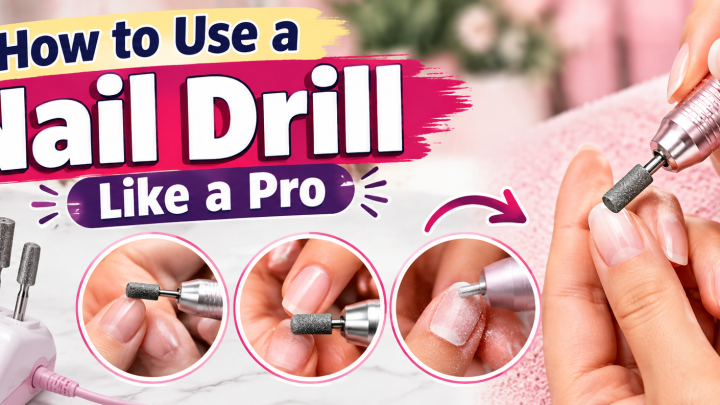
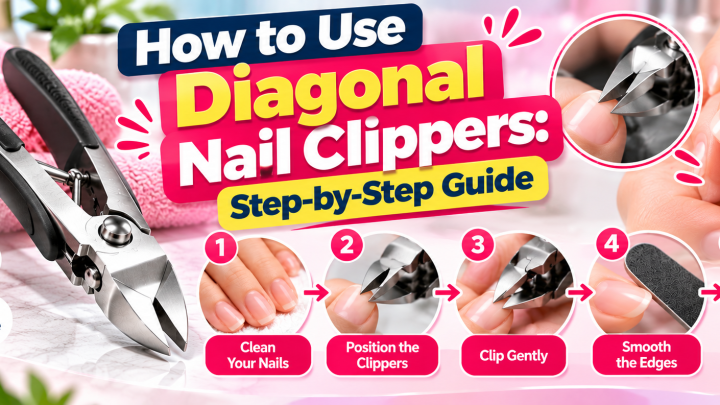
Daichong nail drill and vacuum
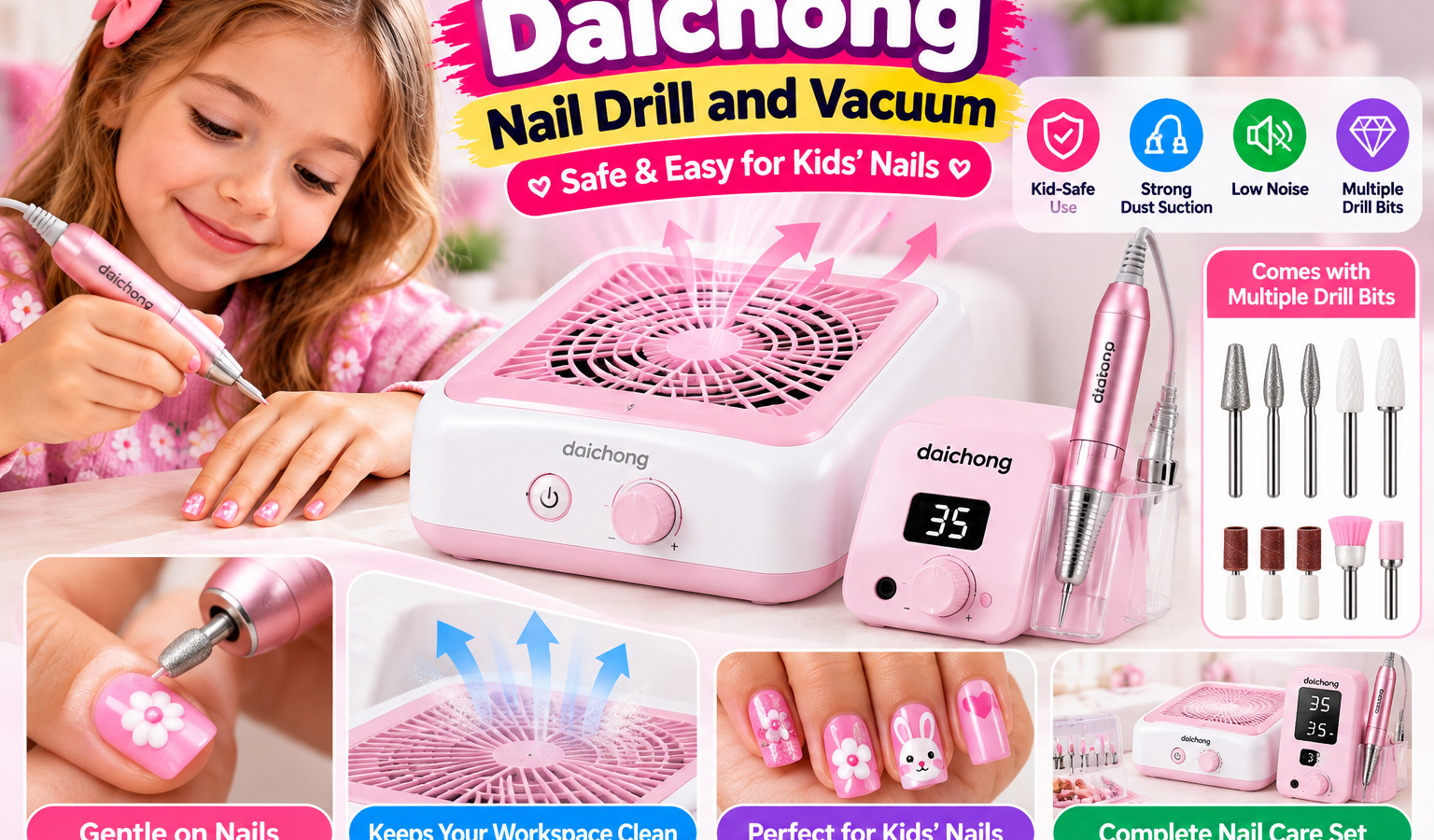
A daichong nail drill and vacuum combines filing power with built-in dust collection in one compact unit. Nail technicians across the US have turned to these machines as salon air quality standards tighten and client expectations rise. The appeal is straightforward.
You get aggressive cutting speed and dust capture without buying two separate devices.
Manufacturer specifications and aggregate reviews point to a solid entry-level option for salons watching their equipment budget. Per OSHA guidelines on nail salon air quality, dust extraction at the source matters far more than room ventilation alone. That single fact makes integrated vacuum systems worth a serious look.
Here’s what you need to know before committing to one.
Quick Answer
Yes, a Daichong nail drill and vacuum is a legitimate choice for budget-conscious nail techs. It pairs a brushless motor with a built-in dust collector. Most models run between 0 and 30000 RPM.
Dust collection reaches the filing site directly. The tradeoff is weaker suction compared to standalone industrial units.
Why Daichong’s Built-In Vacuum Matters for Your Salon Air
Nail dust is not just a cleaning nuisance. It is a respiratory hazard that accumulates in your lungs over time. Silica particles from acrylic powder and polymer dust from gel and dip systems can cause chronic irritation, coughing, and long-term lung damage with repeated exposure.
OSHA explicitly classifies certain nail dusts as harmful airborne contaminants when inhaled consistently
A Daichong drill and vacuum addresses this problem at the source. The vacuum housing sits right beside the handpiece port. Dust gets pulled away the moment the bit touches the nail surface.
You are not relying on ambient airflow or a ceiling fan to catch drift. You are capturing particulates before they ever enter the breathing zone.
This matters more now than it did five years ago. State licensing boards across the country are beginning to enforce stricter air quality rules in cosmetology facilities. California already requires local exhaust ventilation for certain procedures.
Other states are watching. A built-in vacuum keeps you ahead of those trends without retrofitting your booth.
The science behind why source capture works comes down to airflow physics. Dust particles follow the air stream. When suction velocity at the point of generation exceeds the rate at which particles settle or drift, you remove them effectively.
Daichong units create that positive capture velocity through direct-channel design. The motor pulls air through a filter and out the back while the filing action happens inside the intake cone.
Clients notice the difference too. They sit through a full appointment without a cloud of powder hanging around their face. That experience translates into repeat bookings and referrals.
You do not need to wave a hand fan or pause to sweep the desk. The unit handles it continuously.
There is a practical side as well. Cleanup time drops significantly. Technicians who switch from open-bowl filing to a dust-collecting drill typically report finishing their station reset in under two minutes instead of five or ten.
That speed adds up across a full day of appointments. You are reclaiming minutes that used to vanish into dust management chores.
How Daichong’s Drill-and-Vacuum System Actually Works
The system relies on three core components working together. First is the motor assembly. Most Daichong models use a brushless DC motor rated for extended continuous operation.
Brushless designs eliminate carbon brushes that wear down over time. That means less maintenance and a longer operational lifespan compared to brushed alternatives.
Second is the handpiece and bit retention system. The motor transfers rotational force through a shaft into the chuck. Bits lock in place using either a friction ring or a threaded collar depending on the model version.
Speed control comes through a foot pedal that modulates voltage to the motor in real time. Press harder and the RPM climbs. Release pressure and it drops back down.
Third is the dust collection chamber. A small fan runs off the same power circuit as the motor or from a secondary dedicated motor in higher-tier versions. Air gets drawn through the filing zone where the bit contacts the nail.
That airstream carries fine particles into a collection bag or filter compartment. The filtered air exits through the rear vent. Clean enough air leaves the unit.
Dust stays trapped inside.
The engineering tradeoff here is suction power versus noise level. Stronger suction requires more aggressive fan design. Aggressive fans produce more acoustic output.
Daichong engineers balance these variables to deliver adequate dust pickup without turning your workstation into a jet engine. Most users report acceptable noise levels during normal salon operation.
You will notice the suction weakens if the filter or bag becomes clogged. This is not a defect. It is normal physics.
Airflow drops when the path gets restricted. Regular cleaning restores full performance. We recommend emptying the dust bag after every two to three clients and washing or replacing the filter weekly depending on your volume.
Some models route the vacuum air through a washable foam filter before the bag. Others use a paper bag system only. The foam filters reduce bag replacement costs but require more frequent rinsing.
Paper bags trap finer particles more completely but add recurring expense. Choose based on your monthly budget and how often you prefer maintenance tasks.
Understanding this mechanics helps you troubleshoot issues faster. If your drill spins but the vacuum feels weak, check the bag first. Is it full?
Next, inspect the filter for clogging. Then verify the handpiece seal is tight. A loose bit collar creates an air leak that robs suction before it reaches the collection chamber.
Most performance complaints trace back to one of these simple issues rather than motor failure.
Key Features That Define Performance and Durability
Not all Daichong units share identical specs. The brand offers several model tiers. Understanding which features actually move the needle helps you pick the right one instead of defaulting to the cheapest option.
Motor Type and Lifespan
Brushless motors dominate the mid-range Daichong lineup as of 2026. They deliver consistent torque across the full RPM range. You will not feel the power drop when you press harder against the nail surface.
Cheaper brushed motor variants tend to lose torque under load and generate more heat over extended sessions. If you file for six hours straight, brushless pays for itself through comfort and reliability.
Speed Range and Control
Most Daichong drills cover 0 to 30000 RPM. Some entry models cap at 25000 RPM. The wider range gives you precision options.
Low speeds control cuticle work without grabbing skin. High speeds chew through acrylic overlays and dense dip powder efficiently. The foot pedal response also varies by model.
Higher-end versions offer smoother acceleration curves instead of jerky speed jumps.
Suction Power Metrics
Suction strength typically falls between 30 and 50 watts of fan motor capacity in Daichong integrated units. Compare that to standalone desktop collectors rated at 100 watts or more and the difference becomes clear. Integrated systems sacrifice raw suction volume for compact integration.
They work well for moderate filing volumes. They struggle during heavy structural sculpting sessions that generate large dust clouds rapidly.
Handpiece Weight and Ergonomics
A lightweight handpiece reduces technician fatigue. Daichong handpieces generally weigh between 80 and 120 grams. That sits in the average range for this category.
Look for a balanced grip shape and a cord that does not twist excessively during rotation. Poor cable management causes strain over long days.
Build Quality and Housing Materials
Budget Daichong units use ABS plastic housings. These hold up well under normal salon conditions but can crack if dropped or dropped repeatedly. Mid-tier models reinforce stress points with metal inserts around the bit collar and motor mount areas.
Check whether replacement parts like handpiece cables and filter assemblies remain available through the seller. Obsolete proprietary parts kill machines faster than motor burnout.
Noise Output
Decibel ratings for Daichong drills typically land between 55 and 65 dB at medium speed. That is comparable to normal conversation volume. Quiet enough for client comfort without ear protection.
Units pushing past 70 dB become disruptive in small salon spaces. Verify the rating before purchasing if your booth shares walls with other stations.
Feature Comparison Table
| Feature | Entry-Level Daichong | Mid-Range Daichong | Premium Brushless |
|---|---|---|---|
| Motor type | Brushed | Brushed or hybrid | Brushless DC |
| Max RPM | 25000 | 28000 | 30000+ |
| Suction wattage | 30W | 35W | 40W+ |
| Handpiece weight | ~120g | ~100g | ~85g |
| Housing material | ABS plastic | Reinforced ABS | Metal-reinforced |
| Noise level | 60-65 dB | 58-63 dB | 55-60 dB |
| Price range | $80-$130 | $130-$200 | $200-$300 |
Daichong Nail Drill with Vacuum vs. the Competition
You will find several competing brands offering similar drill-and-vacuum combinations. Runail, Zenna, GME, Masatai, and Hailin all occupy the same budget-to-midrange segment. Each brand positions itself slightly differently.
Knowing how Daichong stacks up prevents buyer regret.
Daichong vs. Standalone Dust Collectors
A standalone collector like a Jet Beauty or ZENAIL desktop unit delivers stronger suction because it dedicates its entire motor to air movement. Daichong splits power between drilling and vacuuming. The result is adequate but not exceptional dust capture.
If your primary concern is airborne particle removal during heavy acrylic work, a separate collector paired with a basic drill may outperform an integrated Daichong setup.
Daichong vs. Runail
Runail machines often match Daichong on paper. Both offer similar RPM ranges and comparable vacuum wattage. Runail tends to price slightly lower on marketplace platforms.
Daichong generally scores better on handpiece ergonomics and filter accessibility. Real-world durability reports from verified buyers lean slightly toward Daichong for motor longevity, though the margin is narrow.
Daichong vs. Zenna
Zenna positions itself as a professional-grade budget option. Their integrated models sometimes include dual-speed settings and reinforced handpieces. Daichong counters with simpler controls and broader availability of replacement parts.
If you value repairability over feature density, Daichong holds an edge.
Daichong vs. GME
GME focuses heavily on the Chinese domestic market. International warranty support remains limited compared to Daichong sellers who ship primarily to Western customers. Return policies and customer service responsiveness typically favor Daichong purchases made through established resellers rather than direct factory channels.
Daichong vs. Budget Chinese No-Name Brands
Unbranded or white-label drills found on marketplaces often copy Daichong exteriors without matching internal component quality. Motor windings, bearing grades, and filter materials differ substantially. A Daichong unit costs slightly more upfront but avoids the replacement-and-return cycle that plagues no-name imports.
The price premium buys consistency.
Side-by-Side Comparison
| Brand | Motor Type | Max RPM | Vacuum Wattage | Avg Price | Warranty | Best For |
|---|---|---|---|---|---|---|
| Daichong | Brushed/Brushless | 25000-30000 | 30-40W | $80-$250 | 6-12 months | Balanced budget users |
| Runail | Brushed | 25000-28000 | 30-35W | $70-$180 | 6 months | Lowest price seekers |
| Zenna | Brushed | 28000-32000 | 35-45W | $120-$220 | 12 months | Feature-focused buyers |
| GME | Brushed | 25000-30000 | 30-40W | $90-$200 | Varies | Domestic CN market |
| Jet Beauty (external) | N/A | N/A | 100W+ | $150-$300 | 12 months | Heavy-duty dust control |
Who Should Choose This Machine (And Who Should Look Elsewhere)
Daichong nail drills with integrated vacuums fit specific profiles exceptionally well. They also miss the mark for others. Matching yourself honestly to the right category saves money and frustration.
Choose Daichong If:
You are a solo technician or small salon operator managing equipment costs tightly. You perform moderate acrylic and gel filing but do not spend hours daily sculpting heavy extensions. You want one device that handles both cutting and basic dust collection without buying multiple tools.
You travel to client locations occasionally and need something portable. You prioritize ease of setup and straightforward maintenance over advanced features.
Look Elsewhere If:
You run a high-volume salon doing dozens of acrylic fills daily. Your filing sessions generate massive dust clouds that outpace integrated vacuum capacity. You require industrial-grade suction certified for heavy particulate environments.
You already own a quality drill and prefer upgrading to a standalone collector instead. You want wireless handpiece freedom and do not mind sacrificing some vacuum power for mobility. You work primarily with hard gel or builder gel structures that demand maximum torque under sustained load.
Nail technology students entering the program represent a strong Daichong candidate group. School budgets rarely cover premium gear. Students need reliable tools that teach proper technique without advanced customization.
A Daichong unit delivers competent performance throughout a training program and often survives into early career practice.
Mobile nail technicians also benefit from the all-in-one design. Carrying a drill and a separate vacuum doubles your equipment load. One compact unit fits neatly into a portable kit.
The vacuum runs quietly enough for home appointments without disturbing household members.
Salon owners facing new air quality inspection requirements should evaluate Daichong as a compliance-friendly solution. Integrated dust collection demonstrates proactive effort during health inspections. Pairing it with general room ventilation satisfies most standard checklist items without expensive ductwork installation.
Safety First: Nail Dust, Respiratory Health, and Salon Standards
Nail dust exposure represents one of the most underestimated health risks in the cosmetology industry. Every time you file acrylic, gel, or dip powder, microscopic particles become airborne. These particles range from 0.3 to 10 microns in size.
Anything under 10 microns can penetrate deep into lung tissue and stay there indefinitely.
OSHA identifies nail salon dust as a recognized occupational hazard requiring engineering controls. The agency recommends source capture methods, like integrated vacuum systems, as the primary line of defense. Room ventilation alone cannot replace dust extraction at the filing site.
A Daichong drill and vacuum addresses this safety requirement by design. The built-in collector removes particulates before they disperse into your breathing zone. This setup satisfies the hierarchy of controls that OSHA and NIOSH both advocate.
Source elimination ranks higher than administrative controls or personal protective equipment alone.
What respiratory protection should you still use?
Even with excellent dust collection, NIOSH recommends wearing an N95 respirator during heavy filing sessions. Integrated vacuums reduce exposure significantly. They do not eliminate it entirely.
Fine particles smaller than one micron can bypass the filter and escape through the exhaust vent. A properly fitted N95 catches those remaining fractions.
How does nail dust compare to other salon exposures?
Acrylic dust contains polymethyl methacrylate particles. Gel dust includes urethane acrylate compounds. Dip powder dust combines polymer with dye pigments.
All three categories irritate lung tissue differently. Acrylic dust causes mechanical irritation. Gel residues may trigger allergic contact dermatitis through airborne sensitization.
Dip powders add chemical complexity due to their pigment load.
What do state regulations require?
Regulatory requirements vary by jurisdiction. California’s Cal/OSHA enforces the strictest standards for nail salon air quality. Other states follow Model Act guidelines developed by professional beauty organizations.
Many states have adopted basic ventilation requirements without mandating specific dust collection technology. Check your state board rules before assuming compliance.
Safety Checklist for Daichong Users
- Run the vacuum before starting any filing procedure
- Empty the dust bag after each client session
- Wash or replace filters weekly depending on usage
- Wear an N95 mask during extended sculpting work
- Inspect handpiece cables daily for fraying or damage
- Verify the bit retention collar locks securely every time
- Keep the unit away from water sources and polish removers
- Replace damaged filters immediately rather than operating without them
- Document cleaning schedules for inspection readiness
Real-World Performance: What to Expect Day-to-Day
Performance expectations separate reality from marketing claims. Daichong machines deliver competent results for typical salon workloads. They do not excel at extreme applications.
Understanding where they shine and where they fall short helps you set proper expectations from day one.
Filing performance across different materials
Acrylic overlay removal works efficiently on Daichong units. The motor maintains steady speed under moderate pressure. Carbide bits cut through cured monomer without bogging down.
Heavy structuring work stretches the motor more. Extended use at high RPM generates noticeable heat in the handpiece after twenty minutes of continuous operation.
Gel file removal proves equally straightforward. Hard gels require coarser grit bands or diamond bits. Soft gels respond well to ceramic sanding bands.
The integrated vacuum captures the waxy gel dust effectively. Gel particles tend to clump more than acrylic powder. You will notice thicker buildup in the collection bag faster.
Dip powder maintenance presents a middle ground. The polymer coating files smoothly. Dust generation falls between acrylic and gel profiles.
Suction performance handles typical dip refill volumes without issue. Clients requesting full system removals create heavier debris loads. Plan to empty the bag mid-session during those appointments.
Noise levels during actual operation
Most users report noise levels between 58 and 64 decibels during normal filing. That sits comfortably below conversation volume at close range. Clients rarely comment on operational sound.
The vacuum fan adds a consistent white noise background. Some techs find it masking rather than disruptive. Salon neighbors in adjacent booths occasionally mention hearing it through thin walls.
Heat management over extended sessions
Brushed motor variants generate more warmth than brushless versions. After forty-five minutes of continuous high-speed filing, the handpiece becomes noticeably warm to the touch. Brushless models run cooler under identical conditions.
Both types benefit from intermittent rest periods during marathon appointment days.
Battery life concerns
Most Daichong units operate on corded power only. Battery-powered variants exist but remain rare in this price tier. Cord length typically measures between six and eight feet.
Position your machine within reach of your workstation outlet. Extension cords introduce tripping hazards and voltage drop that can affect motor performance.
Daily Workflow with Daichong Integrated System
- Plug in the unit and verify the power indicator lights up
- Insert your chosen bit and secure the retention ring
- Press the foot pedal gently to confirm motor response
- Turn on the vacuum function before making contact with the nail
- File using light to moderate pressure. Let the bit do the work
- Pause every thirty minutes to check bag fill level
- Empty the bag between clients or when it reaches the fill line
- Wipe down the exterior housing with a disinfectant wipe
- Store the handpiece in its cradle when not actively filing
- Power down and unplug at end of business day
Mistakes New Users Make with Daichong Drills
First-time Daichong owners often repeat the same errors. These mistakes reduce performance, shorten machine lifespan, and sometimes create safety hazards. Avoiding them separates successful users from frustrated returns.
Running the vacuum after removing the bit
Many beginners turn off the vacuum while the bit still spins inside the handpiece. This reverses airflow direction momentarily. Dust gets blown outward instead of captured inward.
Always shut off the motor first. Then disconnect the vacuum power. Clean sequence matters for optimal collection.
Ignoring the fill line on the dust bag
An overfilled bag loses suction capacity rapidly. The filter behind the bag becomes saturated. Airflow path gets restricted.
You will notice weaker dust pickup and increased motor strain. Empty the bag before it reaches ninety percent capacity. Regular emptying maintains consistent performance throughout your appointment book.
Using the wrong bit type for the material
Carbide bits cut aggressively through acrylic. Diamond bits file smoother through gel surfaces. Ceramic bands sand gently for maintenance work.
Using carbide on soft gel creates excessive heat and uneven filing. Match your bit selection to the product system you are working with. The right bit reduces effort and improves finish quality.
Forcing the motor past its limits
Pushing hard against the nail surface damages the bit, the nail plate, and eventually the motor. Let rotating abrasives do the cutting work. Light pressure produces better results and protects equipment.
High pressure generates friction heat that compromises both your work and your tool longevity.
Skipping regular filter maintenance
Foam filters trap fine particles that clog pores over time. A dirty filter restricts airflow dramatically. Washing foam filters monthly extends their life considerably.
Paper bag systems require replacement more frequently. Either approach works. Skipping maintenance entirely guarantees poor performance.
Common Troubleshooting Scenarios
| Problem | Likely Cause | Solution |
|---|---|---|
| Weak suction | Full dust bag | Empty bag immediately |
| Motor not starting | Loose power connection | Check plug and socket |
| Excessive vibration | Loose bit or worn bushing | Tighten collar or replace bit holder |
| Burning smell | Overloaded motor | Reduce pressure and allow cooling |
| Speed fluctuation | Faulty foot pedal connection | Reseat pedal connector |
| Dust escaping unit | Cracked housing or bad seal | Inspect and replace damaged parts |
Setting Up Your Daichong: Quick Start Guide
Proper setup prevents problems down the road. Take ten minutes on day one to configure everything correctly. The process stays straightforward if you follow the sequence.
Unboxing and inventory check
Remove all components from the packaging. Lay them out on a clean surface. Verify you received the main unit, handpiece with attached cable, foot pedal, power cord, dust bag or filter assembly, and any included bits.
Some packages contain spare belts or tool kits. Missing parts indicate shipping damage. Contact the seller immediately rather than attempting workarounds.
Positioning the unit
Place the drill on a stable, level surface near your workstation. Keep the power cord reachable but clear of foot traffic. Route the handpiece cable so it hangs freely without sharp bends.
Position the foot pedal flat on the floor where your dominant foot rests naturally. The pedal should not slide during operation.
Installing the dust collection system
Attach the dust bag to the intake port. Ensure the connection seals completely. Improper seating creates air leaks that kill suction performance.
If your model uses a foam filter, insert it according to the diagram printed on the housing. Some units require the filter before the bag. Others place it after.
Follow the manufacturer diagram precisely.
Securing the handpiece and bit
Loosen the retention ring on the handpiece. Insert your chosen bit shank fully into the chuck. Tighten the ring until secure.
Give the bit a gentle tug test. It should not move or wobble. Loose bits cause vibration, uneven filing, and potential injury.
Never skip this verification step.
Testing before first client
Plug in the power cord. Turn on the unit using the main switch. Press the foot pedal gently to activate the motor.
Confirm smooth rotation in the correct direction. Turn on the vacuum function. Hold the handpiece near a light tissue or piece of paper.
You should see the material pull toward the intake opening. Weak or absent pull indicates a seal problem.
Initial Setup Checklist
- Unbox and verify all components present
- Position unit on stable surface near outlet
- Attach dust bag or filter assembly properly
- Install and secure your first drill bit
- Test motor rotation and vacuum suction
- Verify foot pedal responds smoothly
- Disinfect handpiece surface before client contact
- Review basic maintenance schedule
Maintaining Your Daichong for Long-Term Use
Regular maintenance keeps your Daichong running reliably for years. Neglect accelerates wear and triggers costly repairs or replacements. Build these habits into your daily and weekly routine.
Daily cleaning tasks
Wipe down the exterior housing after each business day. Use a disinfectant solution safe for plastic surfaces. Clean the handpiece cable and bit collar area where product residue accumulates.
Empty the dust bag completely. Tap out loose particles into a trash receptacle. Do not shake the bag outdoors.
That redistributes captured dust back into your workspace.
Weekly filter care
Foam filters require rinsing under warm water weekly. Squeeze out excess moisture without twisting or tearing the material. Allow filters to air dry completely before reinstalling.
Dry filters restore full airflow. Damp filters promote mold growth and restrict suction. Paper bag users replace filters according to manufacturer intervals, typically every two to four weeks depending on volume.
Monthly inspection routine
Check the handpiece cable for cracks, frays, or exposed wiring. Inspect the retention ring threads for wear. Examine the foot pedal cord and connector for damage.
Test the motor sound for unusual grinding or clicking noises. Any abnormal sounds warrant immediate investigation. Continued operation with damaged components risks complete failure.
Filter and bag replacement schedule
Foam filters last three to six months with proper care. Replace them when they develop permanent stains or lose structural integrity. Paper bags fill faster but cost less per unit.
Keep a small stock on hand. Running out mid-business day interrupts workflow. Budget approximately fifteen to thirty dollars monthly for consumables depending on your client volume.
When to seek professional repair
Motor issues, electrical problems, or internal component failures require authorized service support. Do not attempt DIY repairs on the motor assembly or control circuitry. Opening sealed housings voids warranties and creates safety hazards.
Contact your seller or manufacturer for repair guidance. Many Daichong issues resolve through simple part replacement performed by qualified technicians.
Maintenance Frequency Guide
| Task | Frequency | Estimated Time |
|---|---|---|
| Empty dust bag | Between clients or daily | 30 seconds |
| Wipe exterior housing | Daily | 2 minutes |
| Clean handpiece and cable | Daily | 1 minute |
| Rinse foam filter | Weekly | 10 minutes including dry time |
| Inspect cables and connections | Weekly | 5 minutes |
| Replace paper bag/filter | As needed | 2 minutes |
| Full component inspection | Monthly | 15 minutes |
| Professional service check | Annually or as needed | Variable |
Where to Buy and What You’ll Actually Pay
Pricing for Daichong nail drills with vacuum systems varies based on model tier, seller markup, and included accessories. Understanding the market landscape helps you avoid overpaying or falling for suspiciously cheap imports.
Price ranges by model type
Entry-level brushed motor models typically cost between $80 and $150. These units include basic bits and a simple dust bag. Mid-range options with improved handpieces and stronger suction run $150 to $220.
Brushless motor variants with premium features like dual-speed controls and reinforced housings price from $220 to $300.
Several marketplace platforms carry Daichong products. Amazon listings often include buyer protection and faster shipping but may carry higher markups. AliExpress direct-from-seller options offer lower prices but longer delivery windows and limited warranty support. eBay sits somewhere in between with variable seller reliability.
What influences final cost
Shipping costs add $15 to $40 depending on destination and weight. Customs duties rarely apply for personal-use equipment under $800 value in the United States. Extended warranty packages cost an additional $20 to $50 but may provide peace of mind for long-term use.
Bundle deals including extra bits, replacement bags, and tool kits occasionally save money versus buying separately.
Red flags indicating counterfeit or unsafe products
Packages arriving without proper certification markings warrant suspicion. Missing manuals or packaging that looks professionally printed but contains spelling errors suggest imitation products. Prices significantly below market average often correlate with omitted safety features or substandard motors.
Verify seller reputation through verified purchase reviews before committing.
Pricing Summary Table
| Model Tier | Price Range | Key Differences | Best Value For |
|---|---|---|---|
| Entry-level brushed | $80-$150 | Basic features, included bits | Students, occasional users |
| Mid-range hybrid | $150-$220 | Improved ergonomics, better suction | Regular salon use |
| Premium brushless | $220-$300 | Quiet operation, long lifespan | Heavy daily use professionals |
| Accessory bundles | +$30-$60 | Extra bits, bags, tools | Techs wanting complete setup |
Where to find the best deals
Major beauty supply distributors sometimes carry Daichong inventory with volume discounts. Direct purchases from authorized resellers provide warranty coverage that gray-market imports lack. Seasonal sales around holiday periods and back-to-school seasons occasionally produce meaningful savings.
Joining salon supply group buys with colleagues can unlock tier pricing unavailable to individual buyers.
FAQs: Daichong Nail Drill and Vacuum Questions Answered
Can a Daichong drill replace a standalone dust collector?
Not entirely. Integrated vacuums provide adequate dust capture for moderate filing volumes. Heavy acrylic sculpting sessions generate more particulate than built-in systems handle efficiently.
If your workload involves daily full-overlay removals or extensive restructuring work, a separate industrial collector complements the drill effectively. For maintenance filings and standard manicure services, the integrated system suffices.
How long do Daichong drill motors typically last?
Brushed motor versions generally endure two to four years of regular salon use. Brushless variants extend that timeline to five years or more with proper maintenance. Motor failure usually results from belt wear, bearing degradation, or electrical issues rather than winding burnout.
Regular filter cleaning and avoiding sustained overload conditions maximize operational lifespan considerably.
What size drill bits fit Daichong handpieces?
Most Daichong models accept standard 1/8-inch shank bits. Some newer versions support both 1/8-inch and 3/32-inch collets. Carbide, diamond, and ceramic bits all work provided they match the shank diameter.
Always verify your specific model’s compatibility before purchasing aftermarket abrasives. Using oversized or undersized bits creates dangerous wobble and uneven filing results.
Is the vacuum loud enough to disturb clients?
Noise levels between 55 and 65 decibels fall within normal conversation range. Most clients do not notice operational sound during filing. The vacuum fan adds consistent white noise that many find soothing rather than disruptive.
If your salon shares thin walls with neighboring stations, position the unit away from direct line-of-sight to minimize perceived volume.
Can I use this drill for foot callus removal?
Yes, with appropriate attachments. Daichong motors handle the resistance from foot files adequately. Use coarse grit bands or specialized callus removal heads designed for electric files.
Never attempt aggressive heel grinding with standard nail bits. Switch to proper pedicure accessories and monitor motor strain closely. Continuous high-load operation on callus work shortens motor life compared to nail filing applications.
What warranty coverage should I expect?
Standard manufacturer warranties range from six to twelve months covering motor defects and component failures. Seller-provided warranties sometimes extend coverage slightly beyond factory terms. Registration may be required to activate warranty service.
Keep your purchase receipt and documentation accessible. Warranty claims typically require proof of defect rather than routine wear-and-tear issues like belt replacements.
Are replacement parts easy to find?
Daichong parts availability depends on your seller relationship. Authorized distributors stock common consumables like belts, filters, and dust bags. Third-party sellers on marketplaces occasionally list compatible components.
Handpiece cables and motor assemblies prove harder to source independently. Buying spare belts and filters alongside your initial purchase prevents downtime when replacements become necessary.
Does voltage compatibility vary by region?
Daichong units ship in regional voltage configurations. United States models operate on 110-volt household current. International versions target 220-volt markets across Europe and Asia.
Using the wrong voltage version damages the motor immediately. Verify your unit’s rated voltage matches your local supply before plugging in. Some models include dual-voltage switches selectable at purchase time.
Final Verdict: Is a Daichong Nail Drill Worth Your Money?
The answer depends entirely on your workload and priorities. Daichong nail drills with vacuum systems occupy a solid middle ground between budget entry points and professional-grade equipment. They deliver reliable performance for technicians who file moderate volumes daily without pushing machinery beyond design limits.
Who wins with this purchase: Solo salon owners managing tight budgets, nail techs transitioning from manual filing to electric systems, mobile technicians needing portable all-in-one solutions, and beauty students requiring durable training equipment. These users gain functional dust collection without investing in separate collector units.
Who should skip it: High-volume specialists doing heavy acrylic work daily, salons facing strict air quality inspections requiring certified extraction, technicians prioritizing wireless freedom, and anyone needing industrial-grade suction power. Those profiles benefit more from pairing a basic drill with a dedicated collector.
The value proposition centers on convenience and cost efficiency. One unit handles filing and basic dust management. Setup takes minutes rather than hours.
Maintenance stays straightforward. Performance meets expectations for typical salon workflows without惊艳ing anyone.
Your decision ultimately hinges on realistic assessment of daily demands. Match your actual filing volume and dust generation against the system’s capabilities. If they align, a Daichong drill and vacuum delivers dependable service through years of regular use.
Amazon and the Amazon logo are trademarks of Amazon.com, Inc, or its affiliates.
Author


Similar Posts