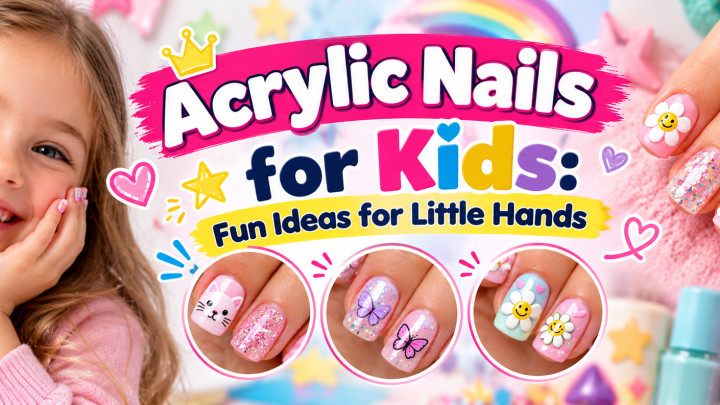
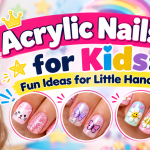
Acrylic Nails for Kids: Cute and Safe Design Ideas
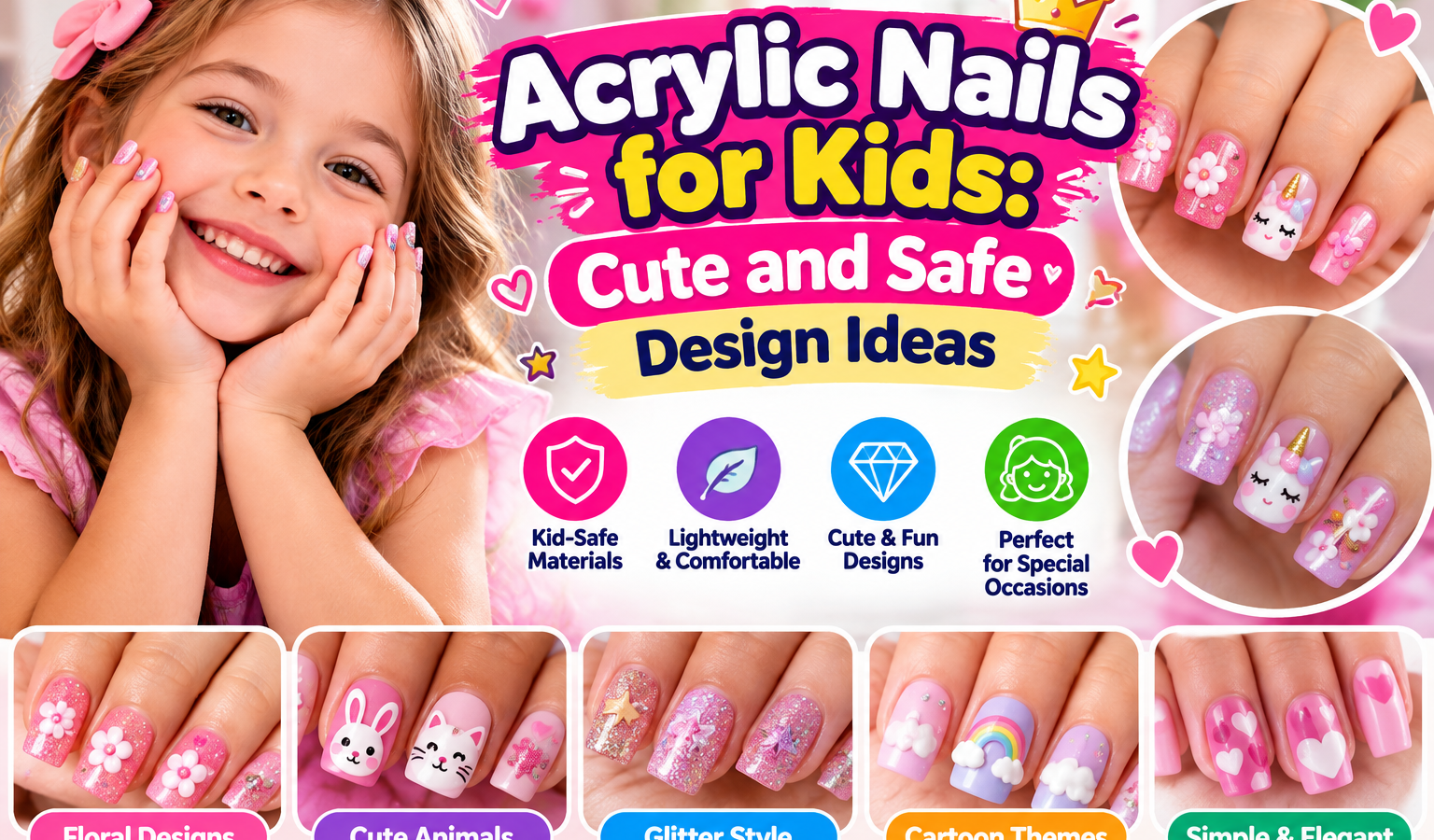
Children can copy almost any nail look they see online, but “acrylic” can mean two very different things. One is colorful nail art applied to their own nails. The other is a hard extension made from liquid monomer and powder.
The first can be adapted to a child’s age and behavior. The second can damage small nail plates, trigger skin reactions, snag, break, or create problems if the child chews or pulls at it.
The safest choice for most children is regular polish, nail decals, or a short, well-fitted press-on nail for an older child. Full acrylic enhancements are not usually a sensible routine choice for young kids.
The Quick Answer
The best acrylic nail designs for kids are designs that create a fun manicure without adding long extensions, sharp edges, loose decorations, or hard-to-remove products.
My practical rule is simple: if a child is likely to chew, pick, pull, or forget that the manicure is there, the design should stay on the natural nail. Nail polish, stickers, and rubber- or water-based nail decals work well for that reason. A fitted press-on nail may be reasonable for an older child who can leave it alone and knows to tell an adult if it starts to lift.
True acrylic nail enhancements are a different category. They require careful preparation of the natural nail, application of a chemical system, and controlled removal. Those steps make them a poor match for children who move suddenly, chew their nails, have sensitive skin, or cannot report burning or itching right away.
Very young children are better served by designs on the natural nail. An older child can handle supervised press-ons without extension length. An older teen can choose from regular polish, decals, or professionally applied press-ons.
Even then, I would not make a full acrylic extension the default.
What Counts as an Acrylic Nail Design for Kids?
The phrase “acrylic nails for kids designs” can describe several different looks.
A true acrylic nail enhancement uses a liquid monomer and polymer powder. The product is shaped on the nail, allowed to harden, and then filed into the chosen length and form. The natural nail is often prepared so the enhancement can grip.
Preparation may include cleaning, removing shine, and lightly etching or dehydrating the surface.
Other nail products are sometimes grouped under the word “acrylic,” even though they work differently:
| Nail option | How it works | General fit for children | Main concern |
|---|---|---|---|
| Nail polish | Color is painted onto the natural or press-on nail | Usually the simplest option for young children | Drying time, ingestion risk, and chipping if picked |
| Nail decals or stickers | Decorative art is stuck or transferred onto the nail | Good for younger children and quick results | Adhesive may irritate sensitive skin or lift early |
| Press-on nails | A ready-made nail is attached with nail adhesive | May suit older children when precisely fitted | Glue on skin, poor fit, chewing, and detachment |
| Acrylic nails | Monomer and powder form a hard extension over the natural nail | Not usually recommended as a routine option for children | Nail-plate damage, allergy, lifting, and difficult removal |
| Gel nails | Gel is shaped and hardened under a compatible lamp | The same nail-preparation and allergy concerns remain | Filing, UV or LED exposure, and strong adhesion |
| Dip nails | Nail is placed in colored resin and powder | Not automatically safer simply because it is not called acrylic | Prolonged contact with chemicals, lifting, and nail damage |
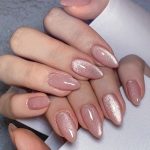
A design can still look “acrylic-inspired” without true acrylic. For example, a short, rounded press-on nail with a glossy base color and one tiny flower gives the same polished look without building a long extension.
A child’s age is only one factor. The most important questions are:
- Can the child sit still for the full application and drying time?
- Will the child chew or pick at the manicure?
- Is the natural nail healthy and free from cuts?
- Does the child have eczema, a known adhesive allergy, or sensitive skin?
- Can an adult remove the product safely when needed?
- Is the design small, secure, and free of loose pieces?
Why Full Acrylic Extensions Need Caution on Children
Natural nail damage
A child’s nail plate is usually thinner and smaller than an adult’s. It can still be damaged by filing too deeply, rough removal, excessive pressure, or an extension that separates from the natural nail.
Poorly fitted acrylic can lift early. The child may then pull at the gap or try to tear the enhancement off. If the edge is attached while the natural nail moves, minor trauma can make the nail more sensitive or weaken it over time.
Poor removal can also take layers of the natural nail with it.
This does not mean one proper appointment will automatically ruin a child’s nails. It means the procedure requires more control than a playful nail-art project and is easy for a sudden movement to disrupt.
Monomer exposure and allergic reactions
Liquid monomer is the part of an acrylic system most likely to cause irritation or sensitization. Repeated or prolonged skin contact can lead to contact dermatitis, particularly in someone with sensitive skin or a history of allergy.
Cured product is generally less irritating than liquid product, but “cured” does not mean suitable for every child. A product marked “HEMA-free” should not be described as allergy-proof. HEMA is one acrylate, and some formulas contain other methacrylate materials that may still cause problems in a sensitized person.
Redness, burning, itching, swelling, cracking, or blisters around the application are reasons to stop using the product. Difficulty breathing, facial swelling, or rapidly spreading symptoms require urgent medical care.
Long nails create everyday hazards
Long extensions can catch on sweater cuffs, bedding, seat belts, gym equipment, and school materials. A caught nail can bend, split, or pull at the natural nail. Very pointed shapes are especially unsuitable for children because they are more likely to snag.
A nail can also detach after impact. A loose small nail or decoration should not be left within a child’s reach. It can be swallowed, and swallowed objects can create a choking risk.
Nail biting can worsen with enhancements
Nail biting does not come from having weak natural nails. It can be a habit, a self-soothing behavior, a way to manage tension, or a response to an irritated nail. Adding a long extension may make the manicure more noticeable and create a new target for biting.
If the child already bites, tears, or picks at the cuticle, natural nail art is a much better fit. A thicker extension can make a child feel that the nail can withstand more pulling, even though that is not true.
Salon rules and developmental limits
There is no single US age that automatically makes acrylic nails appropriate. Salon policies and state or local rules can differ, and some businesses will not perform cosmetic services on very young children. A child who cannot remain still, communicate discomfort, or follow simple instructions may be turned away for good reason.
Parents should ask for the salon’s age policy before booking. They should also confirm that the technician holds the applicable cosmetology license and is working in a clean, ventilated space.
Safer Alternatives for Different Ages
The age ranges below are planning guides, not medical or legal cutoffs. A child’s maturity, nail condition, and behavior matter more than a birthday.
| Child’s stage | Safer design approach | Helpful adult support | Designs to avoid |
|---|---|---|---|
| Young child | Polish, stickers, nail decals, or a temporary color change | Apply products, monitor drying, remove loose decorations, and keep all supplies out of reach | Long tips, pointed shapes, loose rhinestones, 3D charms |
| School-age child | Simple natural-nail art or occasional fitted press-ons | Choose the size, control glue placement, inspect the manicure, and remove damaged nails | Oversized press-ons, sharp corners, nail gems, extension length |
| Preteen | Short press-ons, natural-nail polish, or more detailed decals | Explain what to do if a nail lifts; remove it before it catches | Designs that depend on a child resisting picking or chewing |
| Teenager | Regular polish, press-ons, or professional nail art | Discuss product ingredients, skin reactions, removal, and school expectations | Heavy extensions applied without a clear plan for maintenance and removal |
| Child with nail biting or picking | Natural-nail art only | Address the behavior and repair damaged cuticles without punishment | Any bulky enhancement that can be pulled or chewed |
| Child with sensitive skin or dermatitis | Water-based decals may be simpler than adhesive products | Ask a healthcare professional about repeated exposure | Unverified “hypoallergenic” claims and untested monomers |
Young children: keep the nail surface the canvas
For a young child, the safest design is usually one that has no attached hardware. A single color, two contrasting colors, or a transfer decal is enough to create an “acrylic nail” effect.
A small dab or brush-on color designed for children can work, but an adult should control the product. Let the nail dry fully before the child handles food or puts fingers near the mouth. Never leave nail polish, glue, remover, or wipes within reach.
Decorative decals are another easy option. An adult can apply easy decorative decals in a controlled setting, choose a design without loose parts, and peel away anything that starts to lift.
School-age children: short press-ons can work with supervision
A press-on nail is safer than a long extension only when it is the correct size. If the child has to force it on, trim a visible portion of a very long tip before gluing, or stack extra glue around the edge, the fit is wrong.
The nail should match the width of the natural nail closely. A tiny gap is easier to manage than a nail that hangs over the side. Rounded and softly squared styles work better than pointed or exaggerated shapes.
An adult should perform the application using a supervised press-on routine. The child should not be left to handle strong glue, peel at a lifting edge, or use adult tools on a small or damaged nail.
Older children and teenagers: use the style, not just the product
An older child can usually handle basic nail polish without damaging the natural nail. A well-fitted press-on can be reasonable for a school event, birthday, dance, or photo shoot.
A longer-term acrylic set is harder to justify. It must be maintained, kept away from water when possible, repaired if it lifts, and eventually removed. The child also has to communicate discomfort and resist picking at the manicure.
If an older teen already has acrylic, an adult should handle any trimming or filing. Even a gentler natural-nail prep approach is still an adult procedure, not a safe child-sized shortcut.
Popular Acrylic-Inspired Nail Designs for Kids
For most children, a fun design can be recreated on natural nails with a shorter, safer process. The best designs use a clear shape, a controlled number of colors, and details that will not snag or fall off.
Simple, school-friendly designs
1. Mini French tips
Paint the nail bed in a soft or neutral color and add a narrow white or colored tip. Keep the smile line thin so the design looks neat without demanding advanced nail-art skills.
2. Two-tone color blocks
Divide the nail with a clean vertical or diagonal line. Navy and white, lavender and yellow, or mint and coral work well. One thin color block is usually more durable than several raised layers.
3. Tiny polka dots
Use contrasting colors to add one or two dots near the base of each nail. A toothpick or fine art brush can help place them, but the child should not use a sharp tool unattended.
4. Daisy chains
Paint small white petals around a yellow center. The petals can be as simple as five short brushstrokes. Use a thin top coat after the art is fully dry.
5. Soft gradient
Choose two similar shades, such as pale pink and lavender. Apply one color at the nail base and blend the second color toward the tip. A gradual fade is more forgiving than sharp color blocks.
Bright and playful designs
6. Rainbow stripes
Paint one narrow stripe in each color. Red, orange, yellow, green, blue, and purple can be arranged in rainbow order or mixed in a playful pattern. Keep the stripes slim enough to fit the child’s natural nail.
7. Strawberry milk
Use a soft pink base with a green tip or a single green detail at the base. Small seed-like dots can be added with a fine brush, though they do not need to be raised.
8. Smileys
Paint yellow circles on a light base. A simple dot-and-curve face is enough. Keep the face small so the polish has room around it.
9. Pastel clouds
Apply patches of white, pale blue, and lavender to a soft blue or white base. The clouds can be flat shapes rather than three-dimensional foam pieces.
10. Ocean colors
Combine light blue, aqua, and a dot of coral. For an underwater effect, add simple painted bubbles, shells, or wavy lines. Avoid attached glitter containers and large plastic sea creatures.
11. Cherry red accents
A clear or pale pink base with two small red circles and green strokes creates a cherry motif. The design works well as press-on nail art because it does not need raised fruit pieces.
12. Tiny flowers
A small five-petal flower on each accent nail can tie a solid-color manicure together. Use one accent color to keep the set balanced and easy to apply.
13. Checkerboard
Paint small alternating squares over a white or colored base. Because the squares must remain straight, this works best on wider nails and with a steady adult hand.
14. Hearts
A small heart near the base of each nail is easy for younger children. Red hearts on a clear or pale pink base are less complicated than a full red heart design.
15. Stars and moons
Paint tiny stars with a fine brush or use a flat decal. Gold or silver stars can be painted, but loose metallic foil and rhinestones should not be added to a young child’s nails.
Personalized and school designs
16. Initial letter
Paint one letter on each nail or place a single initial on the thumb. For children who dislike having a character on every nail, one or two accent letters are enough.
17. Team colors
Use two school or club colors. Add a simple stripe rather than a large logo. This is safer for school because the manicure stays neat and does not interfere with writing or activities.
18. Sport-inspired colors
Soccer, basketball, baseball, dance, or swimming designs can use flat paint and small patterns. Avoid anything that makes the nail slippery or extends far beyond the fingertip. Sports equipment and coaches may have their own nail rules.
19. Birthstone-inspired colors
Paint each nail in a different muted or bright color associated with a birth month. No actual stone is needed, and loose gems add risk without improving the design.
20. Friendship color codes
Give each nail a different color or split the design across two feet or hands. This works well for birthdays, sleepovers, and school events where several children coordinate their looks.
Seasonal designs
21. Spring garden
Use pastel bases with flat flowers, leaves, or small rainbow arcs. Keep the leaves narrow so they do not catch on clothing.
22. Summer fruit
Paint simple citrus wheels, cherries, or strawberries. White detailing lines should be thin and allowed to dry before the top coat goes on.
23. Autumn leaves
Use orange, red, mustard, and brown nail art. The colors can be arranged in alternating patterns for a coordinated look.
24. Halloween
Orange and black stripes are simple, but the child can also use purple, turquoise, or white for a less costume-like manicure. Painted ghosts or stars are safer than bulky or sharply raised decorations.
25. Winter
Use red, green, white, silver, or icy blue. Snowflake designs can be painted in very small strokes, while a simple color block is easier for a younger child.
26. Birthday party
Choose a bright accent color, add tiny dots, and paint the first letter of the celebrant’s name on one or two nails. It creates a personal design without making every nail complicated.
Choosing Colors That Stay Playful and Practical
Color choice matters less than the child’s ability to leave the manicure alone. A bold polish that receives praise but leads to constant picking may be a poor choice. A simple polish the child is proud of is usually a better success.
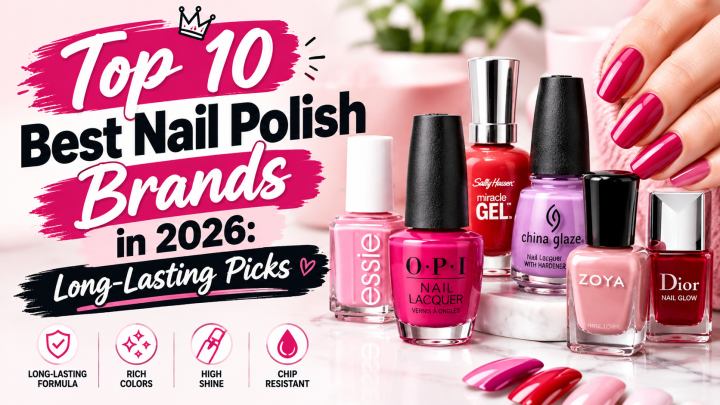
Parents comparing regular color options can use a durable polish choices guide as a starting point, but a product ranking does not automatically make a polish suitable for a child. Read the container, check warnings, and keep it out of reach.
| Desired effect | Useful colors | Design idea |
|---|---|---|
| Calm and school-appropriate | nude, white, soft gray, pale pink, light blue | One accent nail or a thin French tip |
| Fun and bright | turquoise, coral, yellow, red, purple | Alternating colors or tiny dots |
| Faint and youthful | lavender, mint, peach, powder blue, pale yellow | Cloud, flower, or rainbow-stripe art |
| High contrast | navy and white, red and white, black and yellow | Simple stripes or checkerboards |
| Birthday-ready | metallic accent plus a bright base | Initial, star, or confetti-style dots |
| Minimal decoration | one nude shade or one clear gloss color | Natural nail shape with no added art |
Dark polish can make chips and product on the skin more noticeable. Very pale polish can show a stain or uneven edge early. Neither is unsafe by itself, but the child should choose a shade they will still enjoy as it wears down.
Metallic polish may contain particles that create more texture. It does not have to be used, and loose glitter should never be scattered on a child’s work surface.
Children who have trouble sitting still through repeated thin coats may find a quicker drying routine more comfortable. The routine should still avoid heat, flames, and rushing the application. A decal can be a better choice when waiting is frustrating.
Skip vague safety claims
Words such as “non-toxic,” “kid-safe,” “clean,” or “natural” are not enough by themselves to judge a nail product. “HEMA-free” also does not mean that every person will avoid an allergic reaction. A complete ingredient declaration, directions, warnings, intact container, and reputable seller provide more useful information.
If a child has reacted to adhesive, cosmetics, rubber, latex, or acrylate materials before, discuss repeated exposure with a healthcare professional before using a new product.
Matching the Design to the Child’s Routine
A design that works for a birthday photo may not work well in the classroom. Think about the child’s normal week before choosing length or decoration.
| Activity or setting | Better design approach | Why it works |
|---|---|---|
| Everyday school | Short polish, narrow French tip, or one accent nail | Easy to maintain and less distracting during writing |
| Gym or recess | Natural nails with no long extension or loose trim | Reduces snagging and impact risk |
| Dance or cheer | Rounded, short polish without bulky charms | Stays comfortable and does not catch on costumes |
| Birthday party | Bright polish, decals, or fitted press-ons | Creates a noticeable design without extreme length |
| School picture | Two-tone color, tiny flowers, or initial nail | Looks coordinated in photos and survives normal wear |
| Sensory sensitivity | Nail decal or single color with minimal odor | Gives a visible change without prolonged handling |
| Child who chews nails | Natural nail only | Does not create a large extension for the child to bite or pull |
| Special event | Short press-ons with simple art | Provides a temporary change with controlled size |
For an event, plan the manicure early enough that the parent can check for lifting, glue on skin, or an edge that catches. A design that fails before the event is not worth keeping on longer.
Ask about school policies as well. Some schools prohibit artificial nails, nail polish, or decorative products for health, safety, or uniform reasons. Rules may differ for younger grades, sports, dance, and performance classes.
At-Home Nail Art Compared With a Salon Visit
Families have two realistic paths for a kid-friendly design: create a natural-nail look at home or use a salon for a carefully controlled service. Neither path requires full acrylic extension.
| Factor | At-home natural-nail art | Salon visit |
|---|---|---|
| Best choice for | Young children, temporary looks, simple art | Older children who need a professional, low-maintenance finish |
| Adult role | Apply and supervise the entire project | Confirm consent, age policy, sanitation, and design details |
| Main advantage | Easy to change and usually lower commitment | More consistent shaping and detailed application |
| Main drawback | Requires steady hands and drying time | Cost and exposure to salon products or fumes |
| Full acrylic extension | Not appropriate for home application by a child | Not recommended as a routine child service in most cases |
| Best design | Polish, decals, or an occasional short press-on | Fitted press-on or carefully selected natural-nail service |
| Safety focus | Product control, ventilation, and supervision | Licensing, clean tools, ventilation, and clear age policy |
What to do at home
Choose a clear work surface that is not near food, carpets, or heat. An adult should open the product, apply it, and keep the container closed immediately after use. Open a window or use a fan that moves air away from the child.
Do not mix nail products. Do not add household solvents to thin polish. Do not use markers, craft paint, or glue that is not labeled and intended for the intended use on the nail.
Keep the design flat and simple. If the child will not sit still, stop rather than trying to finish quickly. A partial but even polish job is better than a rushed application that spreads onto the skin.
If a press-on is used
Choose the size before applying glue. The nail should sit fully supported without stretching the natural nail. If it must be heavily filed or trimmed, an adult should prepare it before the child is involved.
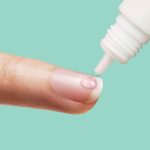
Apply a small amount of compatible adhesive, keep glue away from the cuticle and skin, and press gently. Do not flood the seam with glue. Excess glue can create a hard edge and stick to clothing.
A child should know how to report a lifted edge. The safe response is to stop pulling and ask an adult for help. A small press-on that detaches should be removed from the child’s hands immediately.
What to ask before a salon appointment
For a natural-nail manicure or press-on service, ask:
- What is the minimum age policy?
- Is the technician licensed for the service?
- Are files, buffers, cuticle tools, and reusable implements cleaned between clients?
- Are single-use items discarded properly?
- Is the room ventilated?
- Can a parent remain present?
- Will the product and adhesive be kept away from the child’s mouth?
- What is the planned removal method?
- Is the child allowed to choose a short, rounded design?
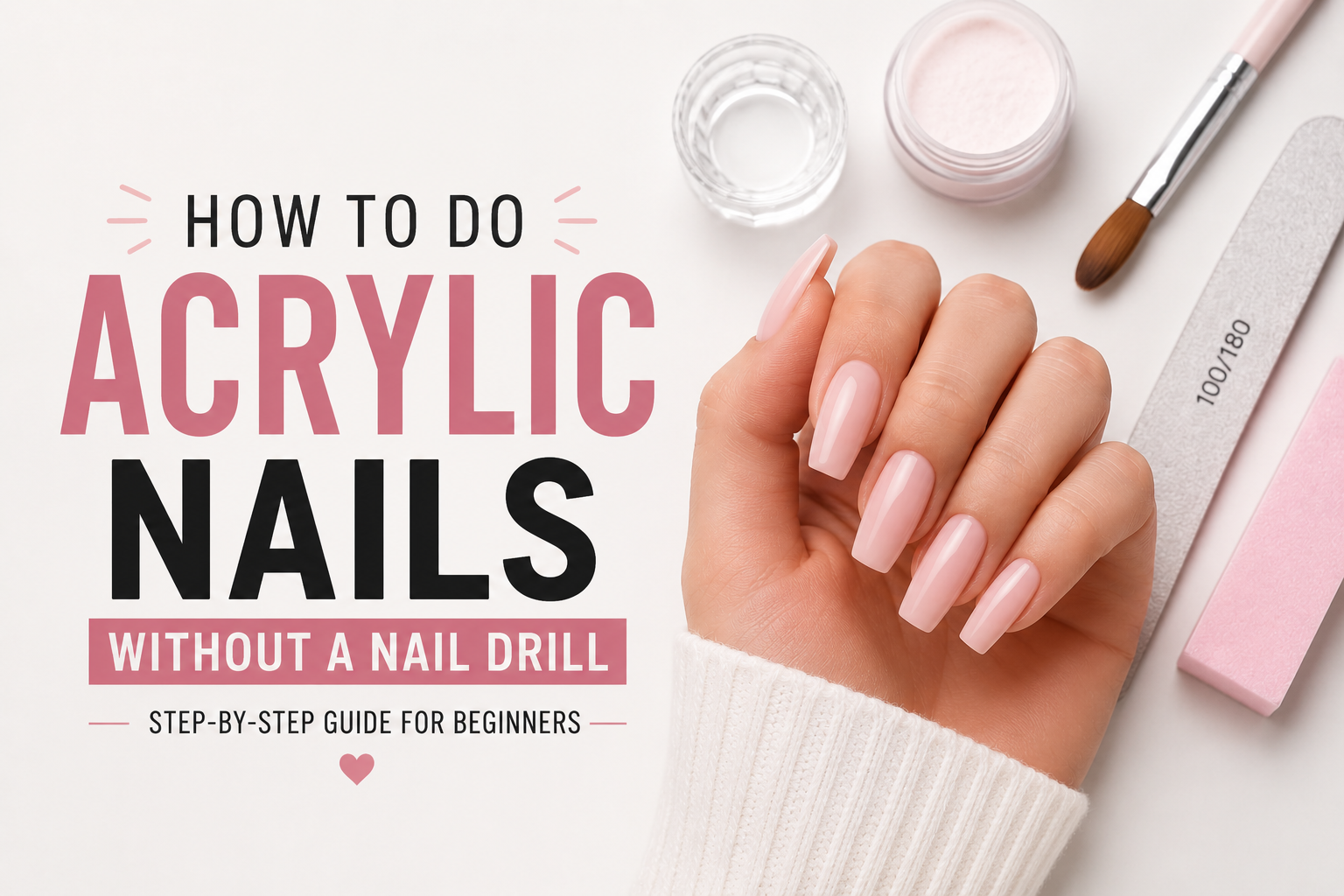
If the appointment is for true acrylic nails, ask whether the salon will work on a child at all. If the salon does agree, a parent should remain present, the nails should stay short, and the child should not be pressured into an extension they do not want. No-drill filing does not remove the risks of the liquid product or the application itself.
If an older teen already has long extensions, an adult should handle any shortening. A careful shortening method can be safer than cutting the nail carelessly with household clippers, but the child should not perform it alone.
A Product and Procedure Safety Checklist
A little preparation prevents many avoidable accidents. Before allowing any nail product or artificial nail on a child, check every item in the setup.
Product check
- The item is in an intact, clearly labeled container.
- The product has not changed color, thickened unusually, separated into an unknown substance, or developed an odd odor.
- The product has directions and warnings.
- The seller is reputable and can answer basic questions.
- The nail product is not described as an alternative to food, medicine, or household adhesive.
- All products stay out of reach after the manicure.
- The child does not share opened nail products with another child.
Parents should use the FDA’s guidance on nail products as a general checkpoint for labeling, warnings, safe use, and product handling. A label can help a parent make informed decisions, but it cannot guarantee that every child will react to a product.
Tool check
- Nail clippers and files are clean and used only when needed.
- Abrasive files do not become overly rough and tear the natural nail.
- Cuticle cutting is not necessary for a child’s decorative manicure.
- No sharp implements are placed within the child’s reach.
- Loose rhinestones, studs, chains, and metal charms are not used on a young child’s nails.
- The work surface is free of food and drink.
Application check
- The child is sitting comfortably and is not being held down forcefully.
- A parent remains in the room.
- The nail is not filed aggressively to make the product “stick better.”
- The product is kept away from the eyes, mouth, and cuticle.
- The child is told to report burning, warmth, itching, or pain immediately.
- The nails are not made longer simply because the child is excited about the design.
- The style is rounded or softly squared rather than sharply pointed.
For a routine full acrylic application, an adult should handle the process. A child should not watch and copy the liquid-and-powder procedure on their own nails. Adult instruction does not remove the need for ventilation, product control, and careful removal.
Aftercare check
- Keep the nails dry for the first part of the manicure if the product instructions call for it.
- Do not let a child pick at lifting edges.
- Check after school, play, and bathing for snagging or glue failure.
- Remove a damaged press-on rather than leaving it loose.
- Do not place superglue or household adhesive on a nail.
- Do not use nail-polish remover on the skin.
- Schedule a calm removal rather than waiting until the nail breaks.
What to Do When a Child Nail, Glue, or Product Goes Wrong
If a press-on starts to lift
Stop picking at it. If the nail is already coming free, remove it slowly with clean hands. Do not use force or sharp tools near the natural nail.
A small amount of warm water and soap may help loosen a well-fitted press-on. Let the child relax and keep the nail flat. If the adhesive remains, an adult can seek safe cleanup advice for safe glue cleanup.
Do not use acetone, paint thinner, or household solvents on a child’s skin.
If an acrylic nail breaks or lifts
A broken extension should not be ripped off. The child may feel pressure, tugging, or pain around the natural nail. Keep the area clean, cover it with a simple protective bandage if it catches, and arrange removal with a qualified professional.
Do not glue the loose piece back onto the nail. Do not cut deeply into the natural nail. A child with significant pain, bleeding, a split natural nail, or a nail bed injury needs medical care rather than a home repair.
If the natural nail looks weak after removal
Keep the nail short and protect it from further filing or adhesive. Avoid applying another extension until the nail has recovered and a clinician has advised you if it remains damaged. A post-removal nail care approach can be useful for general maintenance, but a damaged child’s nail should not be treated as an adult cosmetic problem.
Seek medical advice when there is:
- Increasing pain, redness, warmth, swelling, or pus.
- A red streak spreading from the finger.
- A nail that is repeatedly bleeding or splitting.
- A wound that does not heal.
- Fever along with an infected-looking finger.
- Signs that the child needs repeated medical care.
If nail product gets on the skin
Move the child away from the product and wash the affected skin with soap and running water. Remove contaminated clothing if needed. Do not try to neutralize a chemical with another chemical.
If the skin is only mildly affected, still watch the area for worsening redness, blistering, swelling, or burning. Contact a healthcare professional if symptoms persist or become stronger.
Do not use acetone or nail-polish remover to remove glue from the child’s skin. These products can irritate skin and may make the reaction worse.
If nail product gets in the eye
Rinse the eye with clean, lukewarm water for at least 15 minutes while seeking advice. Do not rub the eye. If liquid monomer, nail glue, or polish has entered the eye, contact a healthcare professional or poison center promptly.
If a child swallows nail product or a detached nail
Do not induce vomiting. Do not give food or drink unless a healthcare professional or Poison Control tells the parent to do so. Call Poison Control at 1-800-222-1222 or use the emergency number for immediate help.
The Poison Control website provides emergency instructions for accidental exposures.
If the child has trouble breathing, cannot swallow, becomes limp, or is choking, call emergency services immediately. Do not wait for symptoms to improve.
If a child has a possible allergic reaction
Stop using the product and remove it carefully. Seek medical advice for swelling, blistering, spreading redness, severe itching, or burning. Emergency help is appropriate when the child has trouble breathing, facial swelling, faintness, or a rapidly worsening reaction.
Special Situations That Change the Design Choice
Nail biting or cuticle picking
Choose a natural-nail design or a temporary decal. Do not use a long extension to cover the damage. A child who bites or picks at the nail needs support, not a harder surface to pull.
If the behavior is frequent, painful, or linked with anxiety, a pediatrician or dermatologist can help the family address it. The goal is to repair the nail and stop the mechanical irritation, not to make the manicure more durable.
Sensitive skin or eczema
Ask a healthcare professional before repeated exposure to adhesives, monomers, solvents, or nail coatings. Keep products away from broken skin. A child with active eczema may be more likely to react to a product that would be tolerable on healthy skin.
Nail decals can also irritate some children because their adhesive may contain rubber or acrylate ingredients. A water-based or water-activated transfer may be a simpler option, but the child still needs an adult-supervised application.
Sports and physical activities
Long artificial nails can catch during play and interfere with grip. For a child who plays basketball, soccer, gymnastics, dance, or climbing, natural nails, polish, or flat decals are the safer choice.
Some sports have additional rules about nails, hair, jewelry, or tape. Check with the coach or school rather than assuming a design is allowed.
Prom, graduation, or formal events
Short, rounded press-ons can give a polished appearance without creating an extension that has to be maintained for weeks. For younger children, a simple manicure plus temporary decals is often enough.
Test the look at home before the event. The child should be able to move, write, and play normally while wearing it. A formal design is not successful if the child has to avoid using the hand all day.
Sensory sensitivity
Some children dislike strong smells, long drying times, or having a stranger touch their nails. Give them control over the color and design, but keep the process adult-supervised.
A single-color manicure, a flat decal, or a short press-on can reduce the time spent sitting still. A child who says “stop” should not be persuaded to continue.
A child who wants a very long style
This is a clear sign to slow down and simplify. Instead of rejecting the child’s interest in fashion, offer a version of the design that uses the child’s natural nail. For example, use a long, narrow color pattern rather than a long extension.
My advice would be to keep the nail length close to the fingertip and the decoration completely secure. It protects the design idea while removing the most avoidable hazards.
Frequently Asked Questions
What age can kids get acrylic nails?
There is no universal age that automatically makes acrylic nails appropriate. Salon policies and local rules vary, and many families are better served by alternatives. Younger children usually have the least benefit from an extension, while older teens may handle a carefully fitted press-on or nail-art appointment.
Ability, behavior, nail health, supervision, and local rules all matter.
Are acrylicnails safe for kids?
Not as a routine choice. A full acrylic extension can be applied without an obvious problem by a trained professional, but it still adds a hard extension, chemical exposure, and a longer removal process to a small natural nail. It also creates snagging and picking risks that many children cannot avoid.
For most kids, natural-nail art, decals, or a carefully fitted short press-on is the better option. Acrylic may be reasonable for an older teen who wants a temporary extension, can leave it alone, and has a safe removal plan. A parent should still confirm that the salon permits the child’s age and remain present.
Can kids get an acrylic-style design without acrylic?
Yes. The look comes from the color, shape, and decoration, not necessarily from a hard extension. A child can get the same visual effect with:
- Polish applied to the natural nail
- Flat nail decals or stickers
- A short, well-fitted press-on nail
- Simple line art made with a nail-safe brush
- A color-blocked or French-tip design
A rounded press-on with a pastel base, tiny white flowers, and a clear top coat can look like a decorated acrylic nail without building length. For a young child, keeping everything flat and securely attached is safer than adding gems, metal charms, or 3D pieces.
What is the safest nail design for a young child?
The safest design is usually the one with the fewest attached products. A simple natural-nail color or a flat decal leaves the least room for lifting, chewing, and skin contact.
For a toddler or younger child, an adult should apply the product, use the smallest practical amount, keep it away from the mouth, and allow it to dry fully. A decal is also useful when the child cannot tolerate the smell or time required for several polish coats.
Avoid:
- Long or pointed extensions
- Loose rhinestones or glitter
- Large 3D decorations
- Nail glue near the cuticle
- Adult scraping or cutting of the cuticle
- Any product on broken, irritated, or infected skin
No label can guarantee that a product will suit every child. Check the directions and warnings, and stop if the child reports burning, itching, heat, swelling, or pain.
How long should a child wear press-on nails?
There is no fixed wearing time for every child. A short event manicure may be fine for a few hours or a day, while an older child may wear a well-fitted pair longer if it causes no discomfort and is not chewed or picked.
Remove a press-on when:
- One edge begins to lift
- Glue collects under the nail or on the skin
- The nail catches on clothing
- The child starts chewing or picking at it
- Moisture or debris becomes trapped underneath
- The natural nail feels sore or pressured
- The child is no longer able to follow the no-pulling rule
A loose nail can detach and become a swallowing hazard. A nail that lifts at only one corner is easier to remove safely than one that is still partly adhered while the natural nail moves underneath.
What should I do if my child chews or picks at press-on nails?
Remove the press-ons and return to a natural-nail design. Do not scold the child for a habit that may be linked with boredom, stress, excitement, or an irritated nail. A large extension can make the manicure more noticeable and give the child something new to pull at.
Clean and protect the natural nail, trim any ragged edge, and avoid adding another extension while the area is sore. If biting or picking is frequent, painful, or difficult to stop, a pediatrician or dermatologist can help the family address the cause and the damaged nail.
Young children who chew their nails are not good candidates for a long-term artificial manicure. Decals, plain polish, or no manicure at all will usually be more comfortable.
Is regular nail polish safer than acrylic for toddlers?
It is usually a simpler option, but it still requires adult control. Paint can be swallowed, and a wet manicure can smudge or spread onto the surrounding skin. Some children also develop irritation from repeated exposure to polish, removers, or decorative adhesives.
Use the product only as its label directs. An adult should apply a small amount, keep the bottle closed immediately afterward, use the product in a ventilated room, and store it where the child cannot reach it. Do not leave open polish on a table during the drying period.
A product described as “kid-safe” is not automatically suitable for every child. Read the full label, check warnings, and keep the product away from the mouth. If the child has sensitive skin or eczema, ask a healthcare professional before repeated use.
For a child who cannot sit still through the drying time, a removable decal may be the better choice.
Are gel nails safer for children?
Not automatically. Gel creates a strong bond to the natural nail and may require filing or thinning of the nail plate for removal. Like every artificial enhancement, it can cause pressure, snagging, lifting, or damage when removed poorly.
Gel products can also contain acrylate ingredients that cause irritation or allergic dermatitis. Although not every gel uses the same materials as liquid acrylic, a child who reacts to one artificial nail system may react to another. A curing lamp does not make an irritating product harmless.
Gel manicures should not be chosen simply because the appointment appears quick or the finished nails feel hard. Natural nails, flat polish, decals, or a short press-on design have fewer variables and are easier to adjust as a child grows.
How do I remove press-on nails from a child’s hand?
Start with warm water and clean, dry hands. Let an adult soak the nail briefly if the adhesive is designed to loosen with water. Do not yank the press-on, lever it with a sharp tool, or twist it sideways while it is still firmly attached.
Support the natural nail with the other thumb and remove slowly. If the press-on resists, pause rather than increasing the force. A small amount of adhesive may remain underneath.
Do not use acetone, paint thinner, household solvent, or sharp tools to clean the child’s skin or nail plate.
If the nail is already lifting, removing it promptly is usually better than gluing it back down. A family that uses glue regularly can review gentle ways to clean residue before the next manicure, but the child should never attempt chemical removal alone.
What if a child already has acrylic nails?
Do not pull or cut the extensions off at home. Keep the nails short, prevent the child from chewing or picking at them, and arrange removal with a qualified nail professional. If a nail has already separated, is painful, or has exposed the natural nail, keep the area clean and avoid further pressure.
A broken extension should not be trimmed deeply into the natural nail. If the child has bleeding, severe pain, swelling, redness, or a split natural nail, seek medical care rather than continuing a home repair.
The next manicure can use natural nails while the nail plate recovers. If the child already chews or picks at the manicure, a length reduction and a simpler design may be necessary. A parent should handle any filing or cutting; safe shortening techniques are still too advanced for an unsupervised child.
Can a child choose any color and design they see online?
A child can choose the mood, colors, and details, but the finished manicure still has to fit the child’s natural nail. Some online designs use long extensions, sharp points, raised charms, or several products that would not be appropriate.
A good design can usually be adapted:
- Replace a long extension with a rounded natural nail.
- Use one color in place of a detailed ombré.
- Paint a flower instead of attaching a 3D flower.
- Use a sticker instead of loose glitter or gems.
- Use two school colors instead of a large logo.
- Keep each nail narrow enough for writing and play.
Children should not imitate an adult manicure simply by applying household products or copying a video with a nail drill. If the design requires sharp tools, a drill, strong glue, or a chemical system, an experienced adult should handle the entire process.
The Best Choice for Most Kids
The best acrylic nail design for a child is usually the one that preserves the natural nail. That usually means a short, rounded shape, a few playful colors, and flat decoration. A bright, coordinated design can still feel special without creating an extension the child must learn to avoid chewing.
Ages, interests, and salons will change over time. What should not change is the basic standard: the design must fit the nail, the child must be comfortable, and an adult must control the products and removal.
Amazon and the Amazon logo are trademarks of Amazon.com, Inc, or its affiliates.
Author


Similar Posts