How to Stop Itchy Fingers After Gel Nails: Home Remedies & Safe Treatments
The first time I had a gel manicure, I left the salon admiring the glossy finish and long-lasting shine—until a few hours later when my fingers started itching like crazy. At first, I thought it was just in my head, but the tingling grew worse, and I found myself Googling in panic: “Why do my fingers itch after getting gel nails?”
If this sounds familiar, you’re not alone. Many people experience itchy fingers after gel nails, and it can be both uncomfortable and worrying. Sometimes it’s just mild irritation, but other times it could signal an allergic reaction to the products used—something you don’t want to ignore.
In this guide, we’ll dive deep into why fingers itch after a gel manicure, what symptoms to watch for, and most importantly, how to stop itchy fingers after gel nails using safe home remedies. You’ll also learn when it’s time to seek professional help, plus simple prevention tips to keep your nails beautiful without the unwanted side effects.
By the end of this article, you’ll not only understand what’s happening to your skin but also have practical solutions to treat it and prevent future flare-ups.
Why Do Fingers Itch After Gel Manicure? (Causes & Symptoms)
If your fingers itch after a gel manicure, it usually means your skin is reacting to something in the products or process. While a little irritation can happen to anyone, persistent itching or discomfort could be a sign of something more serious. Let’s break down the most common causes and symptoms.
Contact Dermatitis from Gel Polish Ingredients
One of the biggest culprits is contact dermatitis, a skin reaction triggered when your body doesn’t like a substance it’s exposed to. Gel nail products often contain chemicals like acrylates and HEMA (hydroxyethyl methacrylate)—ingredients that help polish stick and stay glossy for weeks. For some people, even small amounts of these chemicals can irritate the skin, causing redness, itching, or burning around the nails.
Allergic Reaction vs. Minor Irritation
It’s important to know the difference between a mild reaction and an actual allergy.
- Minor irritation may cause temporary itching or dryness that fades within a day or two.
- Allergic reactions are stronger and more persistent. They can lead to swelling, peeling, or even painful blisters that last longer than just a quick annoyance.
If the itching spreads beyond your fingertips—to your hands, eyes, or even your face—it’s often a red flag that you may be experiencing a gel polish allergy, not just minor irritation.
Symptoms to Watch For
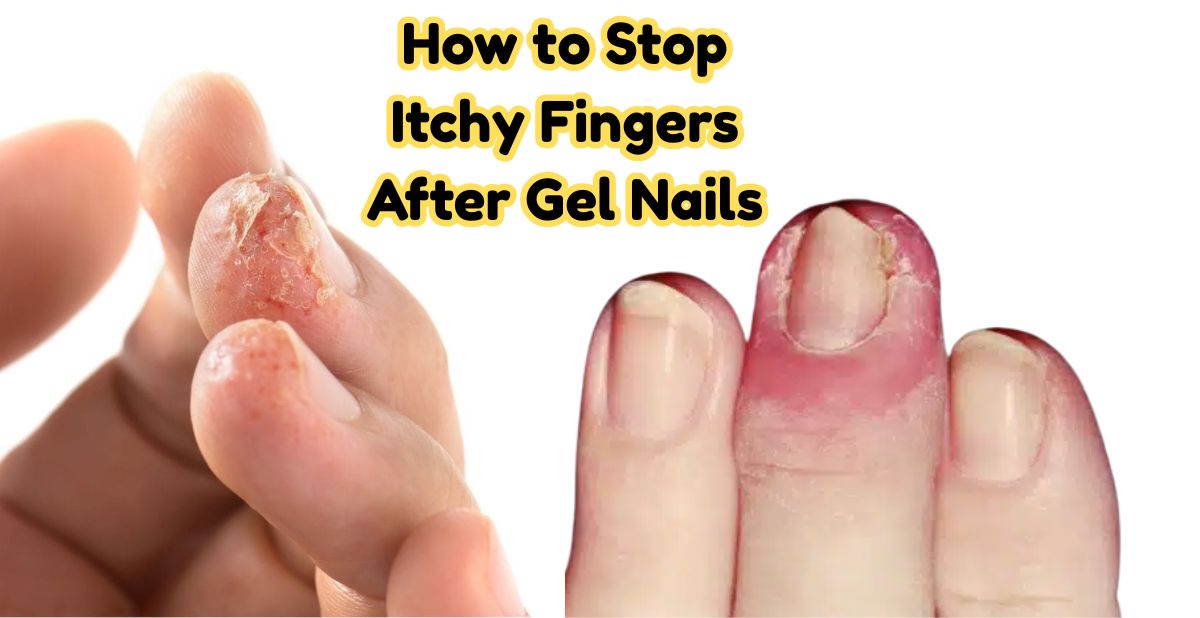
Some of the most common symptoms of itchy fingers after gel nails include:
- Persistent redness around the nail folds
- Itching or tingling in the fingertips
- Peeling or flaking skin near the cuticles
- Swelling or puffiness around the nails
- In severe cases, blisters or oozing skin
Recognizing these signs early is key because repeated exposure can make the allergy worse over time.
Uncured Gel Polish: A Common Trigger
Even if you’re not usually sensitive to nail products, you can still get itchy fingers if the gel polish isn’t fully cured under the UV or LED lamp. When gel polish touches the skin before it’s properly hardened, it allows the chemicals to soak into your skin directly. That exposure often leads to irritation or sensitization, which may explain why your fingertips feel itchy or sore after a manicure.
How to Stop Itchy Fingers After Gel Nails – Home Remedies
When your fingers start itching after a gel manicure, your first instinct may be to scratch, but that can make things worse. Instead, the goal is to calm the irritation, reduce inflammation, and hydrate your skin so it can heal naturally. Here are some safe and effective home remedies you can try right away.

Immediate Relief Options
1. Cool Water Soaks or Cold Compress
Dip your fingertips in a bowl of cool (not icy) water for 5–10 minutes, or press a clean cold compress against the affected area. This helps reduce itching and swelling almost instantly by calming nerve signals in the skin.
2. Aloe Vera Gel or Natural Soothing Creams
Fresh aloe vera gel is a natural anti-inflammatory that cools irritation and helps repair damaged skin. If you don’t have a plant, look for fragrance-free aloe vera creams or balms with simple, natural ingredients.
3. Oatmeal Paste for Itch Relief
Colloidal oatmeal is a dermatologist-recommended remedy for skin irritation. Mix a spoonful of oatmeal with water to form a paste, then apply it to the itchy areas for 10–15 minutes. Rinse off with lukewarm water—it can significantly reduce itching and redness.
4. Coconut Oil or Olive Oil for Hydration
Dryness often makes itching worse. Gently massage a few drops of coconut oil or extra virgin olive oil onto your fingers and cuticles. Both oils create a protective barrier, lock in moisture, and speed up skin healing.
Anti-Inflammatory Home Remedies
1. Honey + Turmeric Paste
Honey is naturally antibacterial and soothing, while turmeric contains curcumin, a powerful anti-inflammatory compound. Mix one teaspoon of honey with a pinch of turmeric, apply it to the itchy skin, and leave it on for 10 minutes before rinsing.
2. Green Tea Soaks
Green tea is rich in antioxidants and calming properties. Brew a cup of green tea, let it cool, and soak your fingertips for 5–10 minutes. It not only reduces itching but also refreshes and hydrates irritated skin.
Important Note: Home remedies are great for mild irritation. If your itching is severe, spreading, or accompanied by blisters, it may be a sign of a gel nail allergy that requires medical attention.
Gel Polish Allergy Treatment – When Home Remedies Aren’t Enough
Sometimes, itchy fingers after a gel manicure aren’t just a mild irritation—they’re the early signs of an allergic reaction to gel polish. If home remedies like aloe vera or coconut oil don’t bring relief, it may be time to turn to stronger solutions.
Over-the-Counter Treatments
1. Hydrocortisone Cream (Short-Term Use)
A mild 1% hydrocortisone cream can help calm inflammation and reduce redness or itching. Use it sparingly and only for a few days at a time, since overuse may thin the skin.
2. Antihistamines for Itching or Swelling
Oral antihistamines (like cetirizine or diphenhydramine) can provide relief if itching keeps you up at night or if swelling becomes uncomfortable. Always follow the instructions on the label or consult a pharmacist for safe usage.
Medical Intervention
1. Dermatologist-Prescribed Steroid Creams
If OTC creams aren’t enough, a dermatologist may prescribe stronger topical steroids to control the reaction. In some cases, oral medication might be recommended for severe flare-ups.
2. Allergy Testing for Gel Polish Sensitivity
To pinpoint the exact trigger, your doctor may suggest a patch test. This checks for sensitivity to ingredients like acrylates or HEMA, which are common in gel nail products. Identifying the allergen can help you avoid future reactions and choose safer alternatives.
When to Seek Urgent Help: If you notice blisters, oozing skin, or swelling spreading beyond your fingertips, don’t wait—see a healthcare provider immediately. Severe allergic reactions can worsen quickly without proper treatment.
How to Treat Gel Nail Allergy at Home vs. Professional Help
When dealing with itchy fingers or skin irritation after a gel manicure, the right treatment depends on how severe your reaction is. Understanding the difference between a mild flare-up and a true allergy will help you decide whether home care is enough or if it’s time to seek professional help.
Mild Reactions – When Home Remedies Are Enough
If your symptoms are limited to light itching, slight redness, or minor peeling around the nails, you may be able to manage the situation at home. In these cases, how to treat gel polish allergy at home comes down to:
- Cool compresses or soaks to calm itching
- Aloe vera gel or coconut oil for hydration and repair
- Oatmeal paste or green tea soaks to reduce irritation naturally
- Short-term use of over-the-counter hydrocortisone cream for persistent redness
These remedies are effective for minor contact dermatitis symptoms that fade within a few days.
Severe Reactions – When to Seek Medical Advice
If your symptoms include swelling, blisters, intense itching, or spreading irritation, you’re likely dealing with an allergic reaction to gel nails that won’t heal with home care alone. In this case, how to treat allergic reaction to gel nails requires professional intervention:
- Dermatologist-prescribed steroid creams to reduce inflammation
- Oral antihistamines to manage severe itching or swelling
- Allergy testing to identify specific triggers like acrylates or HEMA
- Guidance on avoiding future flare-ups and finding safer nail products
Left untreated, a true gel polish allergy can worsen with every manicure, making your skin more sensitive over time. That’s why recognizing the tipping point—when home remedies no longer work—is essential.

Prevention Tips – How to Avoid Future Reactions
If your fingertips itch after a gel manicure, it’s a signal that your skin might be sensitive to certain ingredients or techniques. The good news is that with a few smart precautions, you can still enjoy beautiful nails while lowering your risk of irritation or allergies. Here’s how:
1. Choose HEMA-Free or Hypoallergenic Gel Polishes
Many gel nail reactions are linked to HEMA (hydroxyethyl methacrylate), a common ingredient in gel products. Switching to HEMA-free or hypoallergenic gel polishes can significantly reduce your chances of developing irritation. Look for professional-grade brands that clearly label their formulas as “allergy-safe.”
2. Make Sure Nails Are Properly Cured
Uncured polish is one of the biggest triggers for gel nail polish allergy treatment cases seen by dermatologists. Always ensure your nails are cured under the correct lamp for the right amount of time. Even a few seconds too short can leave active chemicals on your skin, leading to redness and itching.
3. Avoid Skin Contact with Gel Products
Gel polish should only touch the nail plate—never your cuticles or surrounding skin. If polish accidentally floods onto your skin, ask your nail tech to clean it immediately before curing. Repeated exposure is one of the fastest ways to develop a gel allergy.
4. Ask Your Nail Technician About Products Used
Not all salons use the same brands. Don’t be afraid to ask which gel polish system your nail tech is using. If you’ve experienced irritation before, let them know so they can choose a gentler option—or even recommend an alternative nail treatment like dip powder or classic polish.
5. Take Breaks from Gel Nails
Even if you love the glossy finish, give your nails a rest every few months. Taking a break allows your skin and nails to recover and lowers your risk of long-term sensitivity. During breaks, use nourishing nail oils or strengthening treatments to restore natural resilience.
6. Wear Protective Gloves for Household Chores
Chemicals in cleaning products, combined with water exposure, can worsen irritation around gel nails. Wearing protective gloves when washing dishes or cleaning helps protect both your manicure and your skin.
By following these steps, you’ll reduce the chances of itchy fingers and give your nails a healthier, longer life. Prevention is always easier—and safer—than dealing with a painful gel nail polish allergy treatment later.
My Personal Experience with Gel Nail Allergy
I still remember the first time my fingertips itched after a gel manicure. At first, I brushed it off, thinking it was just dryness from the acetone soak or the UV lamp. But within hours, the itching spread, my cuticles turned red, and tiny patches of peeling skin appeared around my nails. That’s when I realized something wasn’t right.
Like many people, I went down the rabbit hole of online searches: “How to treat gel polish allergy?” and “How to treat allergic reaction to gel nails?” The results were both comforting and overwhelming. I learned that what I was experiencing wasn’t uncommon—and that repeated exposure could make it worse.
At home, I started with simple remedies:
- A cool water soak to calm the irritation
- Aloe vera gel straight from the plant on my windowsill
- Coconut oil at night to keep my skin from cracking
These helped a little, but the itching kept coming back after each manicure. Eventually, I booked an appointment with a dermatologist. After patch testing, I discovered I was sensitive to HEMA, a common ingredient in many gel products. My doctor prescribed a mild steroid cream to use during flare-ups and advised me to switch to HEMA-free gel polishes if I wanted to continue with gel nails.
It was frustrating at first—gel manicures had been my little self-care ritual. But learning my triggers and taking breaks from gel nails gave my skin time to heal. And honestly, I felt relieved to finally have answers.

Similar Posts