Dotting Nail Art Tool: Easy, Professional Nail Designs at Home
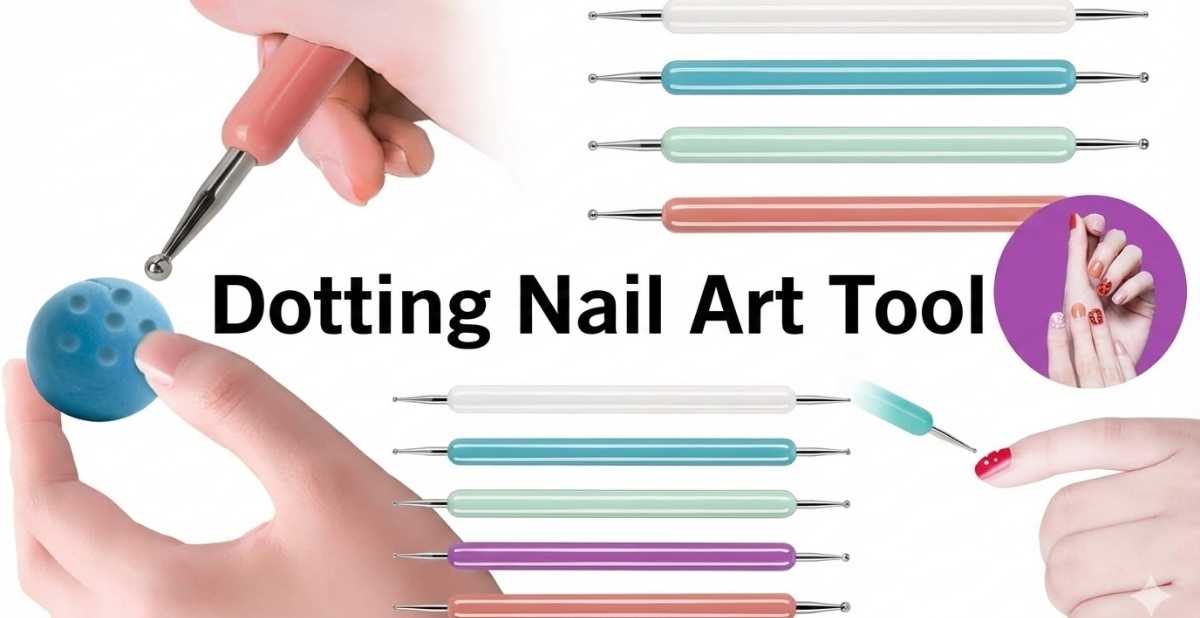
A dotting nail art tool is one of the simplest tools in nail art, yet it delivers some of the cleanest and most professional-looking results. At its most basic, it’s a small handheld tool with a rounded metal or plastic ball on the tip. You dip that ball into polish and gently touch it to the nail to create a perfect dot—no dragging, no streaking, no stress.
That single motion is the reason dotting tools are used in so many styles of nail art using a dotting tool, from playful polka dots to elegant floral designs and modern minimalist accents.

To buy this product, Click Here
Simple explanation: what a dotting tool actually does
Unlike brushes, which rely on bristle movement, a dotting tool transfers polish by contact. The rounded tip holds just enough polish to form a controlled, even shape when pressed onto the nail. This makes it ideal for:
- Dots of all sizes
- Flower petals and centers
- Geometric patterns
- Subtle accent details
It’s also incredibly forgiving. If you mess up, you can wipe it off and try again without ruining the whole nail.
Different ball sizes and what each one is used for
Dotting tools usually come in multiple sizes, and those sizes matter more than beginners realize:
- Small ball tips – Best for fine details, tiny dots, flower centers, and delicate accents
- Medium ball tips – Great for classic dotting tool nail art designs like polka dots and layered patterns
- Large ball tips – Ideal for bold dots, petal bases, and statement designs
Many tools are double-ended, giving you two different sizes in one handle. That versatility is one reason a single dotting tool can replace several brushes for everyday designs.
Why dotting tools are beginner-friendly compared to brushes
If you’ve ever tried to paint a straight line with a nail art brush and ended up frustrated, you’re not alone. Brushes require steady hands, pressure control, and practice. Dotting tools remove most of that learning curve.
Here’s why nail art with dotting tools for beginners feels so much easier:
- No brush strokes to control
- Less hand movement required
- Consistent results with minimal effort
- Faster designs, especially on both hands
Because the motion is simple—dip, touch, lift—your non-dominant hand struggles far less. That alone makes dotting tools a confidence booster.
Personal insight: how I started with dotting tools
I didn’t start nail art with brushes. I started with a dotting nail art tool because it felt unintimidating. My early designs weren’t perfect, but they were neat, balanced, and wearable. Over time, dotting tools taught me spacing, symmetry, and polish consistency—skills that later made brush work much easier. Even now, I still use dotting tools daily because they’re efficient and reliable.

To buy this product, Click Here
Types of Dotting Nail Art Tools (And Which Ones I Actually Use)
Not all dotting tools are the same. Understanding the different types helps you choose tools that match your skill level and style.
Single-Ended vs Double-Ended Dotting Tools
Single-ended dotting tools
Pros:
- Lightweight and precise
- Easier to control for detailed work
- Great for advanced designs
Cons:
- One size only
- You may need multiple tools
Double-ended dotting tools
Pros:
- Two sizes in one tool
- Budget-friendly
- Perfect for beginners
Cons:
- Slightly heavier
- Can feel bulky for micro-details
Which is better for beginners?
For most people starting out, double-ended tools win. They let you experiment with multiple dot sizes without buying a full set. Once your skills grow, adding a few single-ended tools for precision makes sense.

To buy this product, Click Here
Metal, Plastic, and DIY Dotting Tools
Metal dotting tools
- Most durable
- Best polish control
- Easy to clean
- My personal favorite for professional results
Plastic dotting tools
- Lightweight and affordable
- Good for casual use
- Less durable over time
DIY dotting tools (household alternatives)
Items like bobby pins, toothpicks, or sewing pins can work in a pinch. They’re useful for:
- Practicing dot placement
- Creating very small dots
However, they fall short when you need consistent sizing or clean edges. For regular use, a proper nail art brush and dotting tool set offers far better control and results.
In my own kit, I rely mostly on metal, double-ended dotting tools. They’re dependable, easy to clean, and versatile enough for almost every design I create—from quick everyday looks to detailed nail art flowers with dotting tool designs.

To buy this product, Click Here
How to Use a Dotting Nail Art Tool Step by Step (Beginner Friendly)
Learning how to use nail art brushes and dotting tools doesn’t have to feel overwhelming. In fact, dotting tools are often the easiest place to start because the technique is forgiving and the results look polished even with minimal experience. Here’s the exact process I follow, especially when teaching beginners.
Preparing nails properly (base coat and polish consistency)
Great dot designs start before the dotting tool even touches your nail. First, shape and lightly buff your nails so the surface is smooth. Apply a thin base coat and let it dry completely. This prevents staining and helps your design last longer.
Next comes polish consistency. This step is often skipped, but it matters. If your polish is too thick, dots will look raised and uneven. If it’s too thin, they’ll spread too much. The ideal consistency is smooth and slightly runny but not watery. If needed, let thick polish sit open for a minute to loosen naturally.
How to dip the tool correctly (a common beginner mistake)
One of the biggest mistakes beginners make is dipping the tool too deeply into the polish. This overloads the tip and causes messy, spreading dots.
Instead:
- Lightly dip just the ball tip, not the shaft
- Gently tap the tool once on a palette or foil to remove excess
- Reload the tool often instead of using one heavy dip
This small habit instantly improves control and dot shape.

To buy this product, Click Here
Pressure control and spacing tips
Pressure matters more than people think. A light touch creates smaller dots, while firmer pressure creates larger ones. Keep your hand relaxed and let the tool do the work.
For spacing:
- Start from the center and work outward
- Visualize a grid before placing dots
- Clean the tool between color changes to avoid smudging
These tips make nail art using a dotting tool look balanced and intentional rather than crowded.
Personal tip: my trick for consistent dots on both hands
My favorite trick is simple: I place all dots on one nail first, then repeat the pattern on the opposite hand immediately. This muscle memory keeps sizes consistent. I also anchor my pinky on the table for stability. That one habit transformed my non-dominant hand results almost overnight.
Easy Nail Art with Dotting Tool for Beginners
If you’re new to nail art, starting with easy nail art with dotting tool designs builds confidence fast. These styles look cute, wearable, and don’t require advanced skills.
Polka Dot Nail Designs
Polka dots are the classic starting point. They’re simple, playful, and forgiving.
Easy patterns anyone can do:
- Evenly spaced dots across the nail
- One large dot surrounded by smaller ones
- Vertical or diagonal dot lines
Color combination ideas:
- White dots on nude or blush
- Black dots on pastel shades
- Metallic dots on dark polish
These are timeless dotting tool nail art designs that work for any age or occasion.

To buy this product, Click Here
Minimal Dot Accents for Short Nails
Short nails look amazing with minimal dot accents. A single dot near the cuticle or two dots along the side of the nail creates a clean, modern look.
These designs are:
- Office-appropriate
- Easy to maintain
- Perfect for everyday wear
This is where nail art with dotting tools for beginners really shines—low effort, high style.
Quick 5-Minute Dotting Tool Designs
For busy days, quick designs are a lifesaver. Try:
- One accent nail with dots
- Simple corner dot patterns
- Micro dots along a French tip
These designs take minutes but still look intentional and polished.

To buy this product, Click Here
Dotting Tool Nail Art Designs I Create Most Often
After years of experimenting, there are a few dotting tool nail art ideas I return to again and again because they’re versatile and always get noticed.
Gradient dot designs
These use dots that gradually change size or color. They’re perfect for ombré effects without blending brushes and look surprisingly advanced.
Mandala-inspired dot patterns
Using layered dots in circular patterns creates stunning detail with minimal tools. They’re ideal for accent nails and festivals or special occasions.
French tip variations using dots
Instead of a solid line, I create French tips using small, evenly spaced dots. It’s modern, clean, and works beautifully on short and long nails.
Personal experience: which designs get the most compliments
Without fail, gradient dots and dotted French tips get the most compliments. People often assume they took much longer than they actually did. That’s the magic of the dotting nail art tool—it turns simple techniques into designs that look thoughtful, stylish, and professional.
Nail Art Flowers with Dotting Tool (My Go-To Floral Method)
When people ask how I create neat, balanced florals so quickly, my answer is always the same: nail art flowers with dotting tool techniques. Flowers made entirely with dots are one of the easiest designs to learn, yet they look surprisingly detailed and elegant.
Step-by-step flower creation using dots only
This method uses no brushes at all, which is why it’s perfect for beginners.
- Apply your base color and let it dry fully
- Choose a medium dotting tip and place 5–6 dots in a circle to form petals
- Switch to a smaller tip and add a center dot
- Let the design settle before applying top coat
That’s it. The polish naturally rounds itself, creating soft petal edges without extra effort.
Choosing petal and center dot sizes
Size balance matters. For clean floral designs:
- Use medium dots for petals
- Use small dots for centers
- Avoid large dots unless creating bold, abstract flowers
This contrast keeps the flower shape clear and visually pleasing.

To buy this product, Click Here
Best polish textures for floral designs
Cream polishes work best because they hold shape well. Avoid very sheer formulas, which can look patchy, and thick glitter polishes, which don’t spread evenly. If you want shimmer, use fine metallics for center dots only.
Personal tip: fixing uneven petals without removing polish
If one petal looks uneven, don’t panic. I gently place a matching dot next to it to rebalance the shape. This trick saves time and keeps the design intact without starting over.
Nail Art Using Dotting Tool vs Nail Art Brushes
Choosing between nail art using dotting tool techniques and brushes depends on skill level and design goals.
Precision comparison
Brushes allow fine lines and sharp edges, but dotting tools offer unmatched consistency for round shapes. For dots, florals, and patterns, dotting tools are often more precise.
Learning curve
Brushes require steady hands and practice. Dotting tools are intuitive—dip, touch, lift. That’s why beginners progress faster with dotting tools.
When I prefer dotting tools over brushes
I always choose dotting tools for:
- Floral designs
- Polka dots and patterns
- Minimal nail art
- Quick designs
Why most beginners should start with dotting tools
Dotting tools build confidence early. They teach spacing, balance, and polish control before introducing complex brush techniques.

To buy this product, Click Here
Nail Art Brush and Dotting Tool Combo – How I Use Both Together
The real magic happens when you combine a nail art brush and dotting tool in one design.
Creating outlines with brushes, filling with dots
I use a thin liner brush for outlines, then fill the shape using dots. This keeps designs clean and controlled.
When combining tools gives better results
Combination work shines in:
- Floral outlines with dotted centers
- Geometric designs
- Detailed accent nails
Recommended order of use
Always start with the brush first, then add dots. Dots last better on top of defined shapes.
Dotting Nail Art Tool Price: What You Should Expect to Pay
Understanding nail art dotting tool price helps avoid overpaying.
Typical price range in the USA
- Budget sets: $3–$6
- Mid-range sets: $7–$12
- Professional tools: $15–$25
Budget vs professional sets
Budget sets are fine for beginners. Professional tools offer better balance, smoother tips, and longer durability.
Are expensive dotting tools worth it?
Only if you do nail art regularly. Otherwise, mid-range sets offer the best value.
Personal buying advice
I look for metal tips, smooth finish, and multiple sizes. Comfort matters more than brand name.

To buy this product, Click Here
Common Mistakes Beginners Make with Dotting Nail Art Tools
Even the best dotting nail art tool won’t help if these mistakes happen.
Using polish that’s too thick or too thin
Wrong consistency ruins dot shape. Aim for smooth, flowing polish.
Pressing too hard
Heavy pressure causes spreading. Let the tool rest lightly on the nail.
Overloading the tool
Too much polish leads to blobs. Always tap excess off.
Not cleaning between colors
Leftover polish muddies designs. I wipe the tip after every color change for clean, crisp results.
FAQs for Dotting Nail Art Tools
What is the best dotting nail art tool for beginners?
For beginners, the best dotting nail art tool is a double-ended tool with small and medium ball sizes. This combination lets you experiment with different dot sizes without buying multiple tools. Metal tips are usually better than plastic because they hold polish evenly and are easier to clean. Look for a lightweight handle with smooth, rounded tips—sharp edges can drag polish and ruin dot shapes. You don’t need an expensive brand to start. A simple mid-range set is more than enough to practice basic designs, florals, and patterns while building confidence.
Can I do nail art with just a dotting tool?
Yes, absolutely. You can create full nail designs using only a dotting tool. Polka dots, flowers, mandala patterns, minimalist accents, gradient dots, and even dotted French tips are all possible without brushes. Many people are surprised by how versatile nail art using a dotting tool can be. While brushes help with fine lines later on, a dotting tool alone is enough for beginners to create neat, stylish, and wearable nail art from day one.
How do you clean a dotting nail art tool?
Cleaning a dotting nail art tool is simple but important. For regular polish, wipe the tip with a lint-free pad soaked in nail polish remover. For gel polish, clean the tool immediately before curing—gel hardens under UV or LED light and becomes difficult to remove once cured. I make it a habit to wipe the tool between every color change. This prevents muddy designs and keeps dots crisp and clean over time.
Can dotting tools be used with gel polish?
Yes, dotting tools work very well with gel polish. In fact, gel’s thicker consistency often gives more control when creating dots. The key is to work slowly and cure between layers so dots don’t spread. Always clean the tool before curing to avoid hardened gel on the tip. Whether you’re doing florals or minimal designs, dotting tools are fully compatible with gel systems.
Are dotting tools better than nail art brushes?
Dotting tools aren’t better than brushes—they’re different. Dotting tools excel at consistency, symmetry, and ease of use, especially for beginners. Brushes offer precision for lines and detailed outlines but require more practice. That’s why many artists start with dotting tools and add brushes later. For most beginners, dotting tools are the faster and less frustrating way to learn nail art fundamentals.
Conclusion
After years of experimenting, I can confidently say a dotting nail art tool is essential at every skill level. Beginners love it because it’s easy to use and forgiving. Intermediate users rely on it for clean patterns and florals. Even experienced nail artists keep dotting tools close because nothing else creates such consistent, balanced dots so effortlessly.
If you’re someone who struggles with brushes, short on time, or simply wants neat designs without stress, dotting tools are made for you. They help you learn spacing, pressure control, and polish behavior—all skills that transfer beautifully to advanced techniques later on.
My advice is simple: practice without fear. Experiment with colors, sizes, and patterns. Don’t aim for perfection—aim for progress. With regular use, your confidence will grow, your designs will improve, and that small dotting tool will quickly become one of the most valuable items in your nail art kit.
Amazon and the Amazon logo are trademarks of Amazon.com, Inc, or its affiliates.
Author


Similar Posts